Targeting an industrial launch tempo
Blue Origin has laid out a sweeping infrastructure push aimed at turning New Glenn into a high-frequency launch vehicle. The company's stated ambition is to reach a cadence of multiple flights per week by the end of the decade — a bold target that would put it in direct competition with SpaceX's Falcon 9, currently the world's most frequently flown orbital rocket.
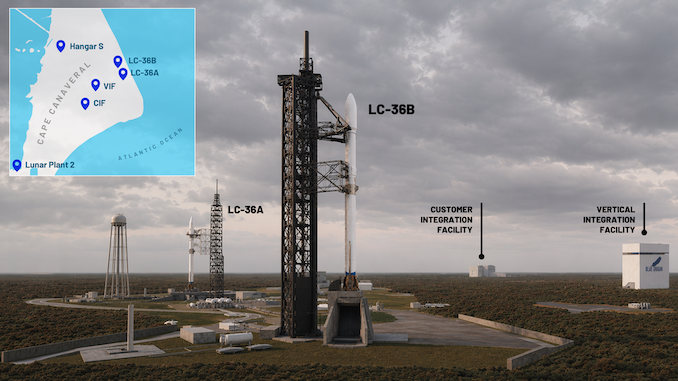
To get there, Blue Origin plans to build additional launch pads at Cape Canaveral in Florida, where New Glenn already operates. The existing pad is not sufficient to sustain the kind of turnaround pace the company is pursuing. The exact number of new pads has not been formally disclosed, but the intent is clear: redundancy in ground infrastructure is a prerequisite for high-tempo operations.
Manufacturing scale-up and a fleet of recovery barges
The expansion goes well beyond concrete and steel at the launch site. Blue Origin intends to significantly increase production capacity at its Rocket Park facility, located near its Florida launch complex. Scaling up booster production is essential to maintaining a steady pipeline of vehicles ready to fly, rather than waiting for a single rocket to be refurbished between missions.
Equally important is the plan to acquire additional offshore landing barges. New Glenn is designed to recover its first stage at sea after each flight, a capability Blue Origin has been developing since the rocket's debut. Running multiple barges in parallel allows recovery and turnaround operations to proceed independently from launch preparation — a logistical necessity if the company is serious about flying several times a week.
Together, these moves signal a deliberate shift in how Blue Origin positions New Glenn: not as a technology demonstrator, but as a mature commercial product built for volume.
A high-stakes industrial gamble with real market tailwinds
The timing is not arbitrary. Demand for launch services is climbing steadily, driven by large low-Earth orbit constellations, NASA and U.S. Department of Defense contracts, and a growing pool of commercial satellite operators worldwide. The market opportunity is real — but so is the competition, with SpaceX, Rocket Lab, and a wave of emerging launch providers all vying for manifest slots.
Blue Origin has conducted only a handful of New Glenn flights to date. Scaling from that baseline to several launches per week is an enormous operational leap, requiring not just infrastructure but also a demonstrated reliability record, a mature supply chain, and substantially larger ground crews.
The company has not released a detailed timeline or a total investment figure for the program. These announcements will ultimately be judged by execution. Still, the scope of what Blue Origin is describing makes one thing plain: the company intends to be a genuine industrial force in commercial launch, and it is willing to commit the capital to back that claim up.


