Breaking with a two-decade tradition of self-funding
Since its founding in the early 2000s, Blue Origin has operated almost entirely on funds provided by Jeff Bezos himself, who reportedly sold Amazon shares regularly to bankroll the venture. That model is now changing. According to reports published in early July 2026 by multiple industry outlets, Blue Origin is preparing to raise $10 billion in outside private capital — the first time in its history that the company has sought investment from external sources.
The transaction is expected to value Blue Origin at approximately $130 billion, a figure that reflects both the scale of its ongoing programs and broader investor confidence in the commercial space sector. Key details, including the identities of the investors involved and the precise structure of the deal, had not been officially confirmed by the company at the time of publication.
Ambitious programs demand serious capital
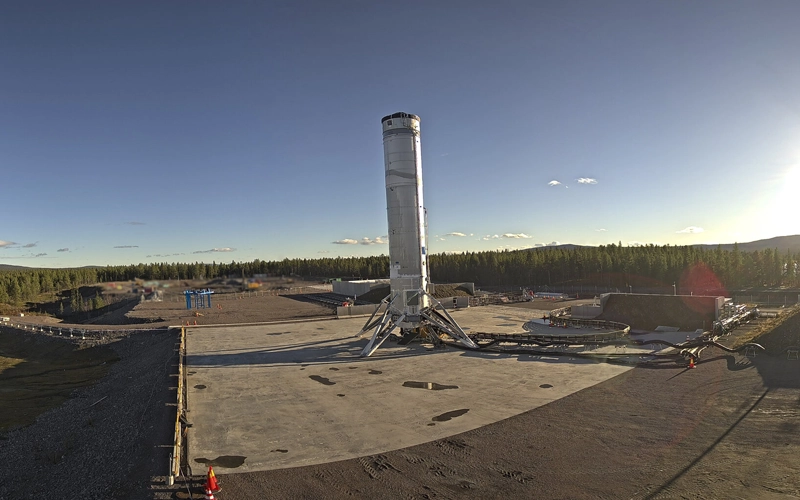
The rationale behind such a substantial fundraising effort becomes clear when examining Blue Origin's current portfolio of projects. The company's heavy-lift rocket, New Glenn, completed its first orbital mission in early 2025, but still needs to significantly increase its launch cadence to compete effectively with SpaceX and other players in the commercial launch market. That ramp-up requires sustained industrial investment.
Beyond launch services, Blue Origin has articulated ambitions in the satellite constellation market — a capital-intensive domain where late entrants face an uphill battle against incumbents that are already scaling. Additionally, the company holds a contract with NASA to develop a human lunar lander under the Artemis program, a multiyear commitment that demands considerable engineering and manufacturing resources.
Taken together, these programs represent a level of financial commitment that even Bezos's personal wealth may no longer be able to sustain alone at the pace the company requires to remain competitive.
What this means for the broader industry
Blue Origin's decision to open its doors to outside investors carries implications well beyond the company itself. It signals that institutional and private capital markets view commercial space — across launch vehicles, satellite infrastructure, and associated services — as a legitimate and potentially lucrative asset class. In that sense, it echoes earlier inflection points for companies like SpaceX and Rocket Lab, both of which leveraged outside investment to accelerate growth.
The shift also raises questions about transparency. Blue Origin has long maintained a notably low public profile when it comes to operational and financial disclosures. External investors typically expect a higher degree of reporting and accountability, which could prompt meaningful changes in how the company communicates its progress — or setbacks.
Whether this fundraise ultimately marks the beginning of a path toward a public offering remains an open question. What is clear is that Blue Origin, headquartered in Kent, Washington, is entering a new phase — one in which its ambitions will be tested not just by the physics of rocketry, but by the expectations of a new class of stakeholders.