A day's delay, then a clean ride to orbit
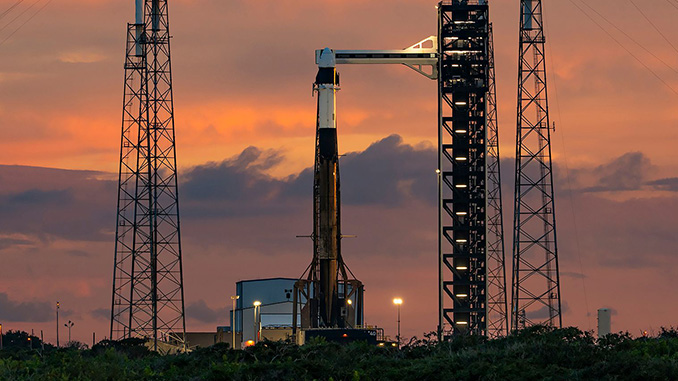
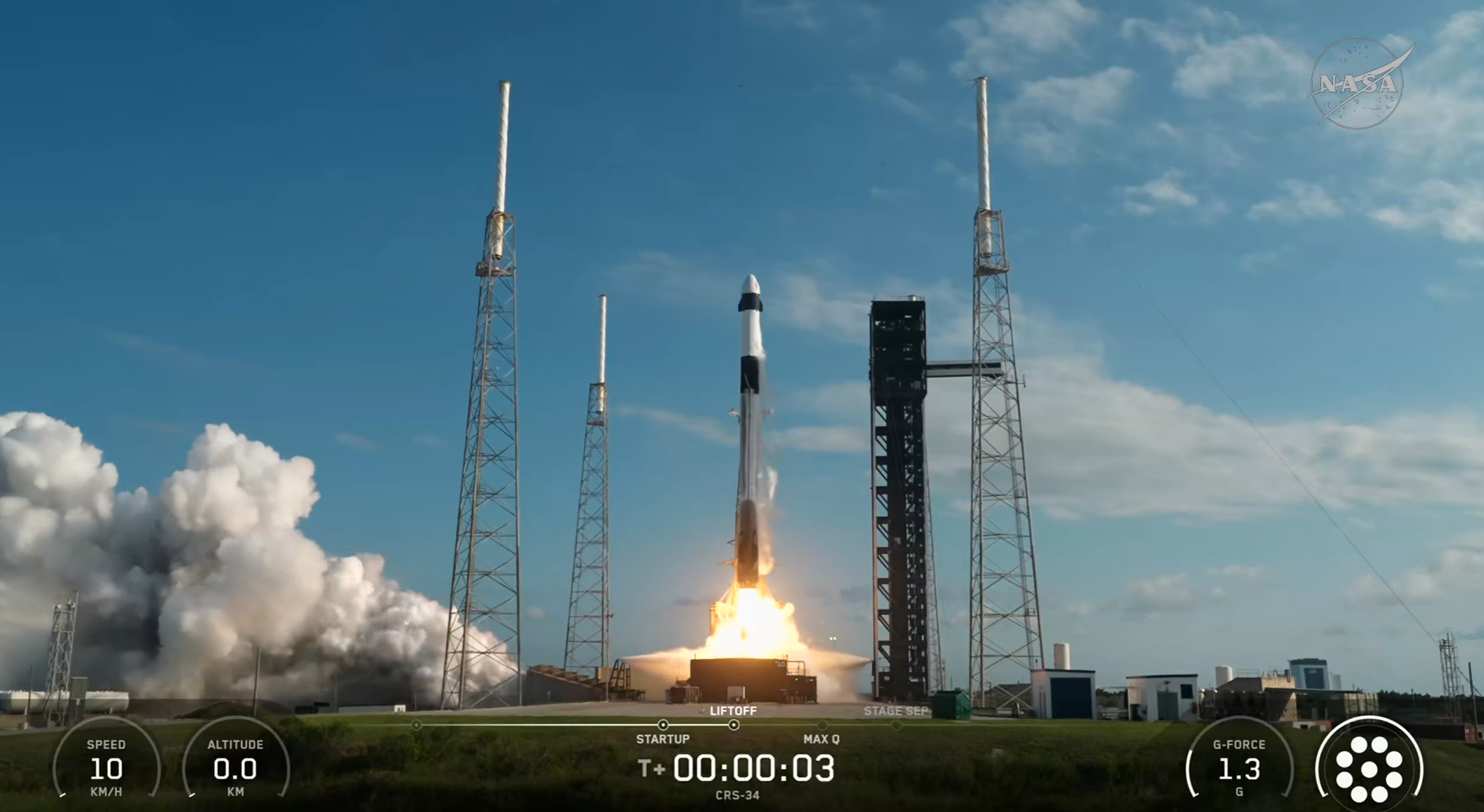
The CRS-34 mission did not launch on its original target date. Teams at Cape Canaveral pushed the attempt back by twenty-four hours before securing a clean window on Friday, May 15, 2026. Liftoff occurred at 6:05 p.m. Eastern time — 22:05 UTC — from Space Launch Complex 40 at Cape Canaveral Space Force Station in Florida. The Falcon 9 performed nominally, and the Cargo Dragon separated on schedule to begin its approach to the International Space Station.
Such short delays are routine in orbital logistics. Launch teams work within narrow daily windows dictated by the station's orbital plane, and any technical or weather issue typically moves a mission to the next available opportunity rather than causing extended holds.
Nearly three tonnes of cargo aboard
The Cargo Dragon departed Earth carrying roughly 6,500 pounds of materiel — just under 2,950 kilograms — spread across multiple categories: scientific hardware, crew provisions, spare components, and general station supplies. NASA confirmed that several new experiments are included in the manifest, spanning disciplines such as microgravity biology and fluid physics research, though a complete public breakdown of the scientific payload had not been released at the time of writing.
CRS-34 is the thirty-fourth rotation conducted under the Commercial Resupply Services agreement between NASA and SpaceX, a contract structure that took shape after the Space Shuttle's retirement. The regularity of these missions reflects how thoroughly the Dragon vehicle has been integrated into station operations over the past decade.
The resupply tempo at the station has remained steady. Russia's Progress MS-34 cargo spacecraft had docked with the orbiting laboratory roughly two weeks before CRS-34's launch, meaning the crew is well-supplied from multiple directions as the ISS moves deeper into its final operational years.
Keeping an aging outpost running
The ISS is navigating a transitional period. NASA, along with partners ESA, JAXA, CSA, and Roscosmos, is committed to sustaining operations through the end of the decade, after which commercial successor stations are expected to take over low-Earth-orbit research functions. In that context, missions like CRS-34 carry a dual purpose: they advance an active science programme while keeping an infrastructure more than twenty-five years old functioning safely.
For SpaceX, the flight was another demonstration of operational maturity. The Falcon 9 first stage completed an autonomous landing on a drone ship in the Atlantic, consistent with the company's established booster recovery practice. Specific details about which booster core flew on this mission were not immediately confirmed.
The Cargo Dragon is expected to berth at the station within a day or two of launch, with crew members using the station's robotic arm to capture and secure the vehicle. Departure and splashdown in the Atlantic are planned for later in the mission.