A strategic bet on Europe's emerging launch sector
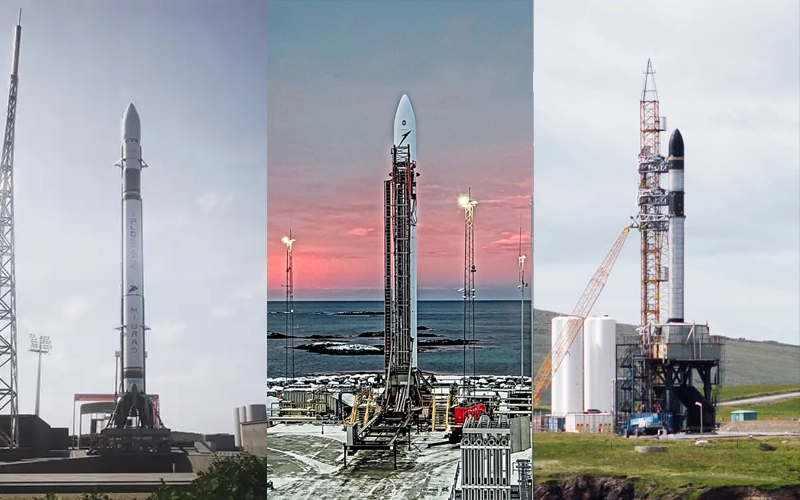
On 27 August 2026, the European Space Agency formally signed the opening contracts of its European Launcher Challenge, a programme designed to accelerate the development of commercially viable launch vehicles on the continent. The combined value of these agreements reaches €543.6 million, distributed across three companies: German-based Isar Aerospace, fellow German firm Rocket Factory Augsburg (RFA), and Spanish venture PLD Space.
Rather than straightforward grants, these contracts follow a commercial logic: ESA commits to purchasing future launch services, providing the selected companies with enough revenue visibility to attract private investment and push their respective vehicles through the final stages of development. It is a co-investment model, not a blank cheque.
MaiaSpace left out — for now
The most conspicuous absence from this first signing round is MaiaSpace, the Arianespace subsidiary developing the lightweight Maia launch vehicle. ESA stated that the contracting process with the company is "expected to resume in the coming weeks," without elaborating on the reasons for the delay. While this falls well short of a formal rejection, it introduces uncertainty around a company that has historically enjoyed strong institutional backing, particularly from France.
Within the industry, questions are already circulating. MaiaSpace benefits from the broader industrial infrastructure of ArianeGroup, giving it a manufacturing pedigree that the three selected startups are still building. Should negotiations stall beyond the timelines suggested by ESA, the development schedule for the Maia rocket — with first flights targeted toward the end of the decade — could come under pressure.
Three different bets on the same horizon
The three contract winners represent meaningfully distinct technical approaches to the small and medium launch market:
- Isar Aerospace is developing Spectrum, a two-stage liquid-propellant rocket targeting several hundred kilograms to low Earth orbit.
- Rocket Factory Augsburg is building RFA One, a modular launcher engineered for high launch cadence and rapid turnaround.
- PLD Space is advancing the Miura 5, building on experience gathered from the suborbital Miura 1 demonstration flight.
None of these three companies has yet delivered a commercial orbital mission, which underscores both the ambition and the inherent risk of this public investment. The European Launcher Challenge is, at its core, a structured wager on private innovation.
Catching up in a market that will not wait
The broader context is hard to ignore. Demand for launch services to low and medium Earth orbit is expanding rapidly, driven by the proliferation of satellite constellations for communications, Earth observation, and navigation. SpaceX continues to set the pace with the Falcon 9 and is scaling Starship for heavy-lift missions. European institutions cannot afford to rely indefinitely on non-European providers for their own scientific and governmental payloads.
The European Launcher Challenge is ESA's clearest signal yet that it intends to build an alternative — not through a single flagship rocket, but through a diversified ecosystem capable of absorbing technical setbacks and adapting to market shifts. Whether that ambition translates into operational vehicles before the competitive window narrows is the central question the coming years will answer.