A Domestic Deal With National Significance
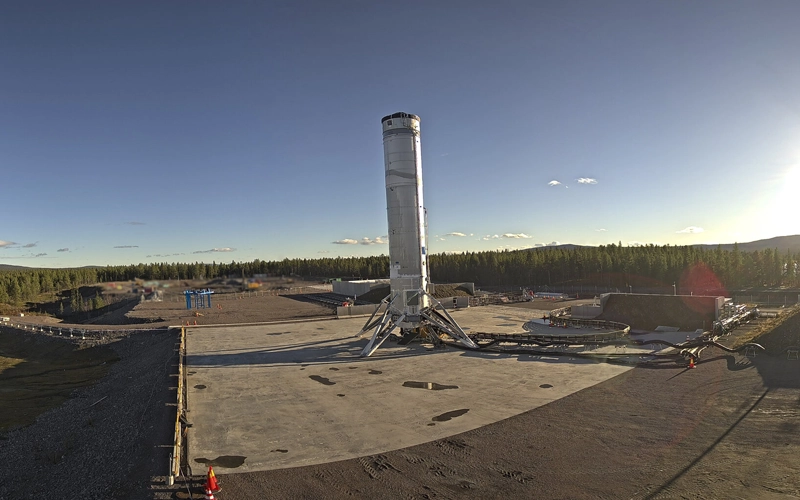
Isar Aerospace, the Munich-based launch startup developing the Spectrum light rocket, has secured a launch services agreement with Planet Germany, the local subsidiary of Earth-imaging operator Planet Labs. Under the deal, Spectrum will carry one of Planet's Pelican high-resolution optical satellites into orbit, with both companies targeting a launch window within the next twelve months.
On the surface, the contract is straightforward commercial business. Look closer, however, and its significance becomes clear. A satellite assembled in Germany will ride a German-built rocket — creating, for the first time, a fully domestic end-to-end space capability that spans design, manufacturing, and launch. For a country that has long relied on foreign rockets and foreign operators to reach orbit, that chain matters.
Planet Germany and the Weight of a €240 Million Government Contract
The backdrop to this agreement is a major institutional commitment. In July 2025, the German federal government awarded Planet Germany a multi-year contract worth €240 million. The deal grants German public agencies dedicated access to imagery from the Pelican constellation, covering use cases ranging from national security and infrastructure monitoring to environmental crisis management.
Planet Germany's existence reflects a broader trend: large Earth observation operators establishing local subsidiaries in Europe to meet the sovereignty and regulatory requirements that government customers increasingly demand. By selecting Isar Aerospace — rather than an established international provider — Planet Germany is doubling down on that local-first logic. The payload is German, the rocket is German, and the contract is anchored in German public funding.
This kind of vertically integrated, nationally rooted supply chain is precisely what European space policy has been trying to encourage, even if it has taken NewSpace startups rather than legacy industry to make it happen at this scale.
What This Means for Spectrum and the Competitive Light Launcher Market
For Isar Aerospace, the Planet Germany contract carries weight beyond its immediate commercial value. Spectrum has not yet completed its first orbital flight. The company has been working toward an inaugural launch from the Andøya Space Center in Norway, and a firm booking from a government-backed customer strengthens its position with investors and institutional partners ahead of that first attempt.
The light launcher market in Europe is becoming crowded. Rocket Lab's Electron is already operational and flying commercial missions from New Zealand and Virginia. Meanwhile, Orbex in the United Kingdom and Rocket Factory Augsburg — another German contender — are also racing toward their debut flights. In that environment, landing a customer backed by a nine-figure government contract signals that Isar Aerospace is competing for credible, anchor-tenant business rather than aspirational manifests.
The proof, of course, will come at the launch pad. The sub-twelve-month timeline is ambitious for a vehicle that has yet to reach orbit. Whether Spectrum can deliver on schedule will be the real measure of Germany's new commercial space chain — and of Isar Aerospace's place within it.