A landmark launch, possibly a final farewell for Pegasus
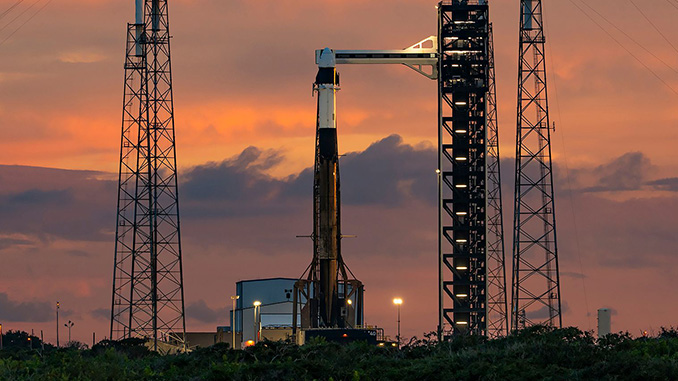
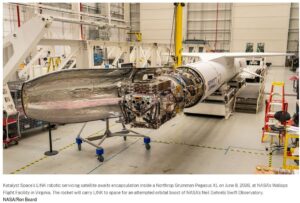
On July 3, 2026, a Northrop Grumman Pegasus-XL rocket released the LINK spacecraft — built by Katalyst Space Technologies — from its carrier aircraft high above the Pacific Ocean. Contact with LINK was confirmed shortly after separation, signaling a successful insertion into orbit. The flight may go down in history as the last ever performed by the Pegasus-XL, the world's only remaining air-launched commercial orbital rocket.
The Pegasus-XL is dropped from a modified Lockheed L-1011 aircraft known as Stargazer, igniting its solid-fuel stages mid-air to reach orbit. Originally conceived in the late 1980s, the vehicle carved out a niche deploying small satellites when few alternatives existed. Today, however, a crowded small-launcher market has made its commercial future uncertain, and this mission may mark the end of its operational chapter.
Swift: two decades of science, now in need of a lifeline
NASA's Swift observatory, launched in November 2004, was designed to detect and study gamma-ray bursts — among the most energetic transient events observed in the universe. Despite its age, the spacecraft continues to deliver scientifically relevant data to the astronomical community. The problem is orbital decay: atmospheric drag, even at Swift's altitude, has gradually pulled the telescope toward an uncontrolled reentry trajectory.
Without corrective action, Swift faces an unmanaged atmospheric reentry within a foreseeable timeframe. LINK's assignment is to perform a reboost maneuver — raising the observatory's orbit to extend its operational life by several additional years. This marks the first time a commercial on-orbit servicing vehicle has been tasked with preserving a NASA science asset already in operation.
On-orbit servicing steps into the mainstream
Katalyst Space's mission fits within a growing commercial segment that companies like Northrop Grumman, with its Mission Extension Vehicles, and Japan's Astroscale have been working to develop. LINK represents a tangible proof of concept: private industry can extend the lifespan of government scientific infrastructure already in space.
The reboost itself requires a rendezvous and docking sequence with Swift — a technically demanding operation, given that Swift was never designed to receive a servicing vehicle. Full technical details regarding the mechanical interface between the two spacecraft had not been publicly disclosed at the time of publication.
Beyond this individual mission, the broader implications deserve attention. As space agencies plan the next generation of large observatories, the Swift reboost raises a pointed question: should future telescopes be built with standardized servicing interfaces from the outset? Whatever LINK's outcome — whether it demonstrates seamless success or surfaces new engineering challenges — it will likely shape how NASA and its international partners approach the longevity of future space science assets.