Swift's orbital predicament
Since its launch in November 2004, the Neil Gehrels Swift Observatory has established itself as one of NASA's most versatile science assets. Designed primarily to detect and rapidly localize gamma-ray bursts — fleeting but extraordinarily energetic explosions that can briefly outshine entire galaxies — Swift has accumulated more than two decades of high-energy astrophysics data that researchers worldwide continue to mine. The spacecraft's instruments remain functional, but its orbit has been gradually decaying due to residual atmospheric drag at low Earth altitudes. Left uncorrected, that decay would eventually pull Swift into a destructive atmospheric reentry, ending the mission prematurely.
To prevent that outcome, Katalyst Space, a US-based commercial space company, developed LINK: a robotic servicing spacecraft purpose-built to dock with Swift and fire its thrusters to push the observatory into a higher, more stable orbit. The additional altitude would extend Swift's operational life by several years, preserving access to an instrument suite that no currently planned successor can fully replicate.
A genuine first for on-orbit servicing
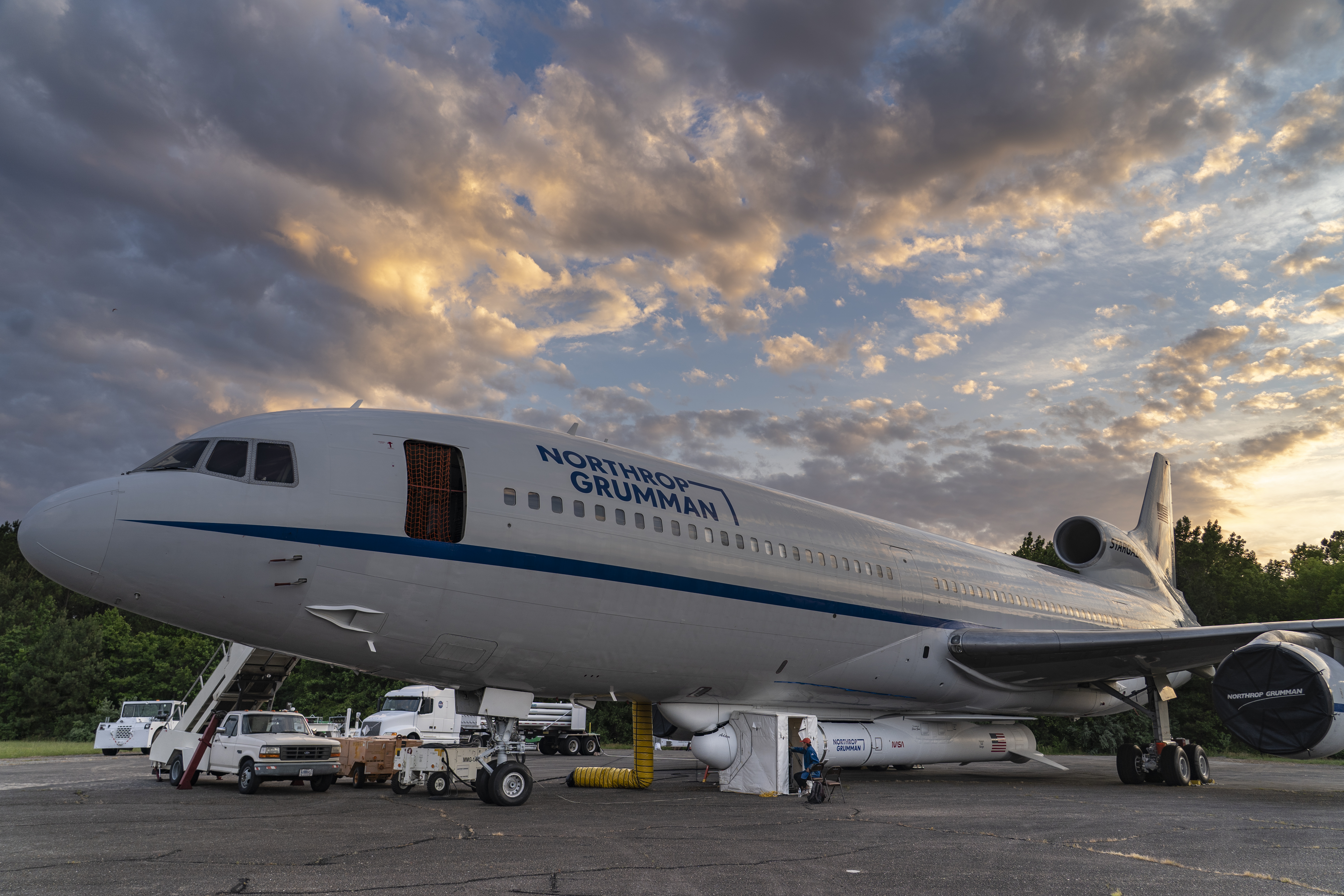
NASA describes the LINK mission as a first-of-its-kind operation, and the description holds up to scrutiny. While robotic servicing has been performed on satellites in geostationary orbit — most notably by Northrop Grumman's Mission Extension Vehicle program — conducting an active orbit-raising maneuver on a science satellite in low Earth orbit is genuinely unprecedented.
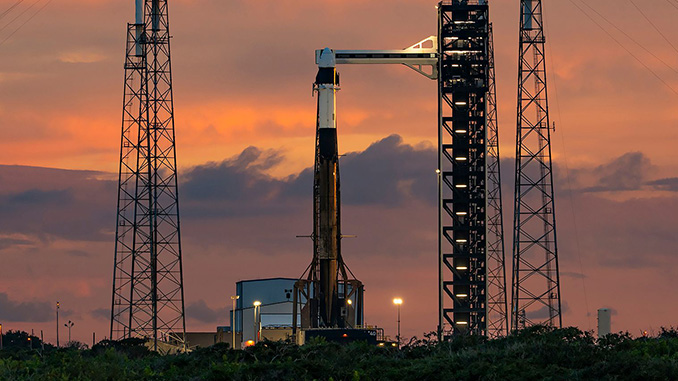
The mission is scheduled to lift off no earlier than July 2, 2026, at 5:09 a.m. EDT from Kwajalein Atoll in the Republic of the Marshall Islands, a remote Pacific launch site with a long history of supporting both military and commercial missions. Once LINK reaches orbit, it will need to perform a carefully choreographed sequence of proximity operations and rendezvous maneuvers to approach Swift — a spacecraft that was never designed with servicing in mind.
That lack of standardized docking hardware represents one of the mission's core engineering challenges. Katalyst Space had to design custom interface mechanisms capable of attaching LINK to Swift's existing structure without compromising the observatory's systems. The docking approach, the thrust profile, and the overall proximity operations must all be executed with a high degree of autonomy, as the round-trip communication delay and operational complexity rule out purely ground-directed control at every step.
Broader implications for the satellite servicing industry
The stakes of this mission extend well beyond a single telescope. Across low Earth orbit and beyond, dozens of aging satellites — scientific, commercial, and governmental — continue operating even as their propellant reserves dwindle or their orbits drift. The economic and logistical case for extending their operational lives through robotic servicing grows stronger each year, particularly as replacement costs remain high and orbital slots become increasingly congested.
If LINK successfully boosts Swift's orbit, it will provide a concrete proof of concept for a commercial servicing model applied to low-Earth-orbit science missions. That outcome would likely accelerate investment in the broader on-orbit servicing, assembly, and manufacturing sector — a market that remains nascent but has attracted sustained interest from agencies including NASA, the European Space Agency, and a growing number of private operators.
For the astrophysics community, the immediate prize is simpler to articulate: more years of Swift data, more gamma-ray burst detections, and more opportunities for multi-messenger astronomy in an era when coordinating observations across instruments and wavelengths has never been more scientifically productive. Whether LINK delivers on that promise will become clear in the days following launch.