JAXA's MMX Sets Course for the Martian System
The Martian Moons eXploration mission lifted off this week aboard an H3 rocket, marking the beginning of a five-year journey to one of the most scientifically compelling destinations in the inner solar system. Developed by JAXA in partnership with CNES, the European Space Agency, and other international contributors, MMX is designed to reach Phobos — the larger of Mars' two moons — collect surface samples, and deliver them back to Earth by 2031.
The core scientific question driving the mission is deceptively simple: where did Phobos come from? Researchers are divided between two main hypotheses. One holds that Phobos is a captured asteroid that drifted too close to Mars and became gravitationally bound. The other suggests it formed from debris thrown into orbit following a massive ancient impact on Mars itself. Analyzing at least ten grams of Phobos regolith in terrestrial laboratories could provide the hard evidence needed to settle the debate.
MMX also carries the IDEFIX rover, built by a Franco-German consortium, which will attempt to traverse the surface of Phobos under near-zero gravity conditions — a technical challenge that has no direct precedent. If successful, MMX will become the first mission ever to return samples from a moon other than Earth's own, adding a new chapter to planetary science.
SpaceX Opts Out of Military Launch Competitions
On the commercial side of the week's news, SpaceX confirmed it is stepping away from certain U.S. military launch procurement processes. With its manifest already heavily loaded by Starlink constellation deployments and a growing backlog of commercial contracts, the company appears to have concluded that competing for government military launches no longer aligns with its current operational priorities.
The decision creates tangible openings for competitors. United Launch Alliance and its Vulcan Centaur rocket stand to benefit most directly, while Blue Origin's New Glenn — still ramping up its launch cadence — could also gain ground in the national security segment. The classified launch market remains highly competitive, but the exit of the dominant commercial player changes the calculus considerably for procurement officials and rival providers alike.
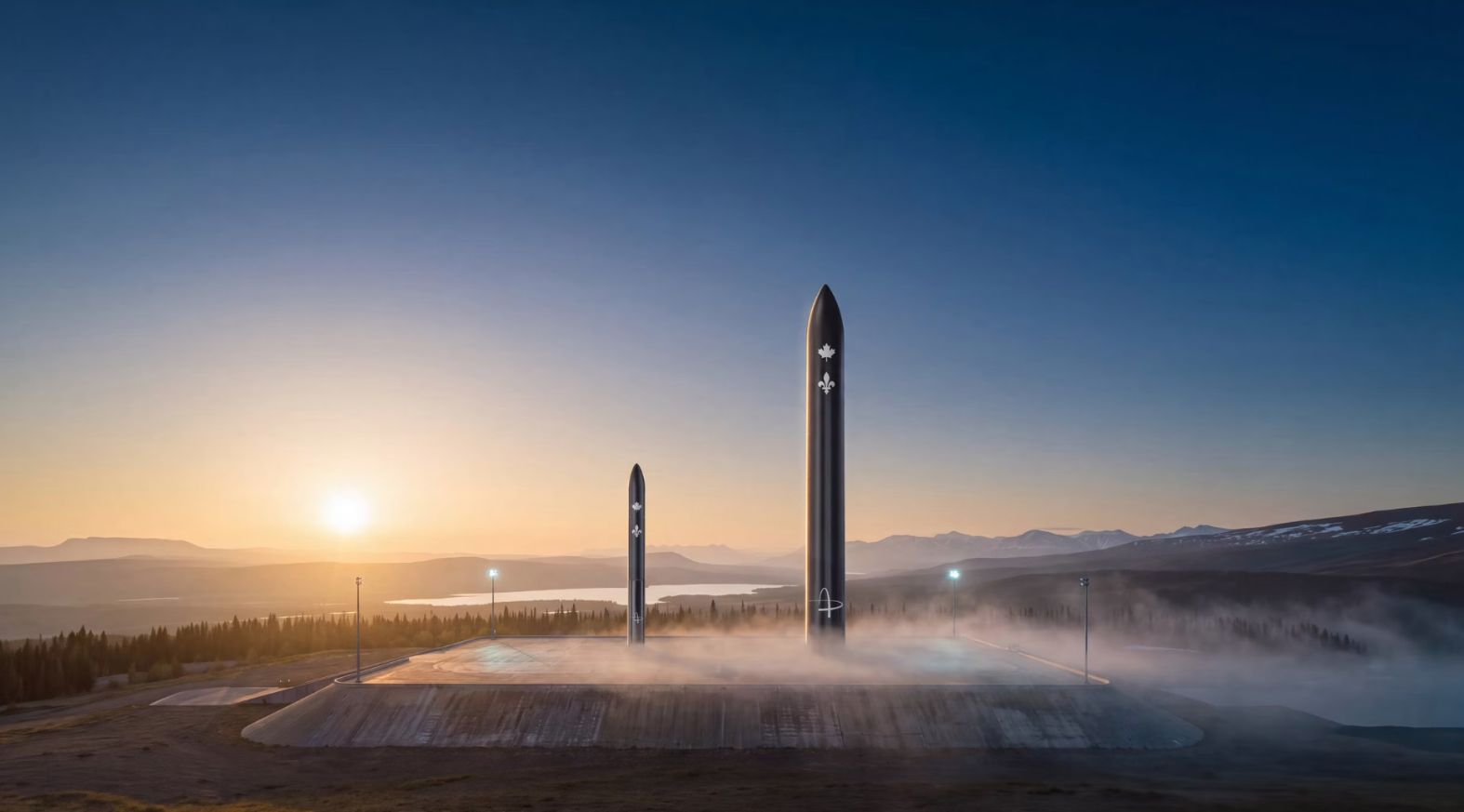
Separately, the week also brought renewed attention to Canada's aspirations for sovereign orbital access. Several Canadian NewSpace companies reiterated their intent to build domestic launch capability, with one consortium putting it plainly: Canada should reach orbit on its own terms. Whether through homegrown vehicles or strategic partnerships with established players like Rocket Lab, the push for national launch independence is gaining political and industrial momentum.
Two Stories, One Underlying Shift
Taken together, the MMX launch and SpaceX's market repositioning reflect a broader structural evolution in the space industry. Established agencies are doubling down on high-complexity science missions that private companies have little incentive to pursue, while commercial operators increasingly prioritize high-volume, high-margin segments over institutional contracts.
For mid-sized spacefaring nations, the pressure to carve out a distinct role is mounting. The window for building meaningful launch sovereignty is narrowing as the largest players consolidate their positions. The competition ahead is as much about strategy and economics as it is about engineering.