Within days of each other, NASA showcased two of its most ambitious ground-based preparation efforts: the conclusion of a year-long Mars habitat analog in Texas, and the unveiling of a lunar landing simulator in California's Silicon Valley. Though separated by geography and mission target, both programs share a core purpose — reducing the unknowns that stand between current capabilities and the crewed missions NASA is planning beyond low Earth orbit.
A Year Inside a Martian Bubble
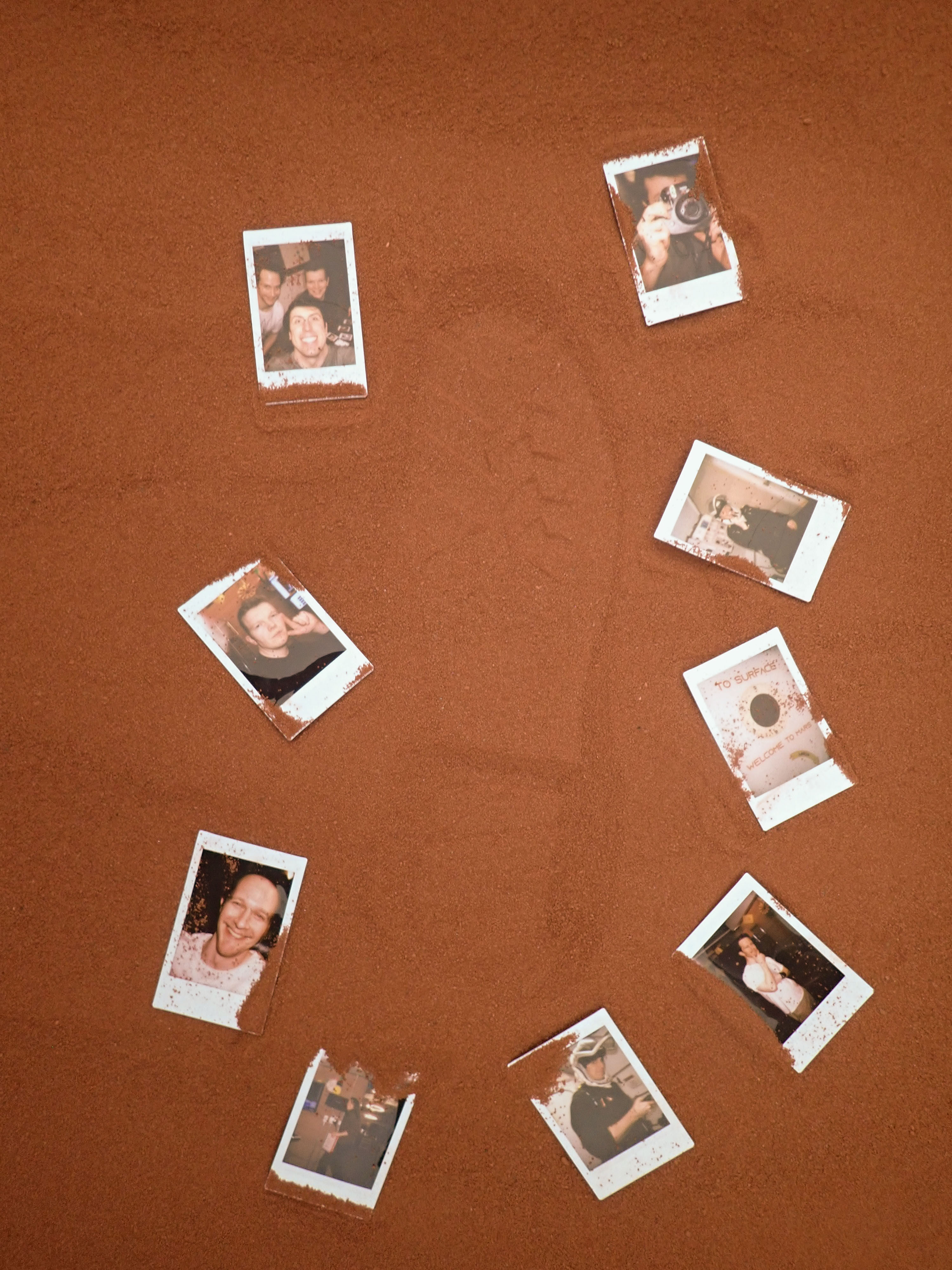
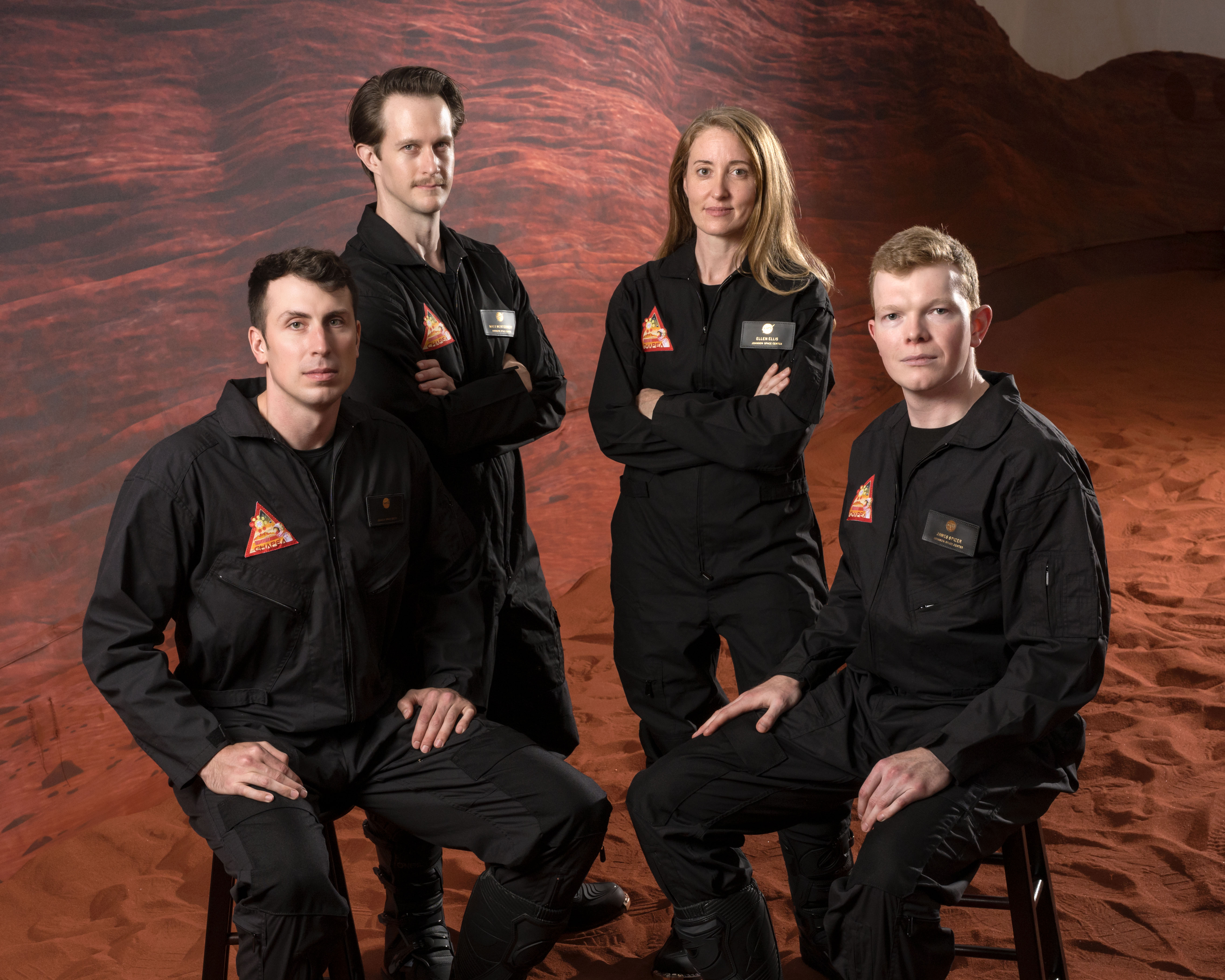
On October 31, four volunteers stepped out of Mars Dune Alpha, a purpose-built habitat located at NASA's Johnson Space Center in Houston, after spending 378 continuous days inside. Throughout their stay, the crew operated under conditions designed to mirror a real Mars mission: enforced communication delays, constrained resources, and excursions into a simulated outdoor environment conducted in full analog spacesuits.
The exercise was the second mission under NASA's CHAPEA program (Crew Health and Performance Exploration Analog). The primary goal was to gather detailed physiological and psychological data on how people respond to long-duration confinement combined with operational autonomy — precisely the conditions future Mars-bound astronauts will face during a transit that could stretch across many months.
The collected data will be analyzed over the coming months. NASA intends to use the findings to refine crew selection criteria, develop better protocols for managing stress in enclosed environments, and optimize daily scheduling aboard future deep-space vehicles. Whether and how these results feed directly into mission planning will depend on the pace of the agency's broader Mars architecture work.
Simulating the Final Meters Above the Moon
At NASA's Ames Research Center, situated on the edge of San Francisco Bay, a new lunar landing simulator was introduced to media on October 29 and 30. The facility is designed to recreate the most demanding phase of any lunar descent: the terminal approach, where altitude is low, terrain is uneven, and there is little margin for correction.
The need for such a tool is directly tied to the Artemis program. Landing crews near the lunar south pole — where water ice deposits represent a strategic resource — requires extreme precision on terrain that no human has previously navigated. NASA is working alongside commercial partners including SpaceX and Blue Origin, whose human landing systems are slated for upcoming Artemis missions, making validated simulation environments all the more critical for joint training and system certification.
Ames has long been a center of expertise in flight simulation and aerodynamics. Its role in lunar landing preparation reflects the increasingly distributed nature of the Artemis effort, drawing on specialized capabilities from multiple NASA centers simultaneously.
The Strategic Case for Earth-Based Testing
Taken together, these two programs embody a principle that runs through NASA's human spaceflight philosophy: the safest place to discover a problem is on the ground. Whether it's a crew dynamic that breaks down under pressure, a medical condition exacerbated by isolation, or a landing approach that proves harder than modeled, simulation offers a controlled environment in which failure is instructive rather than fatal.
With the Artemis schedule continuing to evolve and crewed Mars missions still years away at minimum, NASA is using this window to build a rigorous empirical foundation. Each simulation, each dataset, and each training session brings the agency incrementally closer to the point where sending humans to the Moon and eventually Mars becomes not just an ambition, but an executable plan.