A week that redefines 'busy' for the launch industry
The week of October 20, 2026 is shaping up as one of the most congested orbital calendars of the year. Nine rockets are scheduled to fly from four separate launch regions: the California coast, Florida, Rocket Lab's Māhia Peninsula site in New Zealand, and the Tanegashima Space Center in Japan. That kind of density — geographically spread, institutionally diverse — would have been striking just five years ago. Today it is increasingly a reflection of how the industry actually operates.
SpaceX accounts for the largest share of planned flights, as it has for several years running. But the presence of other operators across multiple continents gives the week a character that goes beyond any single company's cadence. Commercial rideshares, national flagship missions, and small-sat dedicated flights are all on the manifest simultaneously, offering a compressed view of where the launch market stands heading into the final quarter of 2026.
SpaceX's Starlink machine keeps turning
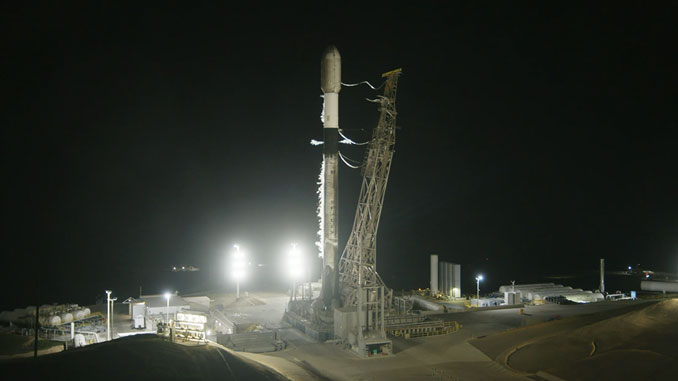
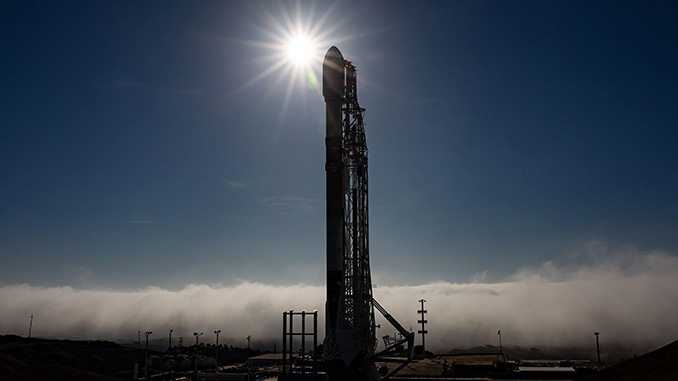
Among the most closely watched missions of the week is a Falcon 9 carrying 27 Starlink satellites, scheduled to lift off from Space Launch Complex 4E at Vandenberg Space Force Base in California. The planned liftoff time was 4:10 p.m. Pacific Daylight Time, or 2310 UTC. Recovery of the rocket's first-stage booster on an autonomous drone ship in the Pacific was planned, as is standard for Starlink missions of this type.
The timing carried added weight: the launch was scheduled just hours after SpaceX disclosed its second-quarter financial results as a publicly traded company. The juxtaposition of an earnings report and a routine production launch is itself telling — SpaceX now operates on two tracks simultaneously, as both a high-frequency industrial launcher and a corporation subject to the disclosure obligations of public markets. Whether those two roles will always sit comfortably together remains an open question.
H3 and Electron: international programs under the spotlight
Two other vehicles on the week's schedule carry particular significance beyond their individual payloads. Japan's H3 rocket, developed jointly by JAXA and Mitsubishi Heavy Industries after a protracted qualification process, is scheduled to fly from Tanegashima. Each H3 mission remains closely watched: the vehicle's demonstrated reliability is a strategic priority for Japan as it works to reduce dependence on foreign launch providers for its own government satellites. Early results have been encouraging, but the program has not yet accumulated the flight history to be considered fully mature.
Rocket Lab's Electron, meanwhile, is on the manifest for another launch from New Zealand. The company has steadily established itself as the most active dedicated small-launch operator outside the SpaceX ecosystem, and its ability to sustain a meaningful cadence from an isolated Pacific site is a genuine operational achievement in a segment where many competitors have struggled to reach comparable tempo.
What a week like this ultimately signals is something the industry is beginning to grapple with in practical terms: orbital slot coordination, airspace deconfliction, and ground infrastructure are quietly becoming bottlenecks as launch frequency continues to climb. The October 20 week may look like an outlier now. By 2030, it could look ordinary.