New concrete on the Space Coast
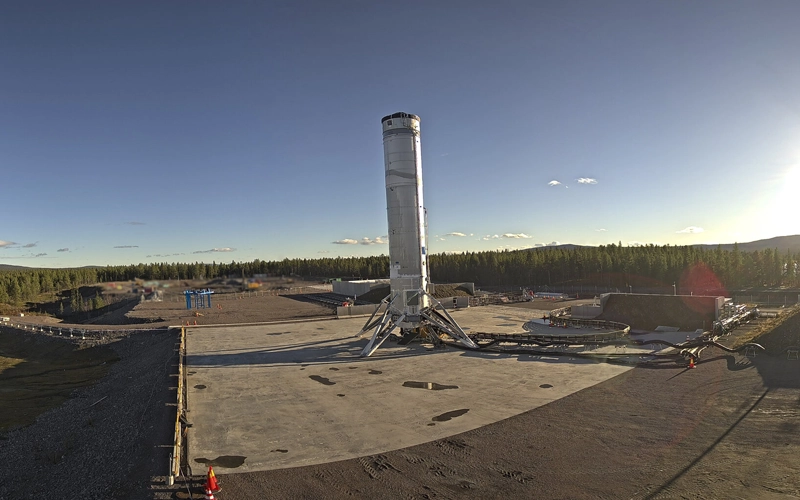
Florida's Space Coast has long been synonymous with rocket launches, but the current wave of construction underway at Cape Canaveral signals something beyond business as usual. Two companies — Stoke Space and Relativity Space — are actively building dedicated launch pads, adding fresh chapters to a coastline already reshaped by SpaceX and United Launch Alliance over the past decade.
Stoke Space, headquartered in Kent, Washington, is developing what it describes as a fully reusable two-stage launch vehicle. Unlike most competitors that focus reusability efforts on the first stage alone, Stoke is pursuing a second stage designed to return and fly again as well. The company's visible progress at Cape Canaveral suggests its Florida infrastructure is being laid in anticipation of orbital attempts, though an official launch timeline has not been confirmed.
Relativity Space has undergone a significant strategic transformation in recent years. Following the cancellation of its small Terran 1 rocket — which completed one test flight in 2023 without reaching orbit — the Los Angeles-based company pivoted entirely to Terran R, a medium-lift fully reusable vehicle. Pad construction activity at the Cape reinforces that this development program is moving forward at a meaningful pace, even as the first flight remains on an unspecified schedule.
The Space Force opens the door to new launch providers
Beyond the hardware developments on the ground, Relativity Space received significant institutional recognition this week. The US Space Force announced the addition of both Relativity Space and Impulse Space to the NSSL Phase 3 Lane 1 program — the National Security Space Launch initiative managed by Space Systems Command.
Lane 1 of the NSSL Phase 3 structure is specifically designed to bring newer launch providers into the national security ecosystem before their vehicles reach full operational status. The rationale is straightforward: the US government wants to reduce its dependence on a concentrated pool of contractors and cultivate a broader, more competitive market for sensitive government payloads. At present, the bulk of high-priority national security launches flow through SpaceX and ULA.
Impulse Space, founded by former SpaceX CTO Tom Mueller, enters the program in a distinct role. The company focuses on orbital transfer vehicles and upper-stage propulsion systems rather than primary launch, positioning itself as a flexible mobility layer within a broader launch architecture. Its inclusion alongside Relativity underscores that the Space Force is looking at the full chain of orbital delivery, not just the rocket lifting off from the pad.
Milestones on paper and steel — but flights still ahead
Taken together, these developments paint an optimistic picture for the next generation of American launch providers. Institutional validation from the Space Force, combined with tangible construction activity at one of the world's most storied launch sites, represents genuine forward momentum.
That said, neither Stoke Space nor Relativity Space has yet reached orbit. Launch pads under construction are infrastructure investments, not operational capabilities. The commercial space sector has seen more than once that the gap between an active construction site and a successful inaugural flight can stretch far longer than initial timelines suggest. For Relativity, the next meaningful indicators will come from Terran R engine testing and vehicle assembly progress. For Stoke, ongoing propulsion tests in Washington State remain the most reliable gauge of how close the company truly is to orbital flight. Both stories are worth watching closely in the months ahead.