Tenth launch for Synspective's radar constellation
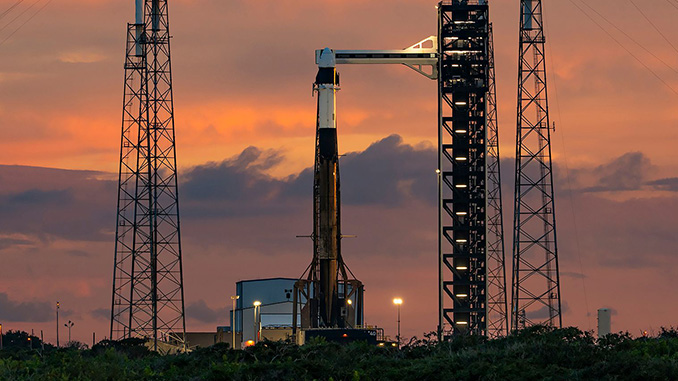
On June 26, 2026, Rocket Lab successfully delivered the tenth satellite for Japanese Earth-observation company Synspective, continuing a commercial relationship that has become one of the most consistent in the small launch market. The mission had been pushed back to accommodate a responsive space operation — a short-notice, high-priority launch inserted ahead of scheduled flights — a scheduling flexibility that underscores Rocket Lab's ability to serve time-critical institutional customers without disrupting its broader manifest.
Synspective's StriX satellites use synthetic aperture radar (SAR) technology, which enables surface imaging regardless of lighting conditions or cloud cover. The data gathered supports a range of applications including urban infrastructure monitoring, land subsidence analysis, and disaster risk assessment. Reaching ten satellites in orbit or launched marks a meaningful threshold for the company as it works to build out a commercially viable constellation.
NASA selects Electron for three science launches in 2027
One day before the Synspective mission, on June 25, Rocket Lab announced that NASA had selected the company to carry two science missions across three Electron rockets, with launches scheduled for 2027. Full details on the nature of the science payloads have not yet been disclosed, but the award fits within NASA's broader strategy of engaging commercial small launch providers to reduce costs and increase scheduling options for smaller-class missions.
For Rocket Lab, landing a multi-launch NASA contract reinforces the Electron's standing as a credible government-grade vehicle. With a payload capacity of roughly 300 kilograms to low Earth orbit, the rocket is not designed to compete with medium or heavy-lift systems. Its value proposition lies elsewhere: dedicated, rapid access to orbit for small satellites that cannot wait for a rideshare opportunity or that carry instruments too sensitive for shared-fairing missions.
Building a track record on two fronts
Taken together, these two developments paint a coherent picture of Rocket Lab's current trajectory. On one side, a growing base of repeat commercial customers in the Asia-Pacific region, anchored by Synspective. On the other, deepening ties with U.S. government agencies, with NASA now joining the Department of Defense as an institutional buyer of Electron launches.
The company is simultaneously pressing ahead with the development of Neutron, its larger reusable rocket aimed at heavier payloads and potential crewed missions further down the line. But in the near term, Electron remains the engine of the business — financially and reputationally. In a segment where launch cadence and schedule reliability are often more decisive than raw performance, Rocket Lab's operational consistency continues to set a benchmark that newer entrants in the small launch market have yet to match.