Building the ranks of a lean but growing service
Six years after its creation as the sixth branch of the U.S. armed forces, the Space Force remains by far the smallest in uniform. That is set to change. Chief of Space Operations General Brad Saltzman has confirmed the service is on track to roughly double its active-duty personnel by 2030. From its current headcount of around 9,400 Guardians, the force is projected to grow to more than 19,000 within the decade — a transformation that would reshape its operational footprint significantly.
Saltzman was candid about the friction points in that expansion. Growth is not simply a matter of issuing more enlistment contracts. Training pipelines and the pace at which new operational units can be stood up and certified represent genuine bottlenecks. Space Force specialties — orbital surveillance, satellite command and control, space-domain cyber operations — require extended, highly technical preparation. Scaling that infrastructure takes time, and Saltzman's remarks suggest the service is managing expectations accordingly.
A 2027 mission to prove orbital logistics are possible
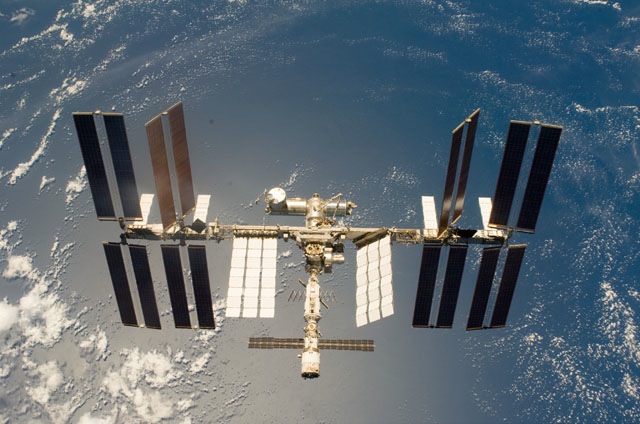
On the technology side, the Space Force is setting its sights on a milestone that could rewrite the economics and strategy of military space operations. The USSF-23 mission, currently targeted for 2027, will place vehicles into geostationary orbit — roughly 36,000 kilometers above the equator — to demonstrate two capabilities the U.S. military does not yet field operationally: in-space refueling and satellite servicing.
The implications are considerable. A military satellite that can be refueled on orbit can remain functional far beyond its original design life, reducing the frequency and cost of replacement launches. Servicing capabilities, meanwhile, would allow hardware to be repaired or reconfigured without deorbit — something that is currently impossible for assets parked at geostationary altitude.
These are not purely theoretical advantages. Both China and Russia have been advancing their own on-orbit servicing programs, some of which Western analysts assess as having potential offensive applications — the ability to approach, interfere with, or disable adversary satellites. The USSF-23 demonstration therefore carries both a logistical and a deterrence dimension.
Two data points, one coherent strategic direction
Read together, the personnel expansion and the orbital servicing roadmap reflect a deliberate effort to build a Space Force that can sustain itself and operate with greater autonomy in an increasingly congested and contested orbital environment. More Guardians means more staffed operational units. Refueling and servicing capabilities mean assets that last longer and are harder to render permanently inoperable.
The financial details behind these plans have not been fully disclosed publicly, and timelines in military acquisition have a history of slipping. Still, the direction of travel is clear. The Space Force is moving beyond its original posture as a satellite management service and positioning itself as a branch capable of projecting and sustaining power in orbit — not just watching from below.