A launch rate that has reset industry expectations
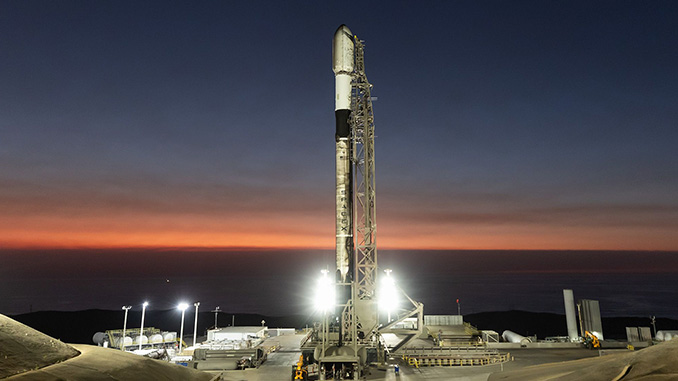
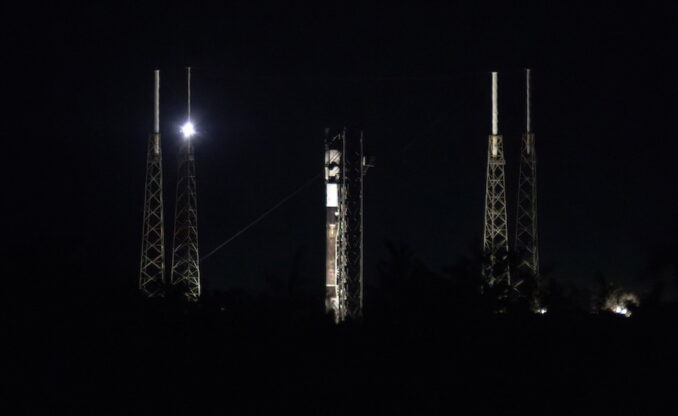
Late August 2026 delivered two landmark moments for SpaceX in rapid succession. On August 21, the Starlink 15-20 mission lifted off from Pad 4 East at Vandenberg Space Force Base at 7:25 a.m. UTC, clocking in as the company's 99th Falcon 9 launch of the year. Three days later, on August 24, the Starlink 10-49 mission departed from Pad 40 at Cape Canaveral Space Force Station at 9:33 a.m. UTC — the 100th orbital launch SpaceX had conducted in 2026 alone.
One hundred orbital launches before September: a figure that would have seemed implausible a decade ago. In the early 2010s, all the world's launch providers combined struggled to reach that number over a full calendar year. SpaceX has now made it a late-summer benchmark for a single company operating a single rocket family.
One booster, 37 flights — and counting
The volume of launches is only part of the story. The Starlink 10-49 mission drew particular attention because of the booster assigned to it: a Falcon 9 first stage completing its 37th flight, a new absolute record for any orbital-class reusable rocket. The milestone eclipses every previous SpaceX record and reinforces the proposition that a well-maintained Falcon 9 booster can be flown far more often than the aerospace industry once thought conceivable.
Each additional flight on the same hardware yields engineering data of real value — stress cycles on the Merlin engines, thermal fatigue on the aluminum-lithium tank structures, wear on the grid fins and landing legs. SpaceX has not disclosed any formal flight-count ceiling for its boosters, but the steady upward progression of records suggests the company has not yet identified a hard limit.
Starlink as the engine behind the numbers
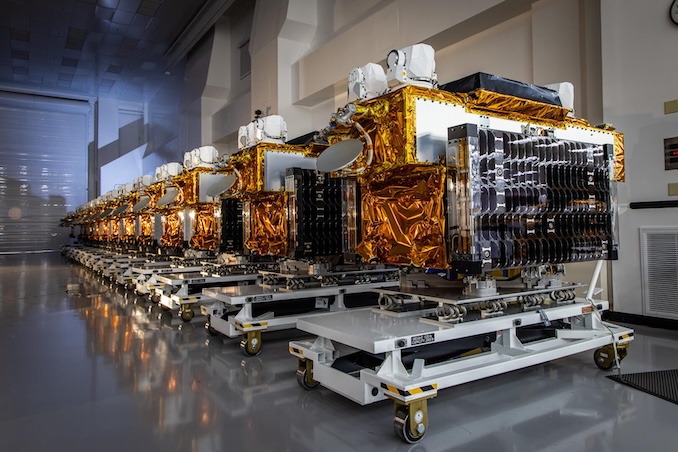
Both missions — Starlink 15-20 and Starlink 10-49 — belong to the same commercial logic: the continuous deployment and replacement of satellites for SpaceX's own broadband mega-constellation, which now operates thousands of active spacecraft in low Earth orbit. It is this captive manifest, where the launch provider and the satellite operator are the same entity, that gives SpaceX a structural advantage none of its competitors can easily replicate.
Rocket Lab's Electron, Arianespace's Ariane 6, ISRO's LVM3, and JAXA's H3 all serve genuine market needs, but none approaches anything near SpaceX's cadence. The economic flywheel is self-reinforcing: Starlink revenue funds launcher development, high flight rates reduce per-launch costs, and lower costs make additional Starlink missions more economical.
As 2026 moves into its final quarter, the more consequential question may not be whether SpaceX will close the year at 120 or 130 launches, but what the long-term implications of such concentrated launch capacity — held by a single private actor — mean for the broader geopolitical and commercial balance of the global space industry.