A flyby that has never been repeated
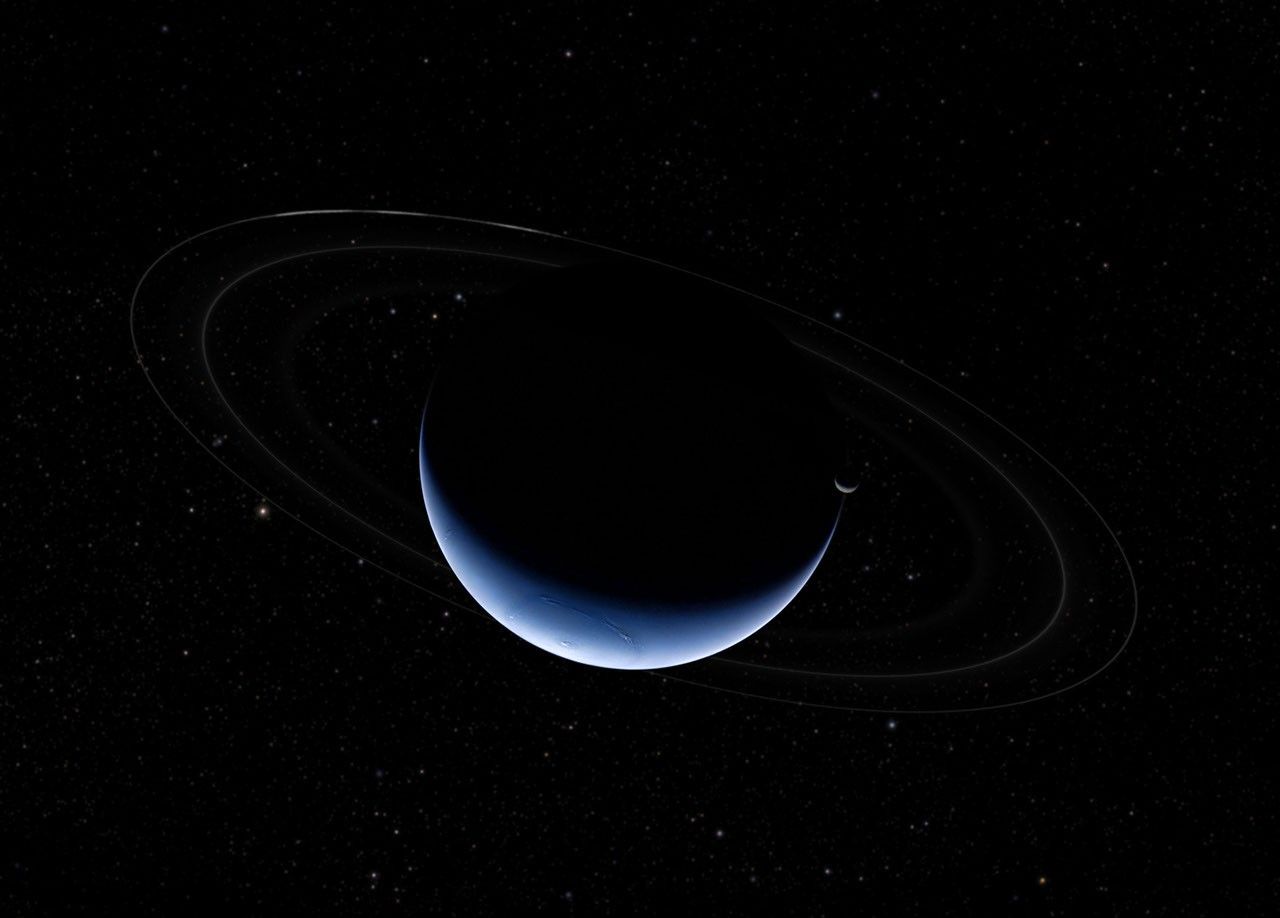
On November 20 and 21, 2026, NASA's Astronomy Picture of the Day program ran two consecutive features connected to the Voyager mission — one titled V-G-R, referencing the broader Voyager program and an event dated to November 17, and one dedicated specifically to Voyager's view of Neptune. The pairing was no coincidence: few missions in the history of deep-space exploration carry the same weight as Voyager 2's brief encounter with the solar system's outermost planet.
Voyager 2 was launched by NASA in August 1977 and flew past Neptune on August 25, 1989, skimming roughly 4,900 kilometers above the planet's cloud tops. That single pass, lasting only a matter of hours in terms of close-proximity data collection, generated virtually everything planetary scientists know from direct observation about Neptune. No spacecraft has returned since.
What those images still tell us
The November 21 APOD image offers a portrait of Neptune that, even by modern standards, carries remarkable scientific weight. The Great Dark Spot — a storm system roughly the size of Earth — is clearly resolved, as are the planet's banded atmospheric structure and the high-altitude methane clouds that scatter blue wavelengths and give Neptune its distinctive deep azure color. The atmospheric dynamics visible in that image were considered surprisingly complex for a planet receiving so little solar energy.
The November 20 feature, labeled V-G-R, appears to commemorate a specific milestone within the Voyager program's timeline, though the precise details referenced remain incomplete based on available summaries. NASA routinely uses APOD as a vehicle for marking anniversaries that might otherwise pass unnoticed outside specialist circles.
Both Voyager probes remain operational. Voyager 2 is now more than 20 billion kilometers from the Sun, transmitting data from interstellar space, with its plasma science instrument still returning readings. Voyager 1, the most distant human-made object, has traveled even further — approximately 24 billion kilometers from the Sun.
When will another spacecraft reach Neptune?
The absence of any follow-up mission to Neptune is one of the more debated gaps in planetary exploration planning. Both NASA and ESA have studied ice giant mission concepts over the past two decades. The 2022 Planetary Science Decadal Survey, produced by the U.S. planetary science community, ranked an orbital mission to Uranus as the field's top priority for the coming decade, with a Neptune orbiter placed further down the roadmap.
What that timeline means in practice is straightforward: no funded, confirmed mission to Neptune currently exists. The ice giant remains, in planetary science terms, one of the least explored large bodies in the solar system — known primarily through the data returned during a few hours of a flyby that took place before many of today's researchers were born.
The two APOD features serve as a quiet reminder that our portrait of Neptune is still essentially a single photograph taken at speed, by a spacecraft designed with 1970s technology. The next chapter has yet to be written.