A day of sharp contrasts on Florida's Space Coast
May 29, 2026 will be remembered as one of Cape Canaveral Space Force Station's most eventful days in recent memory — not because everything went right, but precisely because it did not. Within the span of a single day, two orbital missions proceeded smoothly while a third company absorbed the kind of setback that can reshape a program's trajectory entirely.
SpaceX opened the day early, lifting off from Launch Complex 40 at 8:03 a.m. EDT with 29 Starlink broadband satellites aboard a Falcon 9 rocket. Designated Starlink 10-53, the mission marked the 49th dedicated Starlink launch of 2026 — a figure that underscores just how relentlessly SpaceX continues to expand its low Earth orbit internet constellation. The flight appeared to proceed nominally, adding another layer to a network that already numbers in the thousands of satellites.
Atlas 5 carries Amazon's Kuiper satellites on a penultimate flight
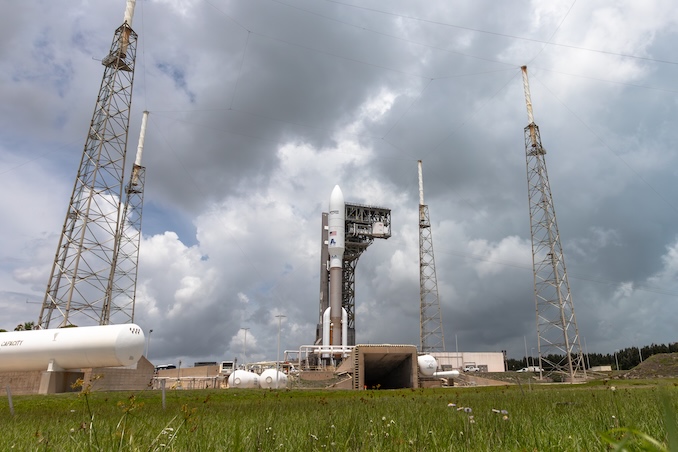
As evening settled over the Florida coast, United Launch Alliance took its turn at Launch Complex 41. The Leo Atlas 07 mission, with a window opening at 7:33 p.m. EDT (2333 UTC), carried 29 Project Kuiper satellites for Amazon into low Earth orbit aboard an Atlas 5 rocket.
The flight carries historical weight beyond its payload manifest. It represents the second-to-last launch Amazon has contracted on the Atlas 5, a vehicle that is nearing the end of its operational life as ULA transitions its commercial business to the newer Vulcan Centaur. For a rocket that has served as a workhorse of American launch capability for over two decades, its final missions are quietly marking the close of an era — even as the satellites it delivers are designed to compete directly with the Starlink network launched just hours earlier from the adjacent pad.
New Glenn destroyed in pad explosion: a serious blow for Blue Origin
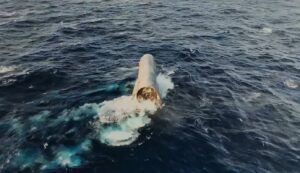
The most consequential development of this 48-hour window, however, was not a launch at all. On May 28, Blue Origin's New Glenn rocket was destroyed when an explosion tore through the vehicle during a static fire test at its Cape Canaveral launch pad. Static fire tests — ground-level engine burns conducted while the rocket remains secured to the pad — are a standard qualification step, but they carry inherent risk when propellant and ignition are involved.
The explosion did not merely destroy the rocket itself. It caused extensive damage to the launch pad infrastructure, raising serious questions about how long the facility will be out of service. As of publication, Blue Origin had not released a detailed damage assessment or provided a timeline for pad repairs and the resumption of flight operations.
The timing is particularly difficult for Jeff Bezos's space company. New Glenn completed its debut orbital flight in early 2025 and has been working to establish a reliable commercial cadence ever since. A vehicle lost during ground testing — rather than in flight — points to potential issues within the qualification and testing process itself, and will almost certainly push Blue Origin's 2026 launch schedule into uncertainty.
The NewSpace sector in one afternoon
Taken together, these events offer a clear-eyed snapshot of where commercial spaceflight stands today. The high-frequency, near-routine cadence that SpaceX has normalized coexists with the persistent technical hazards that still confront newer entrants, regardless of their funding levels or ambitions. Cape Canaveral in late May 2026 was, simultaneously, a demonstration of how far the industry has come — and a reminder of how much further some players still need to go.