A dedicated pad on Canada's Atlantic coast
On 7 July 2026, Munich-based Isar Aerospace announced it had signed a $112.5 million agreement with Maritime Launch Services, the operator behind Spaceport Nova Scotia located in Canso, on Canada's eastern seaboard. Under the terms of the deal, Maritime Launch Services will provide a fully licensed launch facility, ground support infrastructure, and associated operational services tailored specifically to Isar's Spectrum rocket.
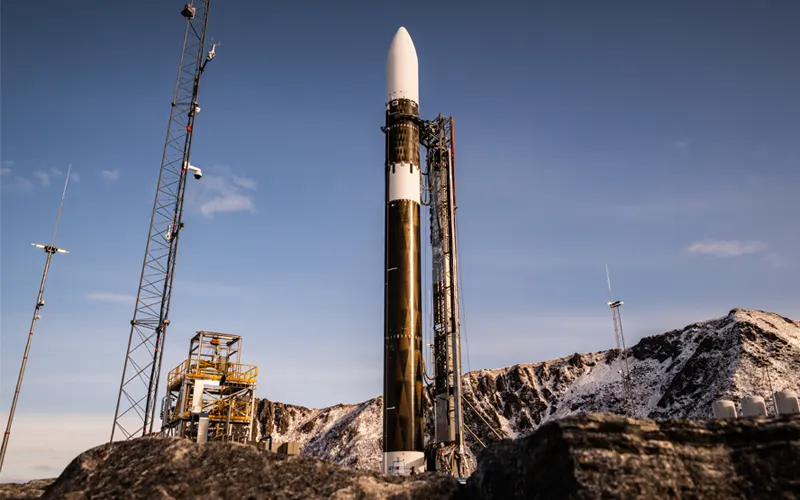
Spectrum is a medium-lift orbital vehicle designed to carry payloads of up to approximately 1,000 kilograms to low Earth orbit. The rocket has not yet completed an orbital test flight, and its development programme remains ongoing. If the schedule holds, the first launch from Nova Scotia is targeted for 2028, primarily serving satellite constellation operators and European institutional customers.
For Maritime Launch Services, the agreement marks a significant milestone. The company has spent years developing Spaceport Nova Scotia while seeking an anchor customer with a credible launch roadmap. Isar Aerospace's commitment could now catalyse further investment in the site's ground infrastructure.
Defence contracts and orbital ambitions intertwined
What sets this deal apart from a standard commercial arrangement is its diplomatic backdrop. Multiple reports indicate that the agreement is connected to a separate German-Canadian defence transaction involving the sale of submarines to the Canadian Navy. While the two contracts are not formally bundled, the broader political relationship between Berlin and Ottawa appears to have been a meaningful factor in bringing the space agreement to a close.
The interplay between defence procurement and commercial space access is not new, but it underscores a growing trend: orbital launch capacity is increasingly treated as a strategic asset in bilateral negotiations, not merely a commercial service. For Canada, welcoming a European NewSpace company reinforces the country's ambition to become a meaningful player in the commercial launch market, an objective it has pursued with limited success so far.
Building a multi-site launch strategy
Isar Aerospace's pursuit of a Canadian launch pad reflects a deliberate effort to diversify its operational footprint. The company has previously discussed using the Andøya Space launch complex in Norway for early Spectrum flights. A Nova Scotia site would offer access to distinct orbital inclinations, including polar and sun-synchronous orbits that are particularly attractive to small satellite operators.
The competitive context is demanding. Isar operates in a market that includes established players like Rocket Lab and SpaceX, as well as fellow European newcomers such as Rocket Factory Augsburg. Differentiating through geographic flexibility — offering multiple launch sites across the North Atlantic — could prove to be a meaningful commercial argument.
That said, significant milestones remain ahead. Spectrum must still complete its qualification campaign and demonstrate orbital capability before any commercial launches can take place. Whether the 2028 timeline proves achievable will depend on technical progress that has yet to be made public in detail. The Nova Scotia agreement signals confidence; the rocket still has to deliver on it.