Expedition 73 crews celebrated at Space Center Houston
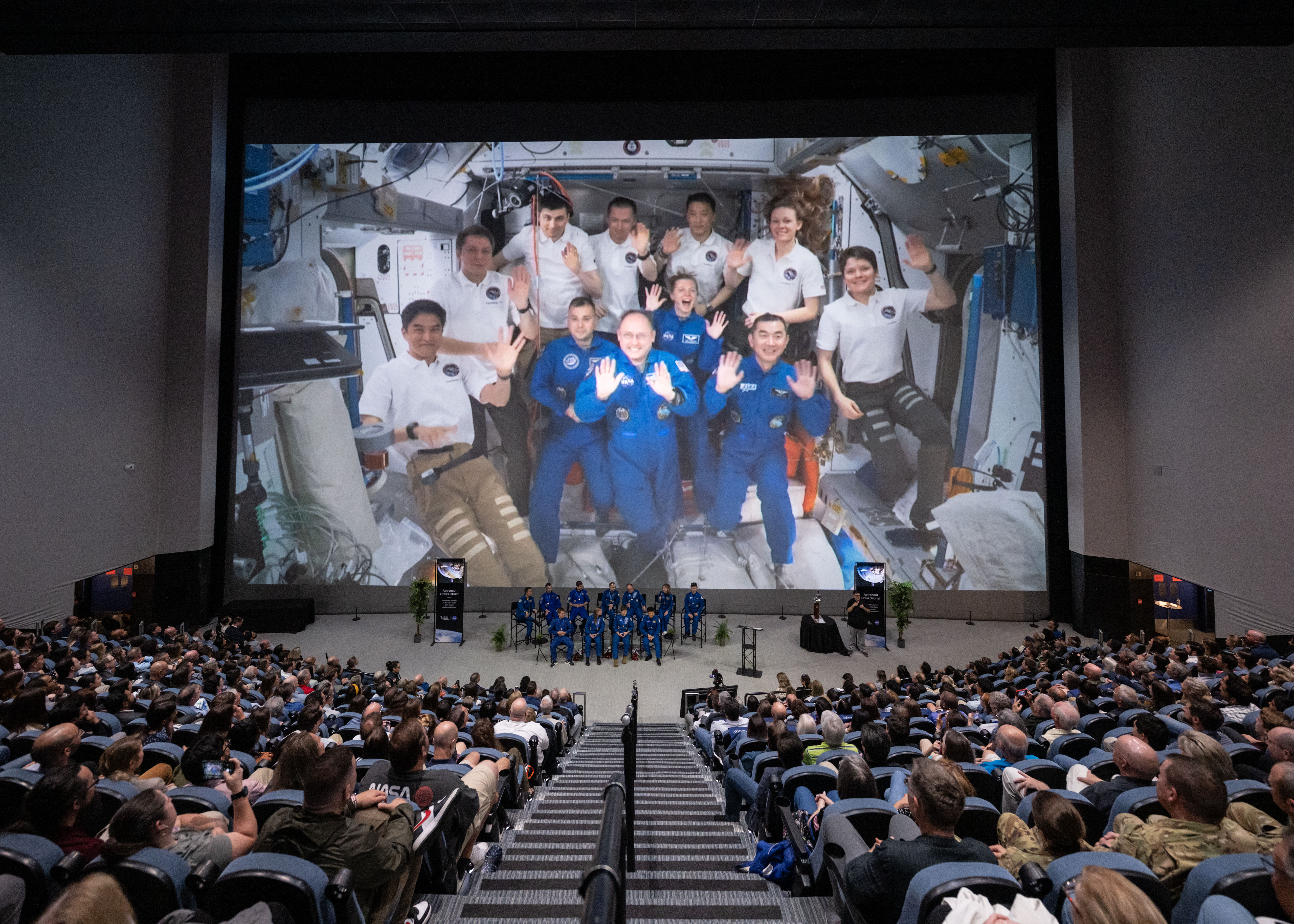
On June 16, 2026, Space Center Houston hosted a welcome-home ceremony bringing together crew members from three missions that had shared time aboard the International Space Station: NASA's SpaceX Crew-10, Soyuz MS-27, and NASA's SpaceX Crew-11. Astronauts and cosmonauts took the stage to reflect on their time in low Earth orbit, roughly 400 kilometres above the surface, and to speak candidly about the daily realities of conducting science in microgravity.
One recurring theme throughout the event was the acknowledgment of ground-based teams — flight controllers, engineers, flight surgeons and logistics specialists — whose work is rarely front and center in public coverage but whose contribution is considered inseparable from mission success. Public ceremonies of this kind also serve a broader purpose: keeping the human dimension of spaceflight visible to audiences beyond the space community.
Expedition 73 encompassed research across multiple disciplines, including fluid physics, cell biology, Earth observation and human health in space. Much of that data will take years to fully analyze, feeding into research programs run jointly by NASA, ESA, Roscosmos, JAXA and the Canadian Space Agency.
SMILE arrives at its operational orbit
On June 25, 2026, the European Space Agency confirmed that the SMILE spacecraft — short for Solar wind Magnetosphere Ionosphere Link Explorer — had successfully reached its science orbit. Developed as a joint mission between ESA and the Chinese Academy of Sciences (CAS), SMILE is designed to study how the solar wind interacts with Earth's magnetosphere and ionosphere simultaneously, a coupling that drives phenomena ranging from auroral displays to geomagnetic storms.
Reaching the operational orbit is a critical programmatic threshold. Only from this point can the onboard instruments begin acquiring data under the precise conditions the mission was designed for. SMILE carries two primary sensors: an ultrasoft X-ray imager and an ultraviolet aurora imager. Together, they will provide global-scale views of magnetopause dynamics and auroral oval structures in near-real time — observations that have not been achievable with previous instrumentation at this spatial coverage.
The practical stakes are significant. A clearer understanding of solar wind-magnetosphere coupling can improve forecasting models for geomagnetic disturbances, which pose measurable risks to satellite operations, power infrastructure and high-frequency radio communications on the ground.
Multilateral cooperation as a structural constant
Though separated in nature and scope, both developments share a common foundation: neither would exist without sustained international cooperation. The ISS program has embodied that principle for over two decades, binding NASA, ESA, Roscosmos, JAXA and the CSA into an operational partnership with no direct precedent in the history of exploration. SMILE represents a newer model — a tightly scoped bilateral scientific collaboration between European and Chinese institutions.
At a moment when geopolitical pressures are reshaping some space partnerships, the ability to maintain joint scientific programs carries its own significance. Whether in low Earth orbit or deep in the magnetosphere, cooperative science continues to follow its own logic, one driven by shared questions rather than divided interests.