A Commercial Lander Earns Its Stripes for the Moon
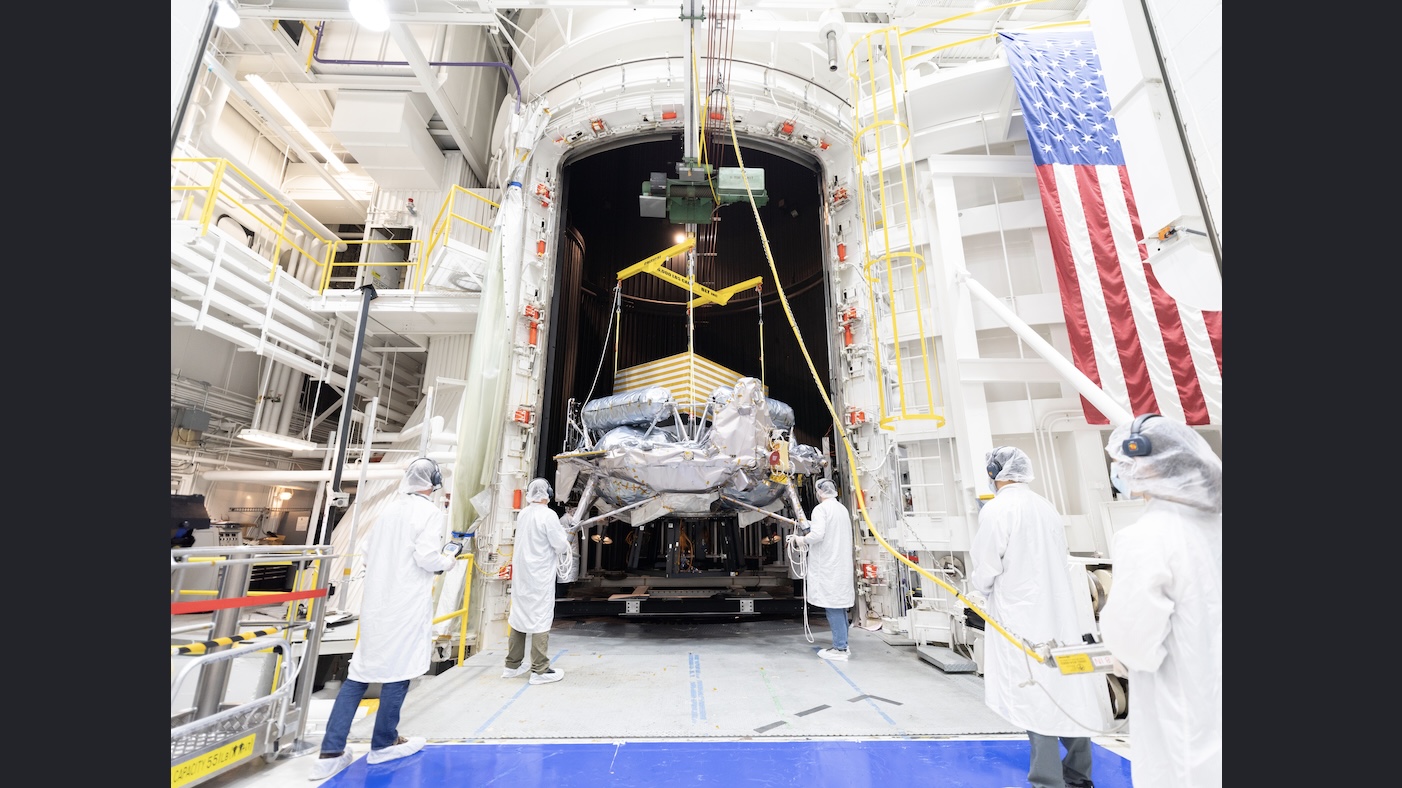
At NASA's Jet Propulsion Laboratory in Southern California, engineers have put a lander built by Voyager Technologies through a demanding qualification campaign. The hardware is intended to support Moon Base, the agency's long-term initiative to establish humanity's first permanent outpost on the lunar surface — a goal that sits at the heart of NASA's broader return-to-the-Moon strategy.
The test sequence was designed to replicate the harshest conditions the vehicle will face from launch to touchdown. The lander was subjected to thermal-vacuum cycling — alternating between the extreme cold of shadowed space and the heat of direct sunlight — as well as the sustained vibrations generated by a rocket ascent. Passing these trials is a prerequisite, not a milestone to celebrate prematurely: it confirms that the structure and its subsystems can withstand real mission stresses without failing at a critical moment.
Voyager Technologies is participating in NASA's CLPS (Commercial Lunar Payload Services) programme, through which the agency contracts private companies to ferry scientific instruments and technology demonstrators to the Moon. The model is designed to drive down costs and increase mission frequency while nurturing a commercially viable cislunar economy.
Rosalind Franklin Rehearses Its First Martian Steps
On the other side of the Atlantic, the European Space Agency was conducting tests of a different but equally consequential kind. The focus: making sure the Rosalind Franklin rover can actually leave the lander that will carry it to the Martian surface — a step that is easy to overlook but technically unforgiving.
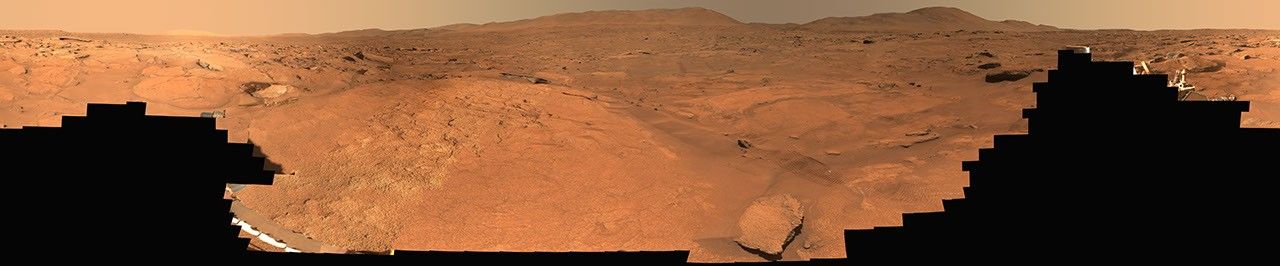
Developed under the ExoMars programme, Rosalind Franklin is equipped with a drill designed to reach beneath the Martian surface in search of potential biosignatures — chemical or structural evidence that life may once have existed on the planet. But none of that science happens unless the rover successfully navigates from its stowed position aboard the lander to the ground below.
The egress sequence involves deploying ramps, managing the rover's six-wheel drive system across an uneven and unpredictable surface, and running through a series of safety checks to confirm stable contact before the vehicle commits to moving. Recent tests focused on validating this choreography under representative conditions, examining ramp kinematics, mobility system responses, and the associated control protocols. Every variable that can be eliminated on Earth is one less risk on Mars.
Two Timelines Converging on Their Respective Destinations
The near-simultaneous nature of these two test campaigns reflects how crowded the planetary exploration agenda has become. NASA is leaning on American commercial operators to lay the groundwork for sustained human presence on the Moon, while ESA is methodically ticking off qualification milestones for one of the most scientifically ambitious robotic missions currently in development.
Neither vehicle has left Earth yet, and both programmes still face the long list of reviews and verifications that precede any launch authorization. What this week's results do signal, however, is that both missions are advancing through the phases where the hardware proves itself — or reveals where more work is needed.
In spaceflight, the distance between a successful test and a successful mission remains considerable. But successful tests are how that distance begins to close.