The Starship That Came Back From the Ocean
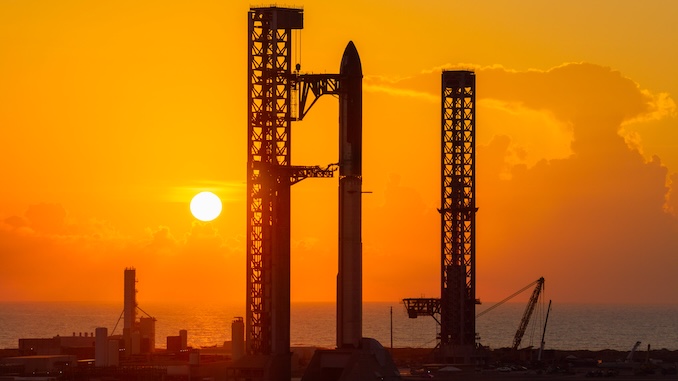
Ship 40, the upper stage of SpaceX's Starship vehicle flown during Integrated Flight Test 13 in the summer, has made its way back to Starbase, the company's launch facility in Boca Chica, Texas. What makes this particular vehicle remarkable — and historically singular within the Starship program — is that it became the first and, to date, only upper stage to endure atmospheric re-entry and survive an ocean splashdown, in this case in the Indian Ocean. Nothing in the planned flight profile had anticipated such an outcome.
In every previous test flight, Starship's upper stage had been lost either during the descent phase or on water impact. Ship 40's partial survival — intact enough to be recovered and transported back to the launch site — hands SpaceX engineers something genuinely rare: a physical artifact bearing the scars of a full re-entry sequence. Thermal tile condition, structural deformation patterns, and the state of onboard systems after prolonged seawater exposure all become readable data points that simulations alone cannot replicate.
What the Hardware Can Teach
Returning Ship 40 to Starbase is not about refurbishment or relaunch — at least not in any near-term sense. The primary value lies in forensic inspection. Engineers can now examine firsthand how the stainless steel structure responded to peak heating, how the heat shield tiles held up across the vehicle's surface, and whether any systems showed unexpected resilience or failure modes under real flight conditions.
SpaceX has not released a formal statement on findings from this inspection campaign, which is consistent with the company's generally guarded public communications on ongoing engineering work. What is clear is that the decision to ship the vehicle back rather than leave it on-site abroad reflects a deliberate and methodical approach — one that treats every flight outcome, including unplanned ones, as raw engineering input.
Ship 42 Heads Back Out for More Structural Testing
While Ship 40 was making its way home, activity at Starbase continued at pace. Ship 42, the upper stage designated for Integrated Flight Test 15, was transported to the Massey's test site for an additional round of cryo-proof testing. This procedure involves pressurizing the vehicle's propellant tanks with cryogenic fluid — typically liquid nitrogen — to validate structural integrity and seal performance under the thermal and mechanical stresses that closely approximate actual propellant loading conditions.
The fact that Ship 42 returned for a second cryo-proof campaign points either to anomalies detected during the first round or to design modifications that required fresh validation. Either way, the iterative approach signals a more measured pace compared to SpaceX's earlier development cycles, a shift that likely reflects the growing weight of external commitments — including NASA's requirements under the Artemis Human Landing System contract, for which Starship is the selected vehicle.
No official launch window for IFT-15 has been announced by SpaceX as of this writing. With Ship 40 now under examination at Starbase and Ship 42 still working through its qualification campaign, the timeline for the next flight remains open. What the program has already demonstrated, however, is that even unplanned outcomes can become engineering milestones.