Our galaxy may be bigger than we thought
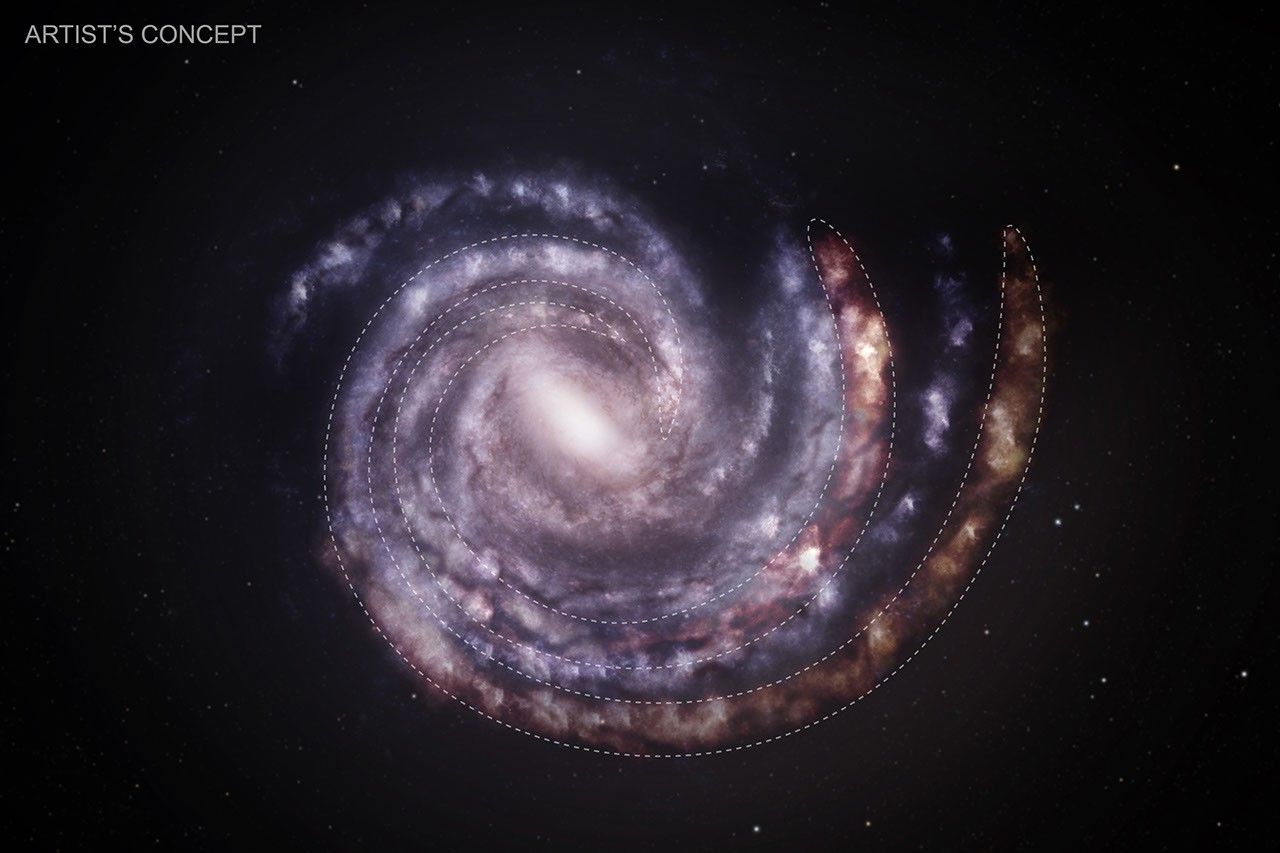
Mapping the Milky Way from the inside has always been one of astronomy's most stubborn challenges. Unlike distant galaxies we can observe in their entirety, our own home system must be charted from a vantage point embedded within it — a bit like trying to survey a forest while standing among the trees. New results from NASA's Chandra X-ray Observatory are now adding a fresh complication: the galaxy's outer spiral arms appear to extend farther out than existing models have accounted for.
A team of astronomers reached this conclusion by making careful distance measurements to dust clouds located in the outermost regions of the Milky Way. Chandra's sensitivity to X-ray emission from hot gas associated with these structures allowed researchers to pin down locations with greater confidence than optical or radio observations alone would permit. The preliminary findings suggest that current three-dimensional maps of our galaxy may need to be redrawn, at least along their outermost edges.
The implications could ripple through several areas of galactic research. The total extent of the stellar disk, the precise geometry of spiral arm placement, and estimates of overall galactic mass are all parameters that feed into broader models of how the Milky Way formed and evolved. As the scientific community scrutinizes these results, further confirmation will determine how significant the required revisions actually are.
Four cosmic portraits for a national milestone
On a more celebratory note, NASA timed a separate Chandra release to coincide with the 250th anniversary of the United States, marked on July 4, 2026. Four images of deep-sky objects — including supernova remnants and stellar nurseries — were processed and rendered using red, white and blue color palettes drawn from the American flag.
The choice of colors is not arbitrary from a data standpoint. In multi-wavelength astronomy, color assignments correspond to specific energy bands or intensity levels, and the images released were constructed from genuine X-ray, optical and infrared observations collected by Chandra and partner observatories. The patriotic palette was layered over scientifically grounded representations rather than applied to fabricated visuals.
Alongside the images, NASA published three new sonifications — translations of astronomical datasets into audible sound. Pixel brightness, spatial position and spectral properties are each mapped onto musical parameters such as pitch, volume and instrument timbre. The technique has become an increasingly prominent tool for making space science accessible to blind and visually impaired audiences, while also offering sighted listeners an unconventional way to experience the data.
An aging observatory still at the frontier
Both announcements serve as a reminder that Chandra, deployed from the Space Shuttle Columbia in July 1999, continues to produce scientifically meaningful results more than a quarter century after launch. Its highly elongated orbit places it well above Earth's radiation belts for the majority of each orbital period, enabling long, uninterrupted observing runs that shorter-orbit satellites cannot match.
The observatory's future, however, remains uncertain. NASA has faced recurring budget pressures in recent years, and Chandra has appeared on lists of potential missions subject to reduced funding, though no formal decision to curtail operations has been publicly announced. The astrophysics community has repeatedly emphasized that no currently operational X-ray telescope matches Chandra's angular resolution, making any gap in coverage a genuine scientific concern.
Whether probing the outer limits of our own galaxy or converting X-ray data into sound and color, Chandra's dual output this week illustrates a point that often gets lost in budget debates: flagship observatories rarely deliver just one kind of value.