A historic debut for a new rocket
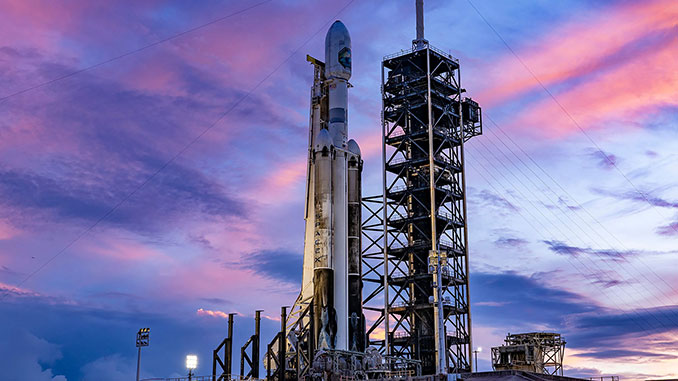
In the early hours of Friday, China launched its Long March 10B rocket and pulled off what only one country had managed before: a successful recovery of the orbital booster's first stage. The milestone makes the People's Republic of China the second nation in history to demonstrate this capability, following SpaceX, which first landed a Falcon 9 first stage back in December 2015 and has since turned the practice into industrial routine.
The Long March 10B is developed by the China Aerospace Science and Technology Corporation, or CASC, the state-owned enterprise that sits at the heart of China's institutional space program. Unlike earlier Chinese launchers built around purely expendable architectures, the 10B was designed from the ground up with reusability in mind — a sign that Beijing is no longer content to observe from a distance as SpaceX rewrites the economics of orbital access.
Why reusability changes everything
The financial logic behind landing and refurbishing a first stage is straightforward. Propulsion hardware accounts for the bulk of a rocket's total cost — estimates generally range between 60 and 70 percent depending on the vehicle. Recovering that hardware, inspecting it, certifying it fit for flight, and relaunching it can dramatically lower the cost per kilogram delivered to orbit. SpaceX leveraged precisely this model to undercut established competitors including Arianespace, Roscosmos, and United Launch Alliance, reshaping the global commercial launch market in the process.
China has long fielded capable expendable rockets, but the pace of change is now accelerating. Several Chinese private launch companies — among them LandSpace and Space Pioneer — have been testing booster recovery on smaller vehicles for a few years. Friday's flight by CASC adds institutional weight and industrial scale to that broader momentum.
The harder question, however, is one of cadence and reliability. SpaceX spent years converting a single successful landing into a repeatable, high-frequency operation with refurbished boosters. CASC will need to demonstrate that this first recovery is the beginning of a dependable program rather than a one-off demonstration.
A geopolitical signal as much as a technical one
The flight does not exist in a vacuum. China has set out an ambitious agenda for the coming decade: a crewed lunar landing before 2030, rapid deployment of low-Earth-orbit mega-constellations, and a push to capture a larger share of the international commercial launch market. Mastering reusability is central to each of those goals, both for cost reduction and as a statement of technological credibility.
For Europe, the implications are worth examining carefully. Ariane 6, which entered service in 2024, was not designed with first-stage recovery in mind. The European Space Agency and Arianespace are pursuing reusability research through the Themis demonstrator program, but concrete timelines remain elusive. As both the United States and China push forward on reusable systems, Europe's room to maneuver on launch pricing is narrowing.
Long March 10B has flown once. But in the history of rocketry, first flights that succeed tend to matter far beyond the day they happen.