A packed week on the launch manifest
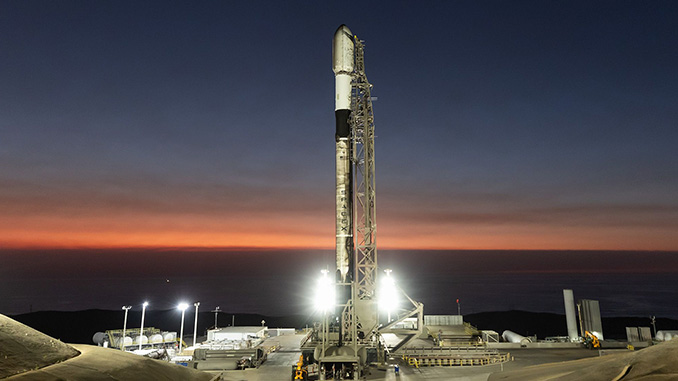
The first half of July 2026 is shaping up to be one of the busier stretches on the international launch calendar. Six orbital missions are scheduled across different continents, combining the reliability of proven rockets with the tension that only an inaugural flight can generate. SpaceX is expected to carry out three separate Falcon 9 missions during the period, a pace that has become almost unremarkable for the Hawthorne-based company — a testament to how thoroughly it has industrialized access to low Earth orbit.
Yet the story of the week lies elsewhere, with two rockets making their operational debuts: one in China, one in India. Both represent different chapters in the ongoing reshaping of the global launch industry.
Long March 10B: China expands its heavy-lift family
The CNSA and its industrial partners are preparing the maiden flight of the Long March 10B, a derivative of the Long March 10 heavy-lift vehicle originally developed with China's lunar ambitions at its core. This specific variant features a configuration optimized for Earth orbit missions, potentially positioning it as a versatile workhorse for upcoming national space programs and constellation deployments.
Any rocket's first flight carries inherent risk. Simulation models and ground testing, however thorough, cannot fully anticipate in-flight conditions. The Long March family has accumulated a strong performance record over the decades, which provides a reasonable foundation — but no guarantee — for this new variant's debut. Engineers at CNSA will be watching every telemetry stream closely.
Vikram-I: India's private sector reaches for orbit
On the Indian side, startup Skyroot Aerospace is preparing to launch its Vikram-I rocket for the first time. The Hyderabad-based company, founded in 2018, is among the leading ventures in India's emerging commercial space sector — an ecosystem that has grown significantly since the government opened the launch market to private capital in 2020, with ISRO acting as both regulator and technical partner.
Vikram-I is designed to carry small payloads to low Earth orbit, targeting the fast-growing market for lightweight commercial satellites. For Skyroot, this is the critical step from demonstration to genuine commercial operation. The company already reached space in November 2022 with Vikram-S, a suborbital test vehicle that made history as the first privately built Indian rocket to cross the Kármán line. But achieving stable orbit is a fundamentally different challenge — and a much higher commercial bar.
If successful, the Vikram-I flight would validate India's private launch ecosystem in a concrete way and could encourage further investment in the sector ahead of a competitive international small-sat market.
A snapshot of where the space industry stands in 2026
Taken together, these six launches offer a revealing cross-section of today's orbital landscape. SpaceX continues to set the operational tempo. China is systematically broadening its launcher portfolio, moving beyond a few flagship vehicles toward a diverse family covering multiple payload classes. And India's commercial space sector, still young, is pushing toward the orbital milestone that transforms a startup into a genuine launch provider.
The outcomes of this week's debut missions — for the Long March 10B and Vikram-I in particular — will provide the kind of real-world data that no ground test can substitute. CosmosRocket will follow each flight and report on the results as they come in.