MTG-I2: Completing Europe's Next-Generation Weather Eyes
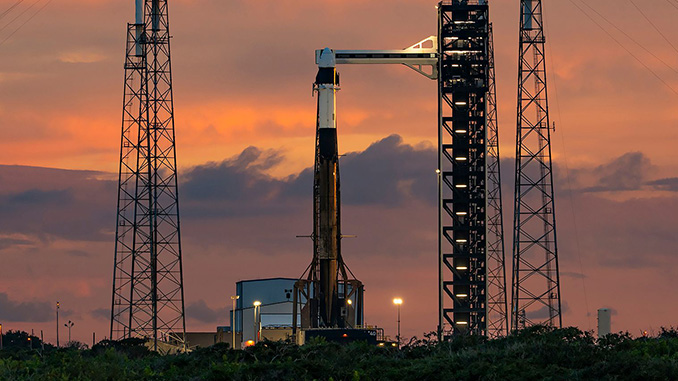
On 27 August 2026, an Ariane 6 rocket is scheduled to lift off from the Guiana Space Centre in Kourou, French Guiana, carrying the MTG-I2 satellite into geostationary orbit. Designated flight VA270, the mission will deliver the second imaging satellite in the Meteosat Third Generation family — and in doing so, close the loop on the first MTG constellation developed jointly by ESA and Eumetsat.
MTG-I2 joins its predecessor MTG-I1, which has already been operational in orbit. Working in tandem, the two imagers will provide high-resolution atmospheric data over Europe and northern Africa, with spectral and temporal capabilities that significantly outperform the previous Meteosat series. Forecasters are expected to benefit most when tracking rapidly evolving convective systems — the kind of fast-forming storms that can catch earlier satellite generations off guard.
For Arianespace, the launch carries industrial weight as well. VA270 reinforces Ariane 6's position as a reliable vehicle for high-value institutional payloads, at a time when the global launch market has become markedly more competitive.
Sophie Adenot Steps Outside — Again
While MTG-I2 awaits its ride to orbit on the ground, ESA's Sophie Adenot has been making history from 400 kilometers up. On 25 August, she conducted her second extravehicular activity — EVA-98 — aboard the International Space Station, just one week after completing EVA-97 on 18 August.
Performing two spacewalks within such a short interval is operationally demanding and relatively uncommon. ESA has not publicly detailed the full technical objectives of either EVA, but activities of this nature typically involve station maintenance, hardware replacement, or the installation of external equipment on the ISS truss structure.
For Adenot, selected as part of ESA's 2022 astronaut class, these back-to-back excursions represent a significant career milestone. Repeated EVA qualification requires months of underwater training at facilities like NASA's Neutral Buoyancy Laboratory, rigorous suit checks, and real-time coordination with mission controllers at both NASA's Johnson Space Center and ESA's European Astronaut Centre in Cologne.
A Window Into Europe's Broader Space Strategy
Taken together, these events are not simply a coincidence of scheduling. They reflect a deliberate and sustained effort by European institutions to assert autonomy across multiple space disciplines simultaneously — Earth observation infrastructure, independent launch capability, and crewed spaceflight.
ESA's decision to livestream the MTG-I2 launch on ESA WebTV also signals an increasing emphasis on public engagement, a trend common to most major space agencies today. At a moment when SpaceX, ISRO, JAXA, and CNSA are each advancing rapidly on their own fronts, visibility has become a strategic asset as much as a communications choice.
Whether measured in satellite data quality, launch reliability, or astronaut milestones, late August 2026 offers a clear snapshot of where European space capability now stands — and where it is heading.