Launch Window: October 2026
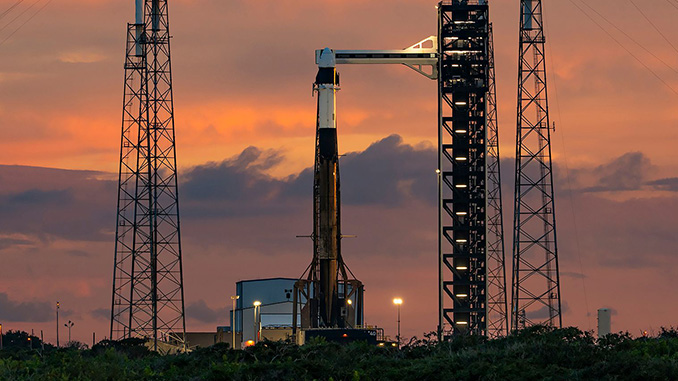
The Japanese space agency JAXA has confirmed a launch date of 19 October 2026 for its Martian Moons eXploration (MMX) mission. Liftoff from the Tanegashima Space Center is scheduled at 04:41 local time on 20 October — 21:41 Central European Time on the evening of 19 October. The vehicle carrying MMX into space will be Japan's H3 rocket, which has been progressively establishing its operational track record over recent years as the country's primary medium-to-heavy launch platform.
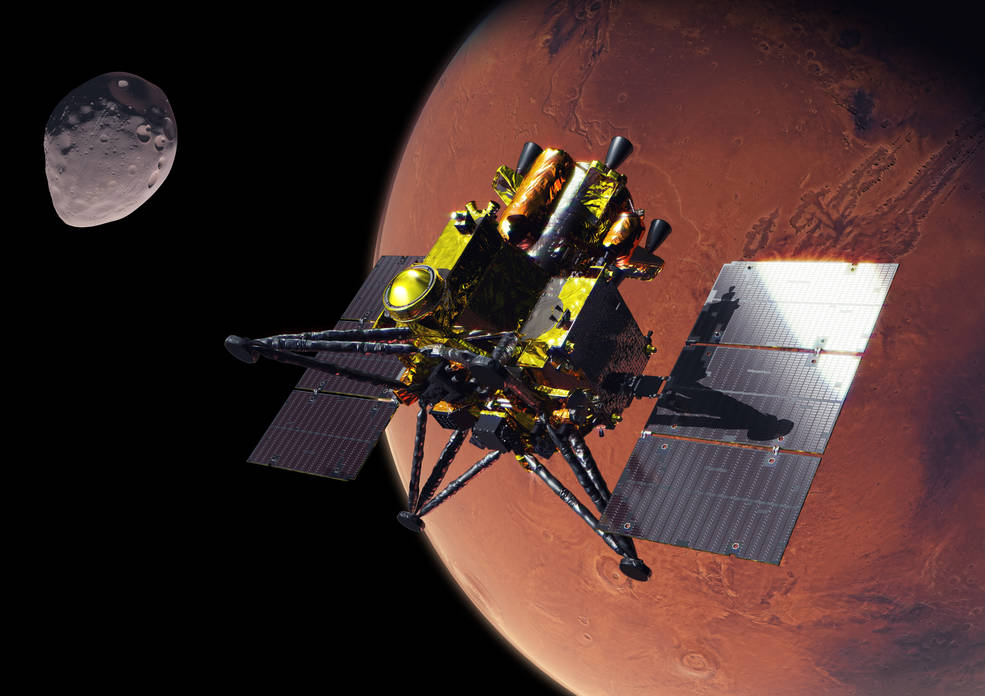
The mission's destination is not Mars itself, but one of its two small moons: Phobos. Roughly 22 kilometres across at its widest point, this irregularly shaped, dark-surfaced body orbits Mars at an altitude of just under 6,000 kilometres. Scientists remain divided on its origins — was it a captured asteroid, or a fragment ejected from Mars during a massive ancient impact? MMX has been designed, in part, to settle that question.
Phobos Sample Return: A First in Planetary Science
The centrepiece of MMX is a sample collection and return sequence. The spacecraft is designed to land on Phobos, gather at least ten grams of surface regolith, and seal the material inside a return capsule. If the mission runs on schedule, that capsule should reach Earth around 2031 — marking the first time that material from a Martian moon has been delivered to terrestrial laboratories for analysis.
The precedent set by Hayabusa2 looms large here. JAXA's earlier probe returned material from asteroid Ryugu in December 2020, demonstrating that sample collection in microgravity environments is operationally feasible. MMX builds on that experience while confronting a more demanding challenge: a longer interplanetary cruise, a more complex gravitational environment around Mars, and a significantly larger mission scope.
International Collaboration at the Core
MMX is structured as a multinational effort. The European Space Agency (ESA) has contributed scientific instruments to the mission, and NASA has provided additional expertise and hardware. France's CNES, along with several research laboratories, has played a role in instrument development, reinforcing Europe's scientific stake in the mission's outcomes.
This cooperative model has become something of a standard for deep-space science missions: no single agency commands the full technical and financial resources needed to execute such programmes independently. By pooling capabilities, participating space agencies also distribute risk — a practical consideration when dealing with a mission that must function flawlessly for nearly a decade from design to sample return.
A Broader Scientific Programme
Beyond the sample return, MMX carries a suite of instruments designed to map Phobos in detail, characterise its mineralogical composition, and monitor the Martian orbital environment over an extended period. The spacecraft's trajectory will also bring it into proximity with Deimos, Mars's second moon, enabling observational opportunities that no dedicated mission has yet exploited.
Assuming a successful October 2026 departure, MMX will spend several months in transit before entering Mars orbit in 2027. From there, the real work begins: orbital surveys, landing site selection, surface operations, and ultimately the departure for Earth. There are no guarantees at this stage, but the scientific community has been waiting for a mission of this kind for decades. The launch window is open — and the countdown is on.