Why build a twin rover?
Space agencies don't send robots to other planets on a leap of faith. Every command sequence, every navigation algorithm, and every mechanical response has to be tested and verified long before launch day. To that end, the European Space Agency maintains a full-scale engineering replica of the ExoMars Rosalind Franklin rover — a vehicle that mirrors its flight counterpart in mass, structure, and onboard systems. This qualification model serves as the ultimate testbed, allowing engineers to simulate real mission scenarios without any risk to the actual spacecraft.
In a recent and significant milestone, this twin rover ran through the precise sequence of movements it will perform shortly after touching down on Mars. The rehearsal covered the rover's initial egress — the careful process of rolling off the lander platform and onto the Martian surface — as well as early driving manoeuvres. Teams scrutinised every phase of the operation, looking for any discrepancies in the autonomous navigation software or unexpected behaviour from the six-wheeled rocker-bogie chassis.
Desert training as a Martian stand-in
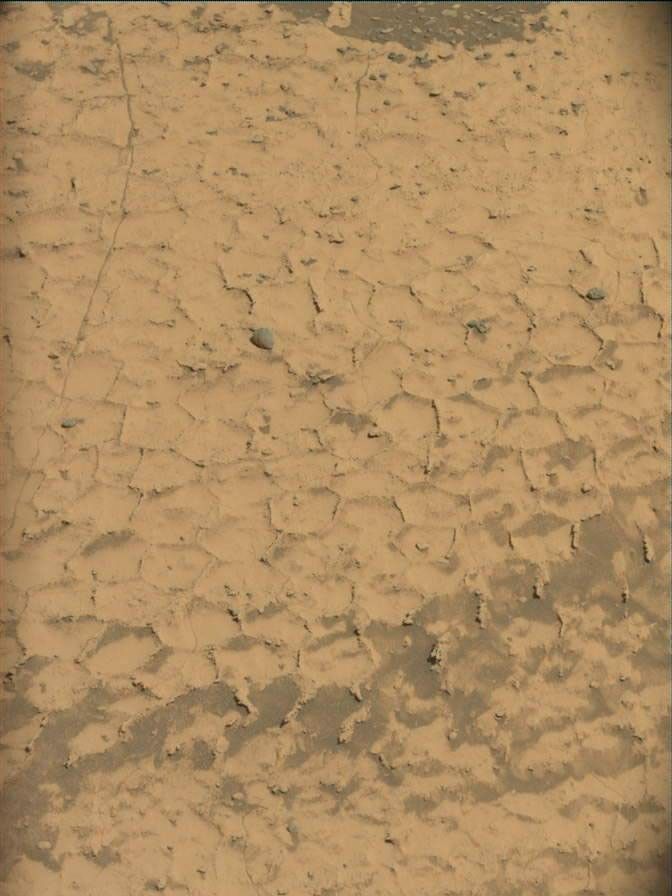
Laboratory floors can only tell you so much. To push the rover through genuinely challenging terrain, ESA has taken the qualification model out into desert environments whose rocky, uneven surfaces bear a meaningful resemblance to parts of Mars. These field campaigns are not publicity exercises — they are rigorous engineering tests designed to expose weaknesses in the rover's ability to handle slopes, loose material, and unpredictable ground.
Rosalind Franklin is designed to operate with a high degree of autonomy. Because the communication delay between Earth and Mars can stretch to over twenty minutes in each direction, ground controllers cannot steer the rover in real time. Instead, they set broad scientific goals and let the onboard navigation system work out the details. The desert trials put exactly this capability under stress, verifying that the rover can select safe paths and avoid hazards without human intervention on every step.
The planned landing site, Oxia Planum, is a clay-bearing plain that scientists believe may have preserved traces of ancient biological activity. Getting the rover safely across that terrain will be the essential first test before any science can begin.
A mission rebuilt from adversity
The road to Mars has not been straightforward for ExoMars. The mission was originally developed in close partnership with Roscosmos, the Russian space agency, which was set to provide both the Kazachok lander and the Proton launch vehicle. That arrangement collapsed in 2022 following Russia's invasion of Ukraine, forcing ESA to seek alternative solutions. Talks with NASA have been reported, though no binding agreement has been publicly confirmed as of this writing.
What has not wavered is the scientific case for the mission. Rosalind Franklin carries a two-metre drill — a capability unmatched by any other Mars rover currently flying or in development. At that depth, organic molecules are shielded from the intense surface radiation that would otherwise degrade them, making subsurface sampling the most promising strategy for detecting evidence of past life. The rover's main industrial contractor, Airbus Defence and Space in the United Kingdom, has continued development work throughout the programme's turbulent years.
The current round of rehearsals, whether conducted on a test floor or in a sun-baked desert, represents the unglamorous but indispensable work that makes planetary missions possible. When Rosalind Franklin finally rolls onto Martian soil, those hours of preparation will have made all the difference.