A catalogue born from confusion
In the eighteenth century, French astronomer Charles Messier faced a persistent frustration: faint, hazy objects kept appearing in his telescope, indistinguishable at first glance from the comets he was hunting. To keep track of these impostors and avoid false alarms, he compiled a systematic list that would eventually include 110 deep-sky objects — galaxies, nebulae, and star clusters among them. That catalogue still bears his name today.
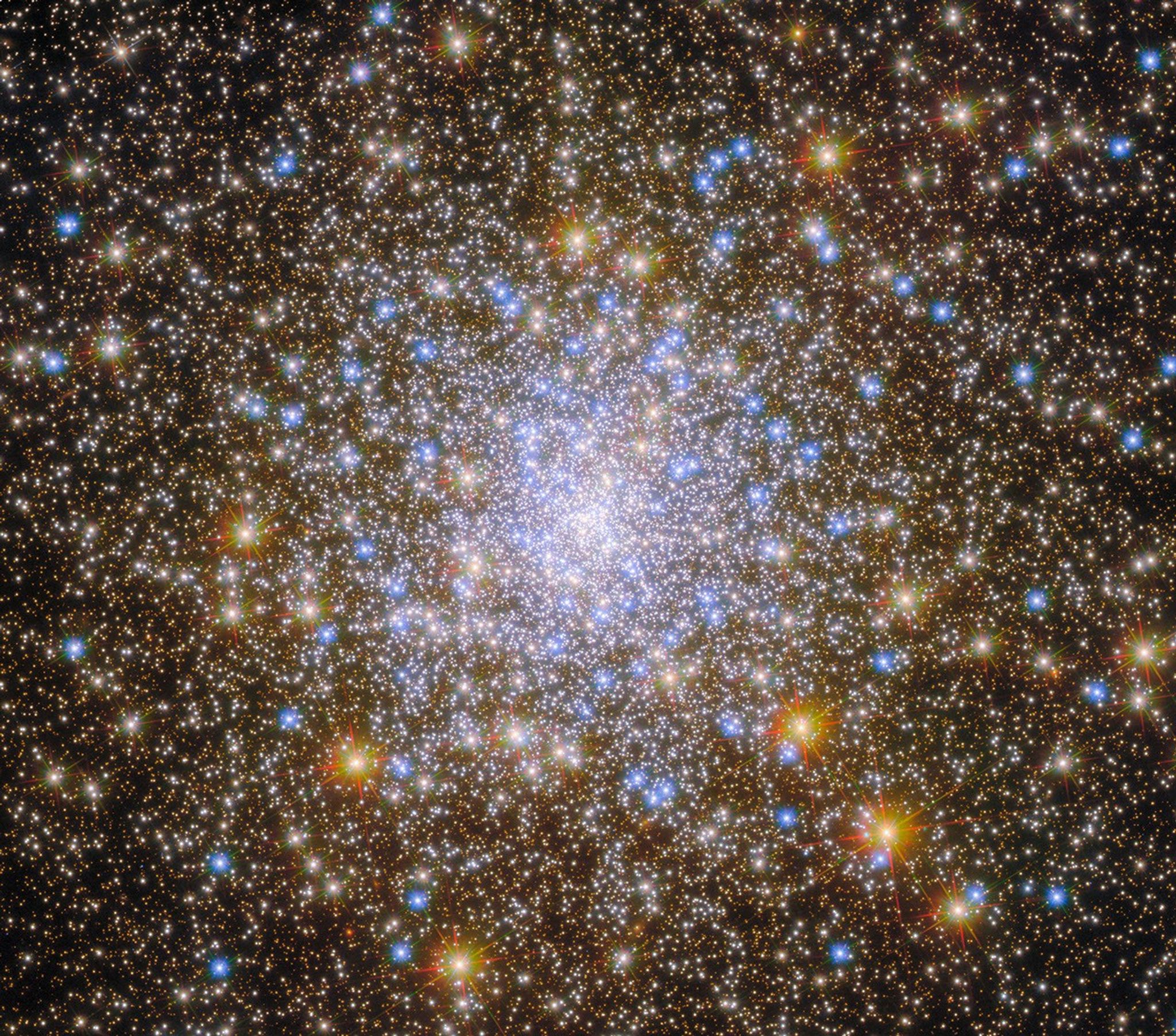
One of its entries, Messier 30 — also catalogued as NGC 7099 — sits roughly 28,000 light-years from Earth in the constellation Capricornus. It is a globular cluster: a gravitationally bound, roughly spherical collection of hundreds of thousands of stars, ancient beyond easy comprehension. What Messier logged as a nuisance has since become one of astronomy's most productive research subjects.
What stellar populations reveal about galactic history
The image released in early November 2026 by NASA and the European Space Agency was captured by the Hubble Space Telescope as part of a broader scientific effort to trace how galaxies form and evolve over cosmic time. Globular clusters like M30 are central to that effort.
Because the stars within a globular cluster are born at nearly the same time — in many cases within the first few hundred million years after the Big Bang — they function as frozen snapshots of early-universe conditions. By studying their chemical abundances, brightness distributions, and internal dynamics, astronomers can reconstruct environments that existed long before the Sun formed.
Messier 30 is particularly notable for having undergone what astronomers call core collapse. Gravitational interactions between stars over billions of years have drawn mass progressively toward the cluster's center, creating an unusually dense core. This process, which only a minority of known globular clusters have experienced, makes M30 a valuable case study in stellar dynamics and long-term gravitational evolution.
Hubble's enduring contribution
More than thirty years after its deployment, the Hubble Space Telescope — jointly operated by NASA and ESA — remains a cornerstone of observational astronomy. Its sensitivity across visible and ultraviolet wavelengths makes it particularly well suited to resolving individual stars within crowded environments like globular clusters, where separating one stellar source from another demands sharp, stable optics.
This latest image of M30 joins an extensive archive of Hubble observations dedicated to globular clusters throughout the Milky Way and neighboring galaxies. Each new dataset refines the models astronomers use to understand stellar lifecycles and the broader evolution of galactic structures.
The James Webb Space Telescope, operated by NASA in partnership with ESA and the Canadian Space Agency, now extends humanity's reach into the infrared, probing even earlier epochs of cosmic history. But Hubble's optical and ultraviolet capabilities remain irreplaceable for the kind of detailed stellar archaeology that images like this one of Messier 30 make possible. The two observatories are increasingly used in tandem, their complementary perspectives converging on some of the deepest questions in astrophysics.