A pre-deployment strategy to stretch surface time
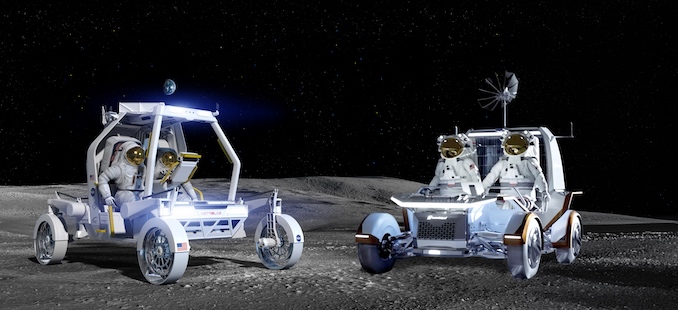
On May 26, NASA announced it had chosen two companies to build refined versions of their existing Lunar Terrain Vehicle (LTV) designs — machines engineered to reach the Moon faster and at lower cost than earlier concepts, with one defining constraint: they must be on the surface before the Artemis 4 crew arrives.
The logic behind this pre-deployment approach is straightforward but represents a meaningful shift in how NASA plans crewed surface operations. Instead of landing astronauts and rovers together, the agency wants the vehicles already waiting, checked out, and ready to roll the moment boots touch regolith. Given that crewed lunar sorties are measured in days rather than months, having a rover operational from the first hours on the surface could dramatically expand the scientific return of each mission.
Building on existing designs to cut risk and cost
Neither selected company is starting from scratch. NASA's requirement is explicit: leverage architectures developed during previous LTV program phases and iterate on them to meet tighter schedule and budget targets. By building on proven engineering foundations rather than pursuing entirely new designs, the agency hopes to compress development timelines while keeping technical risk manageable.
The identities of the two selected firms had not been fully detailed in information available at the time of publication, but their selection fits a broader pattern of private-sector involvement in lunar surface hardware. Companies including Intuitive Machines and Astrolab had previously expressed strong interest in the LTV segment during earlier evaluation rounds, reflecting how commercial players have become central to NASA's surface exploration architecture.
Artemis 4 as the operational target
Artemis 4 — itself dependent on the successful completion of earlier milestones, most critically Artemis 3's first crewed lunar landing since Apollo 17 — is positioned by NASA as the mission where extended surface mobility becomes fully operational for the first time. The agency envisions astronauts traveling several kilometers from their landing site, gaining access to geologically distinct terrain that a walking crew could never safely reach on foot, particularly in the complex topography near the lunar South Pole.
Designing a rover for that environment comes with formidable engineering demands. Permanently shadowed craters nearby create extreme cold, abrasive dust permeates every exposed surface, and thermal swings across illuminated terrain are severe. Mechanical durability and onboard system reliability are therefore selection criteria every bit as critical as cost or schedule performance.
The pre-deployment concept also raises questions that contracts and mission plans will need to address: how does the rover stay functional — and safe — during the weeks or months before the crew lands? Some degree of autonomous operation or remote supervision from Earth seems unavoidable, representing a non-trivial engineering and operational challenge. The coming months should reveal how both teams intend to solve it, and whether the timeline to Artemis 4 can realistically accommodate a rover waiting patiently on another world.