Flying a rotorcraft on Mars is an exercise in engineering at the edge of what physics permits. The planet's atmosphere is roughly one hundred times thinner than Earth's at sea level, which means rotor blades must spin at extraordinary speeds just to generate enough lift. Push those speeds far enough, and the blade tips approach — or breach — the local speed of sound. That is exactly the boundary that engineers at NASA's Jet Propulsion Laboratory (JPL) in Southern California set out to probe during a test campaign carried out in March 2025.
Simulating the Martian environment on the ground
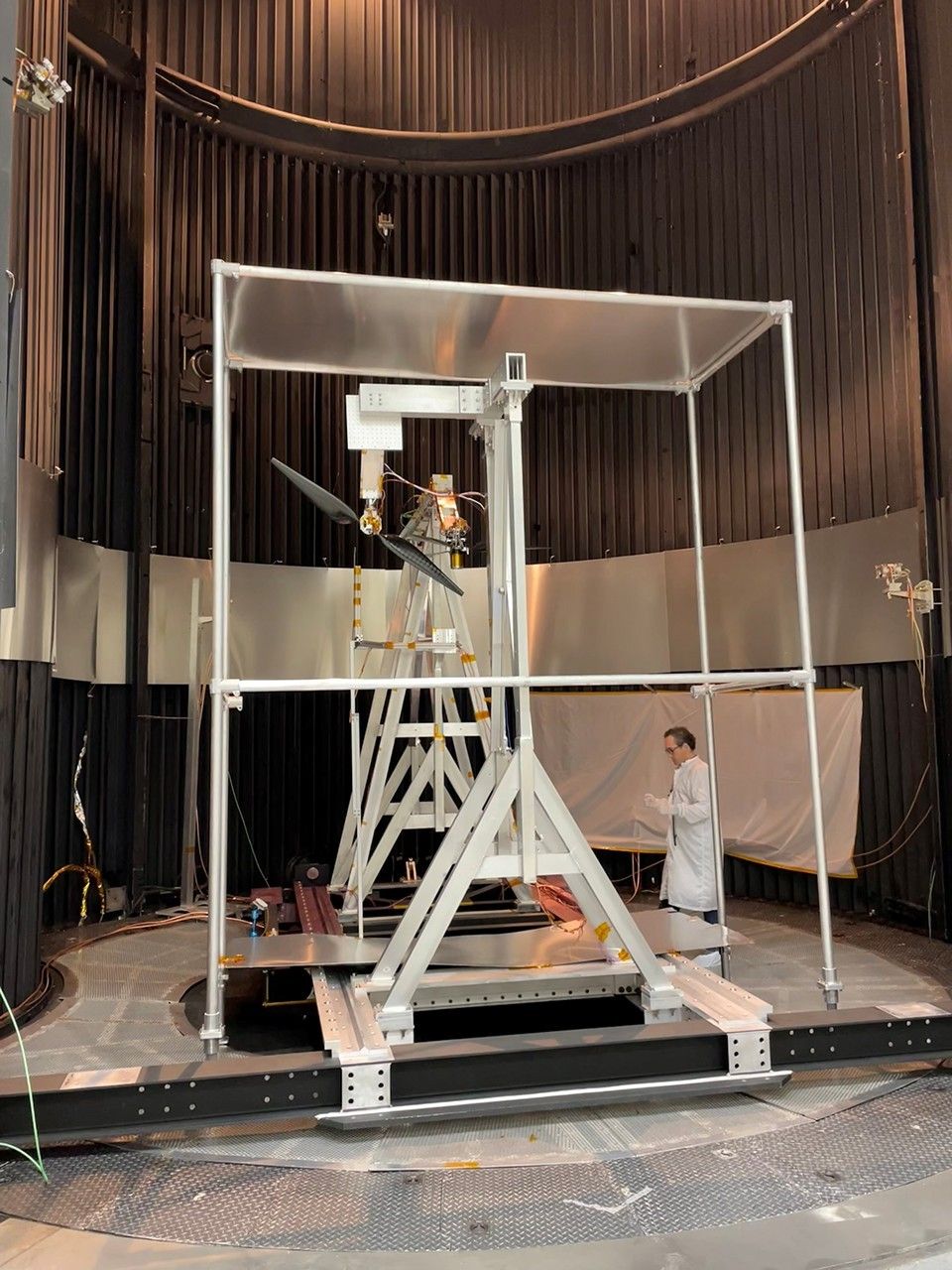
The tests took place inside JPL's 25-Foot Space Simulator, a large chamber capable of replicating the low-pressure, carbon-dioxide-rich conditions found at the Martian surface. Engineer Fernando Mier-Hicks was among the team members responsible for inspecting the custom test stand built for this campaign. Next-generation prototype blades were mounted on the rig and spun up incrementally until the tips crossed the Mach 1 threshold.
The data collected tell a clear story: the blades survived the transition without coming apart or exhibiting significant structural damage. That outcome was far from guaranteed. Crossing the transonic and supersonic regimes introduces fundamentally different aerodynamic loading and shock-wave interactions — conditions that can rapidly destroy composite structures not specifically designed to handle them.
Moving beyond Ingenuity's pioneering but limited legacy
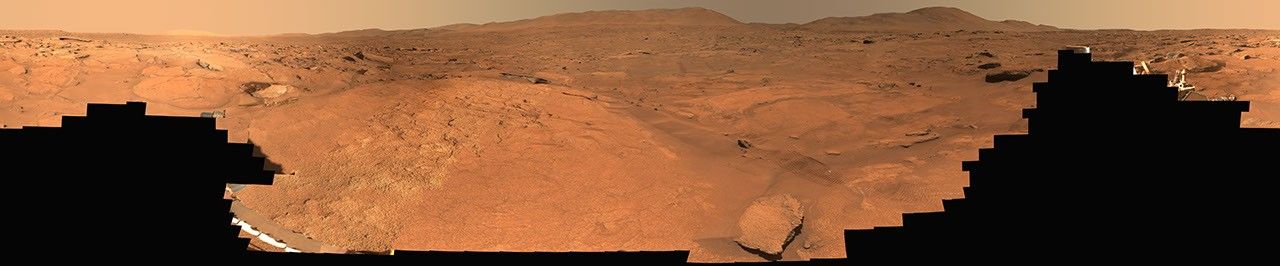
Ingenuity made history when it lifted off for the first time in April 2021, going on to complete more than seventy flights before its mission concluded in January 2024. Yet for all its achievements, the small rotorcraft was never designed for extended range, meaningful payload capacity, or demanding operational scenarios. The next generation of Mars helicopters NASA is working toward would need to cover far greater distances, carry scientific instruments or other payloads, and cope with a wider range of conditions.
Meeting those requirements demands longer blades spinning faster — a combination that inevitably drives blade-tip speeds into the transonic and supersonic range. The new blade designs incorporate specific geometries and materials engineered to handle regimes that conventional aeronautics generally treats as prohibitive.
It is worth keeping the broader context in mind: these tests represent a technology validation milestone, not the announcement of a flight mission. NASA has not publicly committed to a schedule for deploying next-generation Mars rotorcraft. The path from a successful laboratory result to an operational vehicle on another planet still involves extensive qualification testing, system integration, and mission selection processes.
An expanded performance envelope for future Mars rotorcraft
Even so, pushing past Mach 1 under realistic simulated conditions is a meaningful data point. It demonstrates that a well-designed blade can survive operating regimes once considered potentially off-limits, and it widens the design space available to engineers working on future vehicles. The question for Mars rotorcraft is no longer simply whether flight is possible — Ingenuity settled that — but how far that capability can ultimately be stretched.