Heading west, one sol at a time
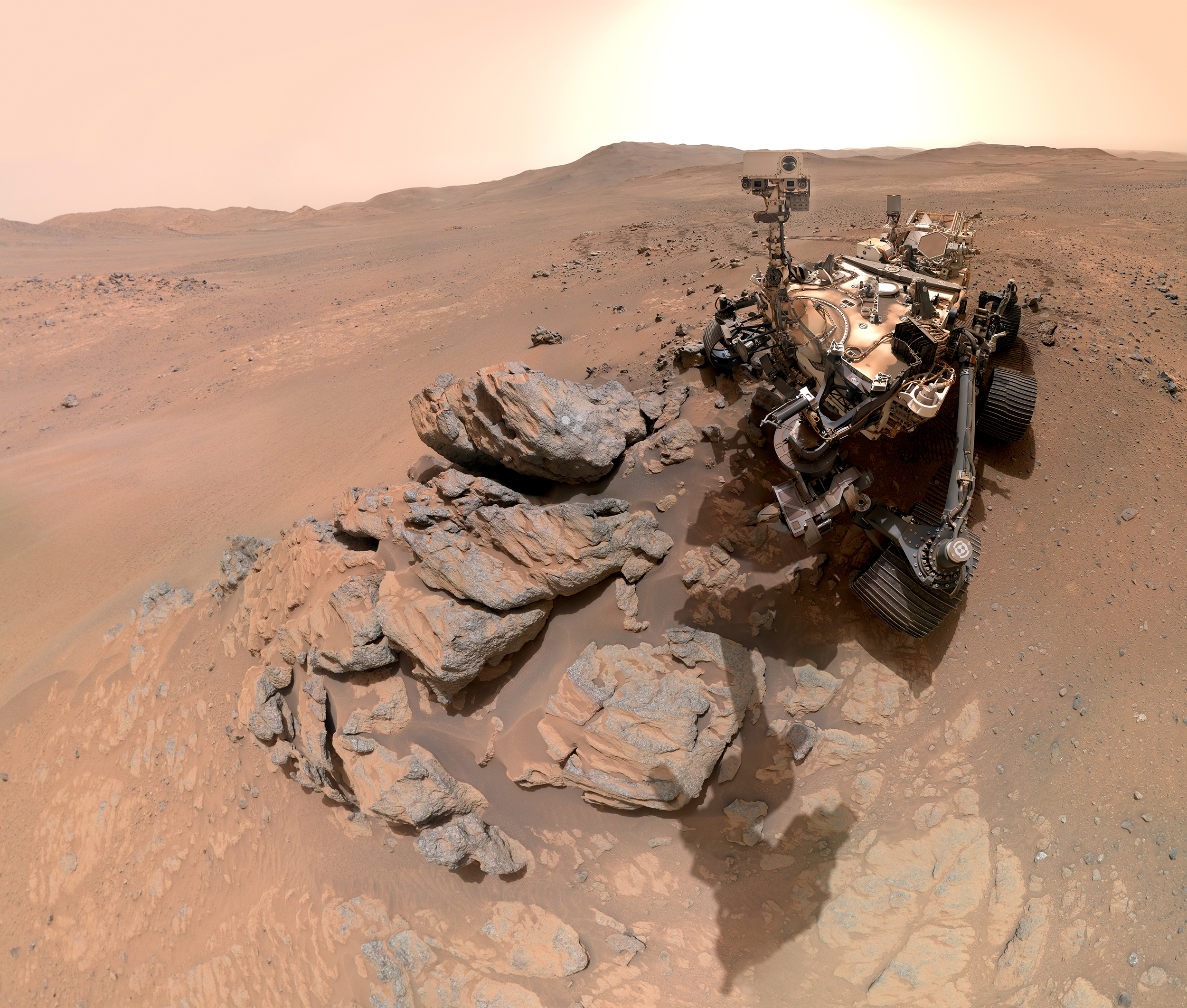
Early 2026 has marked a turning point for Perseverance, NASA's Mars 2020 rover. Since its February 2021 landing inside Jezero Crater, the six-wheeled laboratory has gradually extended its operational range — but its current westward campaign represents a qualitative leap. On sol 1,797 of the mission, March 11, 2026, Perseverance documented its most westerly position to date with a composite self-portrait taken at a rocky feature the science team named Arethusa.
The image, built from 61 individual frames stitched together, clearly shows a freshly abraded circular patch on the rock surface — a signature technique of the rover's robotic arm. By grinding away the weathered outer layer, Perseverance exposes fresh interior material that its onboard instruments, including the PIXL and SHERLOC spectrometers, can analyze for chemical composition. These readings help scientists reconstruct the ancient aqueous history of this part of Mars.
Arbot panoramas and the shores of Lac de Charmes
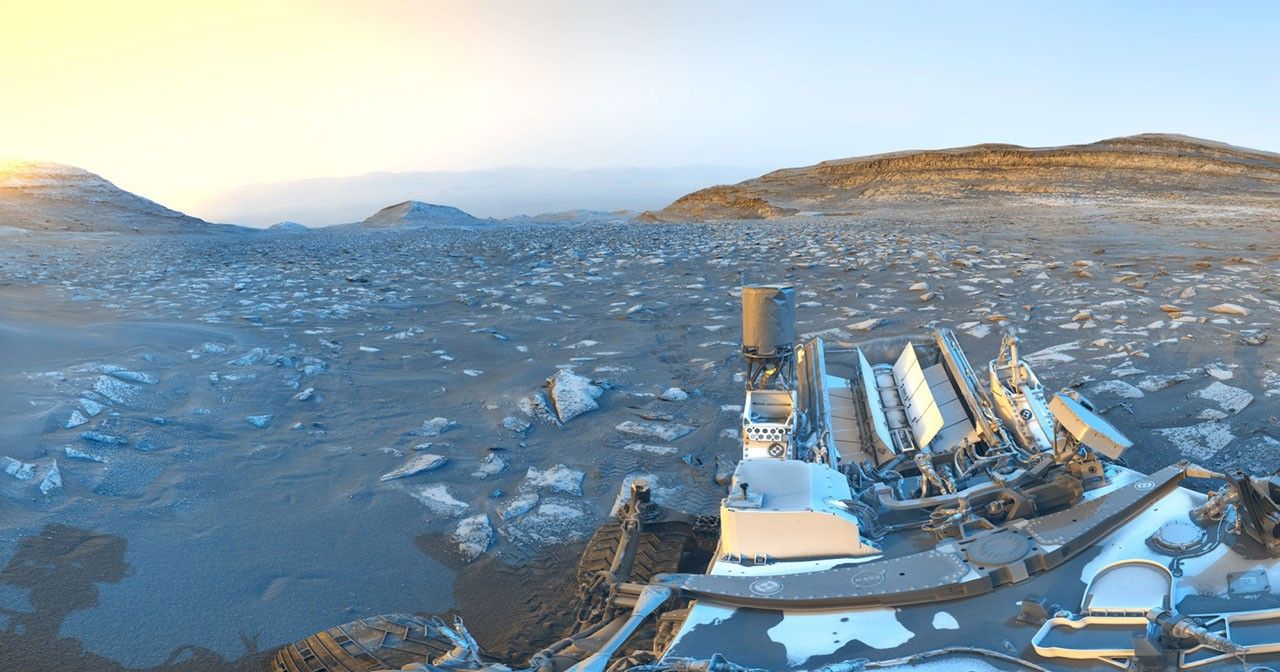
The exploration continued through April. On sol 1,882, April 5, 2026, Perseverance used its Mastcam-Z dual-lens camera system to assemble a 46-image panorama of a location nicknamed Arbot. The resulting image ranks among the most geologically rich wide-angle views obtained anywhere along the rover's traverse. Layered outcrops, varied textures, and subtle topographic relief hint at sedimentary processes that may have operated billions of years ago.
More recently, the science team directed Perseverance to a site they call Lac de Charmes — a name borrowed, as is customary, from terrestrial geography to designate a point of scientific interest. There, the rover performed another abrasion and captured a fresh selfie, published by NASA on May 12, 2026. In the 61-image composite, Perseverance's mast is trained on the abraded outcrop in the foreground, while the western rim of Jezero Crater stretches across the background horizon.
Building a sample library with an uncertain return date
These images carry practical weight beyond their visual appeal. Each selfie helps engineers monitor the rover's mechanical condition and verify the precise placement of its tools after contact with rock surfaces. This careful documentation matters enormously given Perseverance's central role in the Mars Sample Return campaign, a joint endeavor between NASA and the European Space Agency (ESA) that remains under active review due to budgetary and programmatic pressures on both sides of the Atlantic.
Every rock abraded in this western frontier adds to a growing geological archive. The terrain beyond the Jezero delta offers a different stratigraphic context from the crater's interior — one that could reveal conditions predating the impact event itself. Scientists hope that comparing rocks from both settings will sharpen their understanding of when and how Mars transitioned from a potentially habitable world to the cold, arid planet it is today.
No confirmed date exists yet for returning Perseverance's carefully sealed sample tubes to Earth. But with each westward kilometer, the rover assembles a record that, whenever it arrives on Earth, promises to reshape our reading of Martian history.