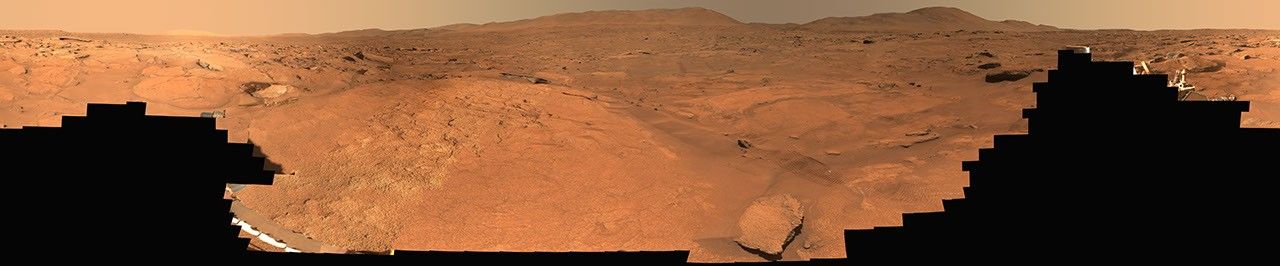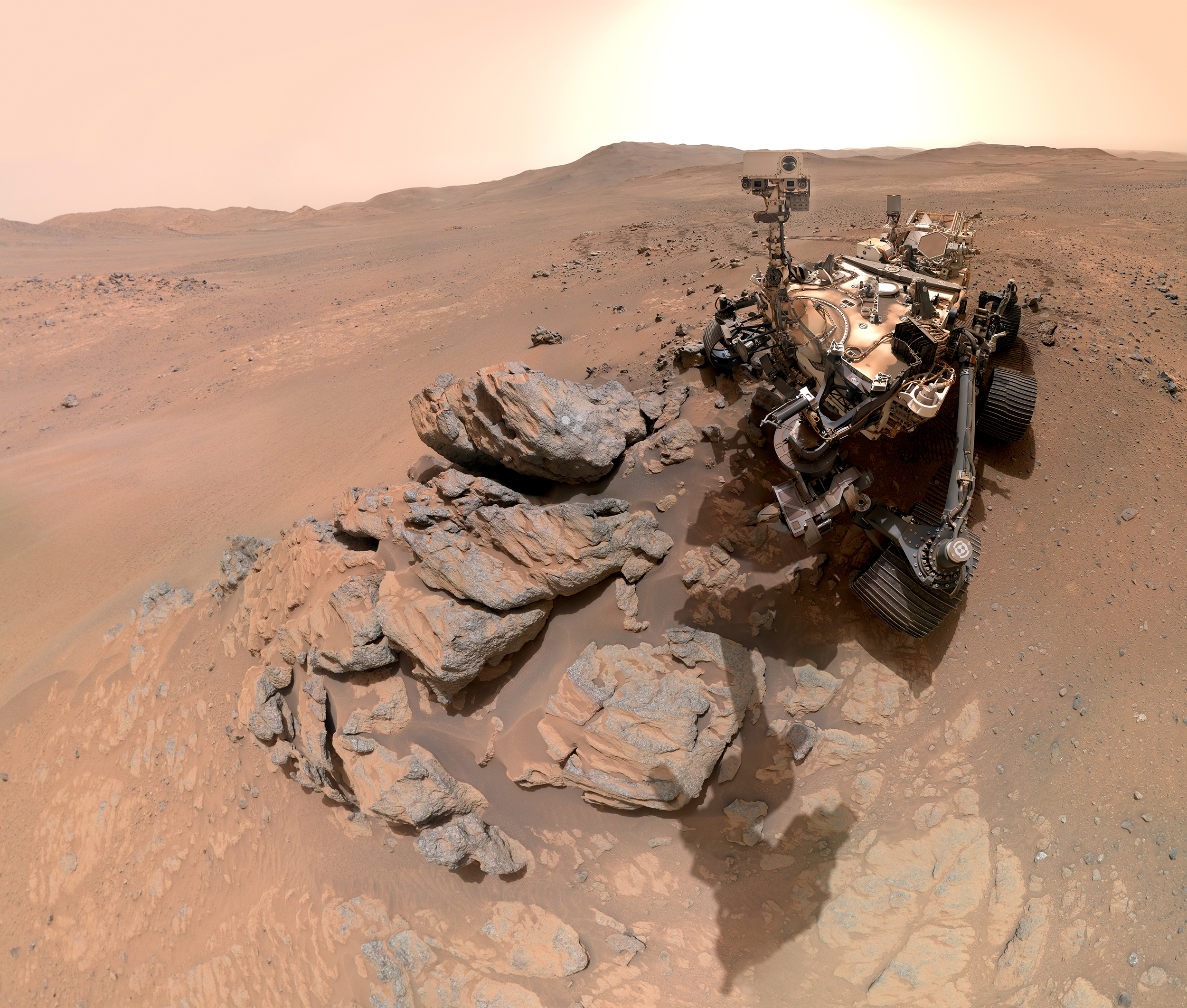
On March 11, 2026 — sol 1,797 of its surface mission — NASA's Perseverance rover photographed itself at the furthest west it has ever traveled since landing inside Jezero Crater in February 2021. The resulting image, stitched together from 61 individual frames, places the rover against a sweeping expanse of ancient Martian bedrock at a location the science team has informally named 'Lac de Charmes.' Such nicknames are standard practice among planetary geologists, helping teams coordinate field work across a landscape that has no official local nomenclature.
A milestone push into uncharted western terrain
The selfie is more than a visual record — it marks a significant navigational commitment. Perseverance has been pushing steadily westward beyond the interior of Jezero, an ancient lake basin whose sedimentary deposits have long been considered one of the most promising environments on Mars for the potential preservation of ancient biosignatures. By driving toward the basin's western rim, the rover is encountering geological formations that have not been observed up close before, offering a fresh cross-section through Mars's deep climatic and hydrological past.
In the foreground of the composite image, the rover's mast is clearly oriented toward a rocky outcrop the team has labeled 'Arethusa,' on which Perseverance had just completed one of its signature circular abrasion patches. This technique, performed using the rover's coring and abrading tool, strips away the weathered outer surface of a rock to expose fresher material beneath — material that SHERLOC's onboard spectrometers can then analyze for mineral composition without the interference of surface alteration. The pale circular mark left on the rock face suggests that its interior is significantly lighter in color than its oxidized exterior.
The engineering behind a self-portrait without a selfie stick
Building this kind of image is a precise engineering exercise. Perseverance carries the WATSON camera at the end of its robotic arm, part of the SHERLOC instrument suite. To produce a selfie, the arm moves through a carefully calculated arc while WATSON captures dozens of frames from different angles. Engineers at NASA's Jet Propulsion Laboratory (JPL) in Pasadena, California then stitch those frames together on the ground, digitally removing the arm itself from the final image. The result looks as though the rover was photographed by an outside observer, but it is in fact a painstakingly assembled mosaic.
Beyond its communicative value, the image also serves a diagnostic purpose. The JPL team uses selfies to assess the rover's physical condition — checking for wheel wear, dust accumulation on instruments, and mast alignment. At this point in the mission, well beyond the original planned operational timeline, monitoring hardware health is a standing priority.
What comes next for Perseverance?
The mission's next steps remain under active evaluation. The science team is continuing to map the geological features of the western sector, looking for igneous or sedimentary rocks that could extend and enrich the stratigraphic record assembled since landing. Meanwhile, the cache of sample tubes that Perseverance has drilled and deposited on the Martian surface continues to await a future retrieval mission — the timeline and architecture of which remain, as of now, unresolved. What this selfie makes clear is that the rover is still moving, still working, and still reaching into territory no mission has covered before.