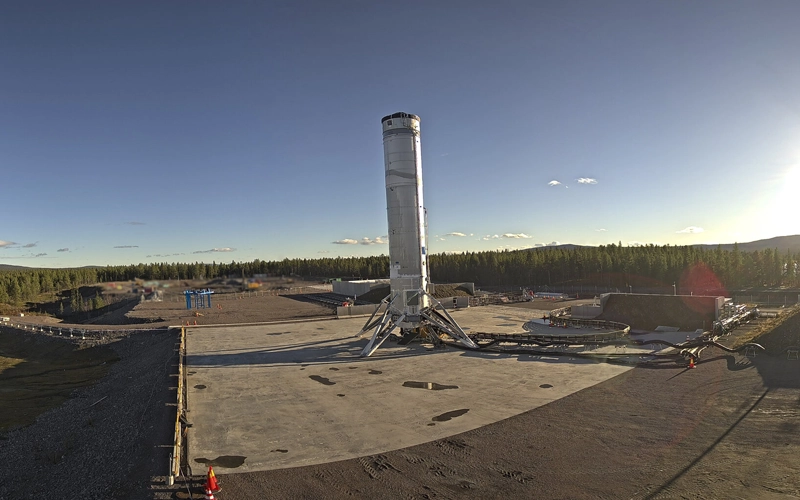
On Sunday, June 29, 2026, Rocket Lab announced it would acquire Iridium Communications in a deal valued at eight billion dollars. The move, the largest in Rocket Lab's history, signals a profound strategic shift for the New Zealand-founded, Nasdaq-listed launch and space systems company — one that goes well beyond adding another product line.
From small-sat launcher to end-to-end space company
Rocket Lab built its reputation on the back of the Electron rocket, a small-lift launch vehicle that carved out a reliable niche in the commercial launch market after its first successful flight in 2018. Over subsequent years, the company methodically expanded into spacecraft manufacturing, satellite components, and propulsion systems, while developing its medium-lift Neutron rocket. The Iridium deal, however, represents a leap of an entirely different magnitude.
Iridium operates a constellation of 66 low Earth orbit satellites providing voice and data connectivity to customers in maritime, aviation, government, and remote-area operations sectors. Crucially, the network offers global coverage, including polar regions — a capability that few competitors can match. By bringing Iridium under its roof, Rocket Lab would transform overnight from a launch services vendor into an operator with its own orbital infrastructure and a proven, revenue-generating customer base.
Peter Beck, Rocket Lab's chief executive, framed the acquisition as the natural next step in a long-held ambition. His argument: owning an operational constellation and the services revenue that flows from it provides a financial foundation far more stable than launch contracts alone, which remain tied to market demand cycles and competition from rivals including SpaceX.
The financial weight of the wager
Eight billion dollars is a significant sum by any measure in the commercial space sector. For context, Northrop Grumman's acquisition of Orbital ATK in 2018 for 9.2 billion dollars remains one of the few comparable transactions. How Rocket Lab intends to finance the purchase — through debt, equity issuance, or a combination — has not been fully detailed as of the announcement, and will be closely scrutinized by investors.
Iridium is not a distressed asset. The company famously went through bankruptcy in 1999 after its original business model failed, but was restructured and ultimately thrived. Between 2017 and 2019, Iridium completed its full constellation refresh — the Iridium NEXT program — using a series of SpaceX Falcon 9 launches, emerging with a modern, capable network and a stable subscriber base. Paying a premium for that track record comes with the territory.
Regulatory hurdles will also require attention. Spectrum licenses, operating authorizations, and national security reviews in the United States and other jurisdictions where Iridium holds permits will all need to be addressed before the transaction can close.
Consolidation as competitive strategy
Seen in a broader context, the Rocket Lab–Iridium deal is a textbook consolidation play. The commercial space industry is increasingly polarized between deep-pocketed vertically integrated giants — SpaceX with Starlink, Amazon with Project Kuiper — and a fragmented tier of smaller, specialized operators. Mid-sized players face a strategic dilemma: grow through acquisition or risk irrelevance.
By absorbing an established constellation rather than building one from scratch, Rocket Lab is attempting to compress years of organic development into a single transaction. If the deal closes on the terms announced, the company will be positioned to offer customers a proposition that spans launch, spacecraft, and connectivity services under one roof. Whether regulators and shareholders will endorse that vision is the next question the industry will be watching closely.