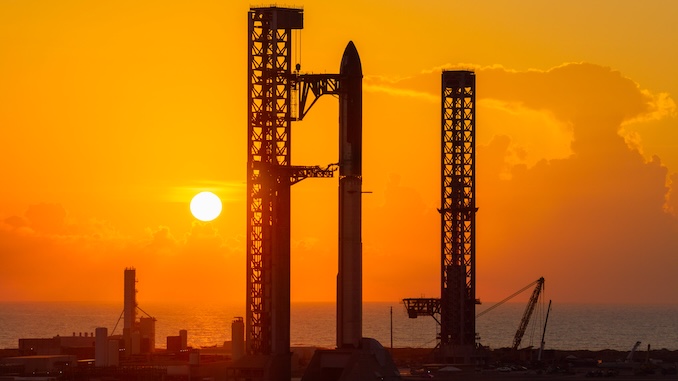
Iterating at speed: what Flight 13 needs to prove
SpaceX is preparing to launch the thirteenth test flight of its Starship vehicle from Boca Chica, Texas, with July 16, 2026 set as the earliest possible liftoff date. The primary engineering goal is straightforward: demonstrate that the problems identified during Flight 12 have been resolved. SpaceX has not disclosed the full list of anomalies from the previous mission, but the company has acknowledged work on several vehicle systems, including propulsion elements and the separation sequence between the Super Heavy booster and the upper-stage Ship spacecraft.
The rapid cadence between flights is a deliberate strategy. Rather than conducting extensive ground testing before committing to hardware changes, SpaceX uses each full-stack launch as a data-gathering opportunity, applying lessons in near-real time. This iterative philosophy has become a defining feature of the NewSpace era, standing in sharp contrast to the more methodical timelines traditionally associated with government space agencies.
Operational Starlink satellites: from prototype to productive payload
Flight 13 carries an additional ambition beyond engineering validation. For the first time, the mission is expected to deploy a batch of Starlink satellites with full operational capability. Earlier Starship test flights did carry satellite hardware, but those units were not intended to join the active constellation — they served primarily to validate the vehicle's payload deployment mechanisms. This time, the satellites are slated to become part of SpaceX's commercial broadband network, giving the flight a dual character: both a test and a productive mission.
The decision reflects mounting pressure on SpaceX to demonstrate that Starship can do more than survive launch. NASA is closely monitoring progress, having contracted SpaceX under the Human Landing System program to develop a Starship variant capable of transporting astronauts to the lunar surface as part of the Artemis campaign. Every successful flight narrows the gap between the current prototype and the operational crewed lander NASA requires.
A busy week in orbit, from Boca Chica to the ISS
Starship is not the only major space event on the schedule this week. A Soyuz spacecraft, operated by Roscosmos, is set to carry a fresh crew to the International Space Station, continuing the unbroken chain of human presence in low Earth orbit. Across all operators and agencies, roughly seven launches are planned globally during this period, reflecting the sustained tempo of both institutional and commercial spaceflight activity.
The juxtaposition is telling: a Soyuz flight, representing decades of accumulated reliability, running in parallel with a Starship mission that is still working through its development curve. One ensures continuity; the other is building toward transformation.
Should weather or technical conditions prevent a July 16 liftoff, SpaceX has backup windows available, consistent with its standard practice. A launch license from the Federal Aviation Administration (FAA) must also be in place before the vehicle can fly — regulatory clearance that has previously influenced the timing of Starship test flights. No confirmation of FAA approval had been publicly issued at the time of writing.