A year sealed inside a Martian stand-in
Ross Elder, Ellen Ellis, James Spicer, and Matthew Montgomery walked out of the Mars Dune Alpha habitat on October 31, 2026, closing the door on 378 days of continuous isolation inside a facility at NASA's Johnson Space Center in Houston, Texas. Throughout the mission, the crew had no access to natural daylight, no outside ambient sounds, and no real-time communication with family or friends — conditions deliberately chosen to replicate the communication delays inherent to Earth-Mars operations, where one-way signal travel can exceed twenty minutes.
Mars Dune Alpha itself is a roughly 1,700-square-foot structure built using 3D-printing technology, designed to function as a credible analog for a surface habitat that future astronauts might actually inhabit on Mars. Inside, the four crew members conducted scientific tasks, performed simulated extravehicular activities in reddish sand meant to approximate Martian regolith, and managed deliberately constrained food and water resources over the course of the year.
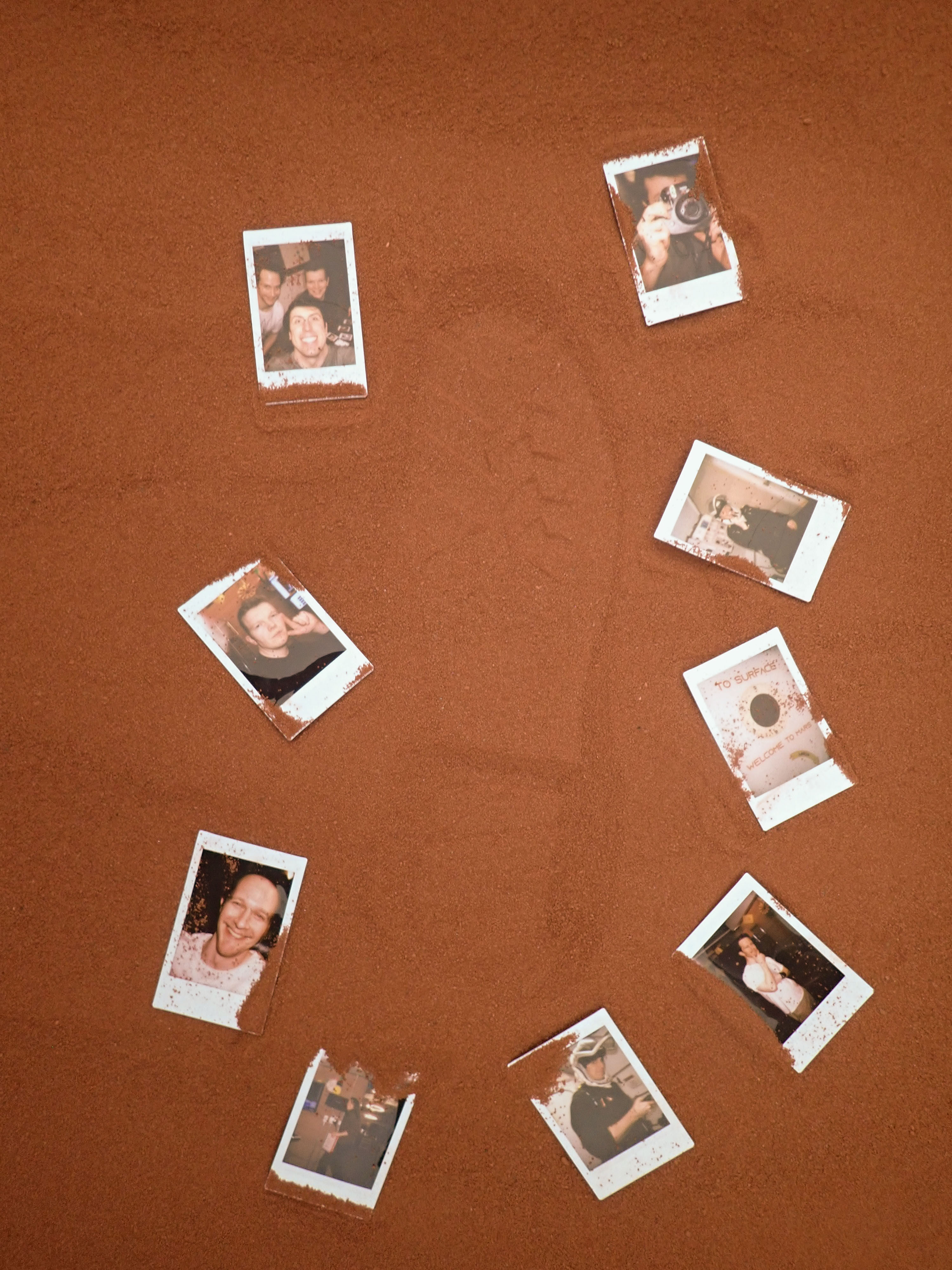
One image captured on August 31, 2026 — two months before the crew's exit — speaks to the mission's human dimension: the team had arranged personal photographs in a circle around a boot print pressed into the simulated Martian sand outside the habitat, echoing a tradition that traces back to the Apollo era.
What CHAPEA is designed to measure
The Crew Health and Performance Exploration Analog program exists specifically to give NASA hard data on how human beings hold up — physically, cognitively, and psychologically — during long-duration missions in confined, resource-limited environments. The first CHAPEA mission had already run for a year; this second iteration builds on that baseline with an additional, independent dataset.
Key research areas tracked across the 378 days include:
- Group dynamics and interpersonal stress in close-quarters living
- Nutritional performance under autonomous, pre-packaged food conditions
- Cognitive function over extended periods without external stimulation
- Psychological effects of partial sensory isolation and communication lag
The findings will feed directly into the medical protocols and mission planning frameworks being developed under NASA's Moon to Mars architecture — the agency's overarching roadmap for eventually landing humans on Mars.
What comes next for the data and the program
NASA has confirmed that all four crew members were in good health upon exiting the habitat, but has not yet released detailed scientific findings from Mission 2. Biological, behavioral, and cognitive data collected during the analog will be analyzed and published incrementally over the coming months.
Whether a third CHAPEA mission will follow remains an open question. No formal announcement has been made, and any decision will likely depend on the research gaps identified once Mission 2 data is fully processed.
For now, the completion of this second yearlong simulation represents a methodical, unglamorous, and entirely necessary step in the long preparation chain that must precede any real human journey to Mars. The science of keeping people alive and functional on another planet begins here, in a windowless building in Houston.