NASA tests the waters for commercial Hubble servicing
On October 29, 2026, NASA issued a Request for Information asking commercial operators to describe what they could realistically offer in terms of in-orbit servicing for the Hubble Space Telescope. The move stops well short of a formal contract solicitation — it is a structured listening exercise, designed to help the agency understand what the private sector can actually deliver before any commitment is made.
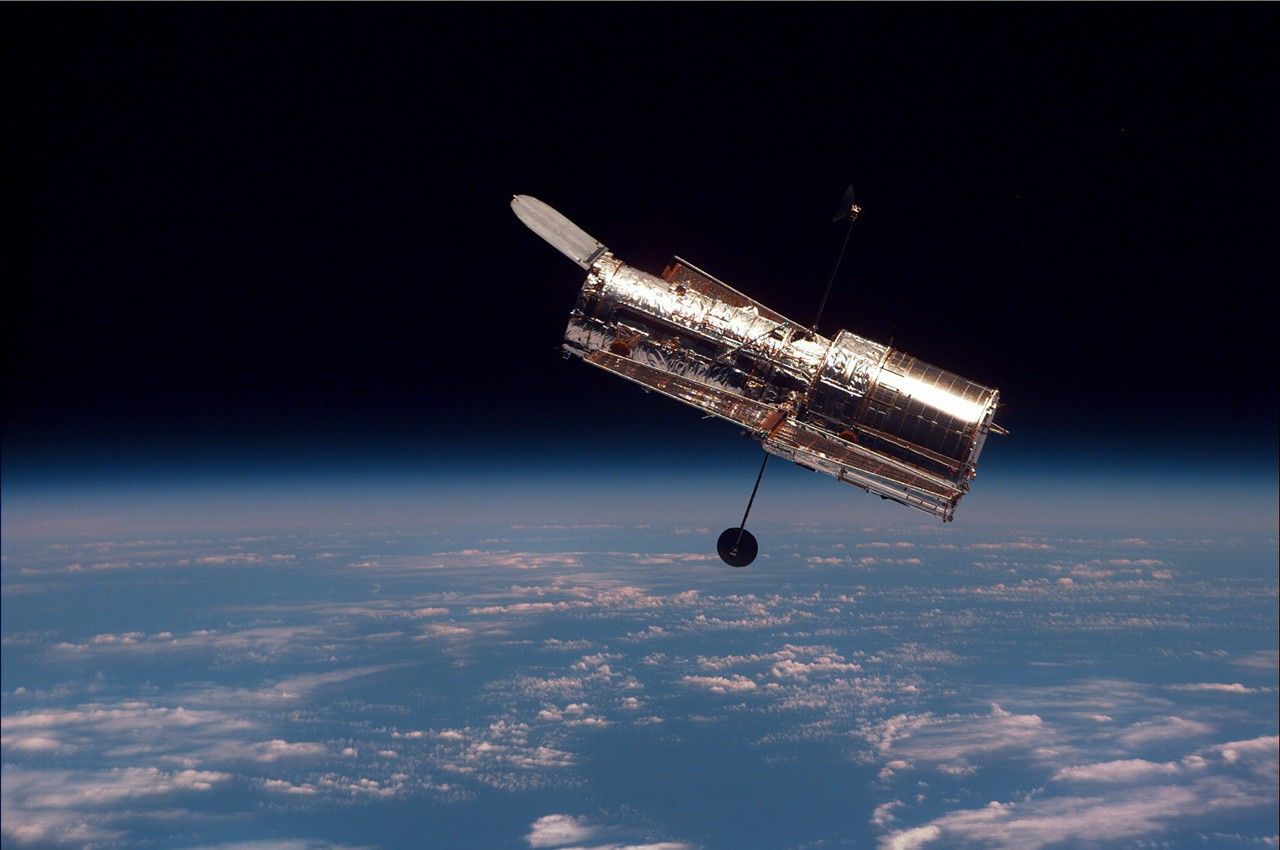
Hubble has been circling Earth at roughly 540 kilometres altitude since April 1990. The last hands-on servicing mission took place in 2009, when Space Shuttle astronauts replaced gyroscopes, installed new instruments, and carried out repairs that extended the telescope's productive life by years. No crew has visited since. Mechanical wear and the gradual failure of several gyroscopes in recent years have raised genuine concerns about how much operational life remains.
Companies such as SpaceX and Northrop Grumman have been developing autonomous rendezvous and docking capabilities that could, in principle, support a robotic or crewed servicing operation. NASA has not signalled a preference for any particular approach; the point of the RFI is precisely to determine which solutions are technically ready and financially viable right now. Whether a mission will ultimately be greenlit remains an open question.
Gravitational lensing data for the Roman era
While its institutional future is being mapped out, Hubble remains scientifically active. An image released on October 22, 2026, captures a barred spiral galaxy in sharp detail, but the scientific prize is not the galaxy itself — it is a gravitational lensing arc visible in the lower right corner of the frame.
The observation is part of a deliberate programme designed to support the Nancy Grace Roman Space Telescope, NASA's next flagship observatory, expected to launch within the coming years. Roman will survey the sky across an enormously wide field of view, gathering data on dark energy, dark matter distribution, and extragalactic structure at a scale and speed that Hubble cannot match. To make sense of that future data, astronomers need carefully calibrated reference observations — which is exactly what these Hubble campaigns are providing.
Gravitational lensing occurs when the mass of a foreground object bends the light of a more distant source, distorting and amplifying it. It is one of the most powerful techniques available for probing the large-scale structure of the universe and mapping otherwise invisible dark matter. Roman is expected to exploit lensing effects across vast swaths of sky; Hubble is effectively drafting the field notes in advance.
A legacy still in motion
Read side by side, these two developments tell a coherent story. NASA is not prepared to let Hubble wind down quietly. On the operational front, the agency is actively exploring whether commercial servicing — something that has never been attempted on an observatory of this class — could add years to the telescope's working life. On the scientific front, Hubble is fulfilling a mentoring role, building the observational foundation that Roman will rely on from its first days of operation.
Significant hurdles remain. Docking with a spacecraft that was never designed to receive a servicing vehicle is a non-trivial engineering challenge, and cost estimates for such a mission could prove daunting. But NASA's appetite for keeping Hubble alive, thirty-six years after launch, is clearly not exhausted.