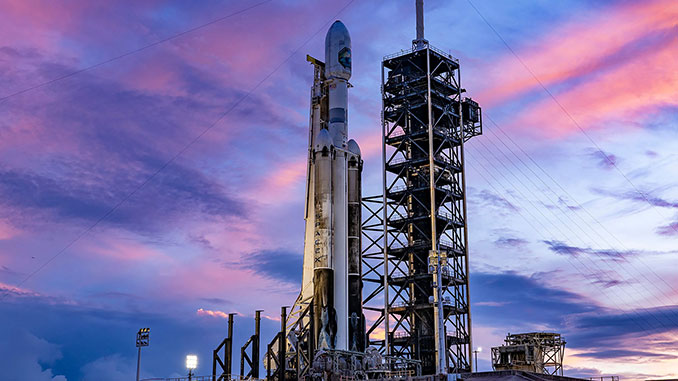
On May 28, 2026, an explosion during New Glenn operations caused severe damage to Launch Complex 36 at Cape Canaveral Space Force Station in Florida. Roughly one month later, Blue Origin has laid out its recovery strategy publicly, even as the technical investigation into what triggered the anomaly remains open and ongoing.
A hybrid integration approach to speed up recovery
Rather than simply rebuilding LC-36 to its previous configuration, Blue Origin has announced a shift toward what it describes as a hybrid horizontal-vertical integration model for its New Glenn rockets. Under this approach, certain assembly phases would take place horizontally before the vehicle is raised vertically at the pad — a departure from earlier procedures that the company believes will both accelerate reconstruction timelines and improve overall operational resilience.
By decoupling some integration steps from the launch tower itself, Blue Origin aims to reduce the launch pad's exposure during high-risk phases of pre-launch processing. Officials have suggested this reconfigured workflow could also yield efficiency gains during normal campaign operations once the pad is back in service.
An end-of-2026 return-to-flight target
Despite the scale of the damage, Blue Origin is publicly committed to resuming New Glenn flights from LC-36 before the close of 2026. That pledge comes while investigators have yet to formally identify the root cause of the explosion — whether it originated within the vehicle itself, the ground support systems, or some combination of both. The company has not released preliminary findings from its anomaly review.
The aggressive timeline reflects real commercial pressure. New Glenn is under contract for multiple government and commercial payloads, and a prolonged stand-down would further strain Blue Origin's competitive position against established providers such as SpaceX, whose Falcon 9 booster continues to fly at high cadence with minimal interruption.
Commercial and institutional stakes
The May accident dealt a significant setback to a program that had only recently begun building operational momentum. New Glenn completed its inaugural flights in 2025 and had started to be taken seriously as a heavy-lift option by both institutional customers and commercial satellite operators.
Blue Origin has not disclosed any cost estimate for the LC-36 reconstruction effort, nor has it outlined in detail how the accident is affecting its order book. Customers with missions slated for the second half of 2026 are facing an uncertain wait, at least until the company can provide firmer scheduling commitments tied to the rebuilt pad's readiness.
Whether Blue Origin can deliver on its stated timeline — while simultaneously concluding a credible investigation — will be a defining test of the company's operational maturity. The months ahead will determine whether the hybrid pad plan translates from a slide deck into a functioning launch complex.