The rover's boldest westward push yet
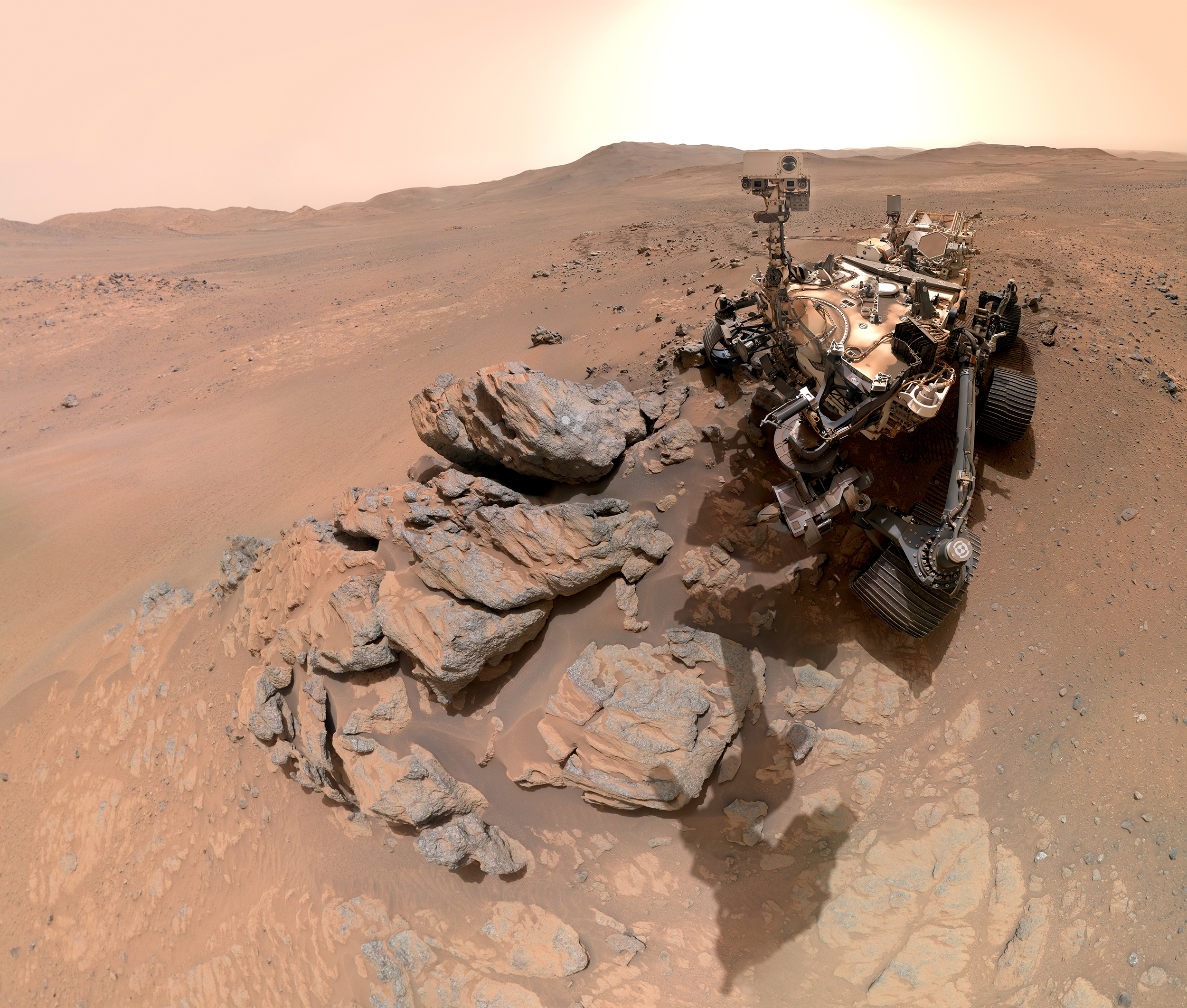
In early 2026, NASA's Perseverance rover crossed into terrain it had never previously reached: the western margins of Jezero Crater, a region the science team has been eyeing since the mission began in February 2021. This sustained drive into what the team calls the western frontier has produced some of the most geologically compelling imagery of the entire mission. On sol 1,797 — March 11, 2026 — the rover paused at a rocky outcrop the team named "Arethusa" and captured what became its westernmost selfie to date.
The portrait was assembled by engineers at NASA's Jet Propulsion Laboratory from 61 individual frames taken by the WATSON camera, which is mounted on Perseverance's robotic arm. The image clearly shows a pale circular patch on the rock surface — the result of an abrasion performed by the rover's PIXL instrument, designed to grind away the weathered outer layer and expose fresher material for analysis. These circular abrasion marks have become one of the most recognizable signatures of Perseverance's fieldwork across Mars.
Arbot and Lac de Charmes: reading the Martian record
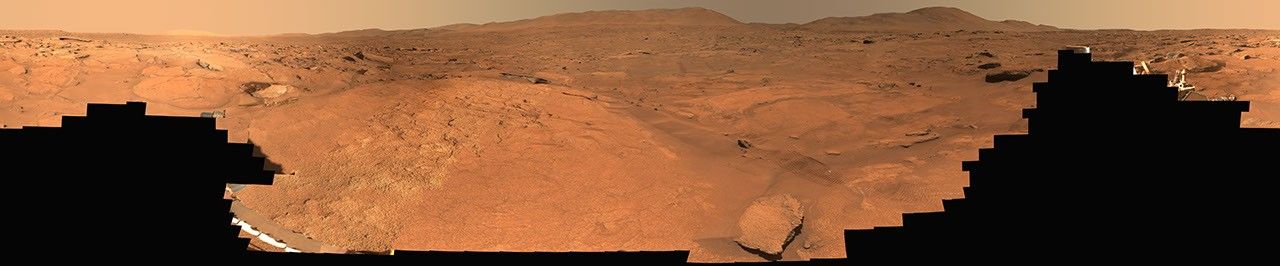
The rover's westward journey continued into April. On sol 1,882 — April 5, 2026 — Perseverance reached a site nicknamed "Arbot" and used its Mastcam-Z stereo camera system to build a 46-image panorama that NASA describes as one of the geologically richest wide-angle views of the mission so far. The visible sedimentary layering and rock formations at this location are providing planetary scientists with a detailed visual record of how this part of Mars evolved over billions of years.
Later, at a site the science team calls "Lac de Charmes" — an evocative nickname with no implication of standing water — Perseverance completed its most recent self-portrait. Again assembled from 61 images, it shows the rover's mast directed toward a foreground outcrop bearing a freshly made circular abrasion, with the western rim of Jezero Crater visible in the diffuse Martian light behind it. Beyond their visual appeal, these composite selfies serve an operational purpose: they allow mission planners to precisely geolocate the rover within its surroundings and plan subsequent arm placements and traverses.
High-value data in an uncertain budget environment
The progression of these images reflects a deliberate scientific strategy. The western areas Perseverance is now traversing may fall outside the reach of future sample-return vehicles — part of a joint NASA and European Space Agency effort that has faced scheduling and funding challenges. Every abrasion, every panorama captured in this terrain becomes a record that cannot be replicated by remote sensing alone.
With the mission now past sol 1,900, Perseverance's radioisotope thermoelectric generator continues to deliver reliable power to its instruments and drive system. The rover shows no signs of critical mechanical failure. But as NASA navigates a constrained budgetary period, the scientific return from each kilometer driven in this unexplored frontier carries an added weight — a reminder that the window for discovery on the Martian surface remains open, but not indefinitely.