A scrub, then a second chance
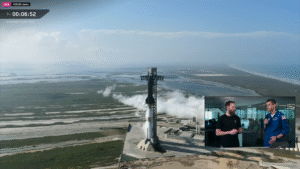
The path to Starship's twelfth flight began with a setback. On May 21, with the countdown well into its final minute, SpaceX called a scrub after a series of technical issues prevented the vehicle from lifting off its Starbase launch mount in South Texas. Automated abort systems detected anomalies close enough to ignition that the launch team had no option but to stand down and reassess. While scrubs are a routine part of any flight test program, the timing — less than sixty seconds from liftoff — underscored how demanding the final seconds of a countdown remain, even for a company with SpaceX's launch cadence.
Twenty-four hours later, on May 22, 2026, the window opened again and this time Starship V3 cleared the pad without issue. The mission marked the first flight of the third major design iteration of the vehicle, following eleven previous test flights that have progressively shaped the system since its earliest attempts. SpaceX's philosophy of iterative development — building, flying, learning, and revising — means each new version incorporates tangible changes informed by data collected on prior missions.
What sets V3 apart
The V3 designation reflects meaningful engineering changes relative to earlier Starship configurations. While SpaceX had not released a comprehensive public changelog at the time of the flight, the stated objectives for this suborbital test included verifying updated onboard systems and validating revised aerodynamic and propulsion parameters. By most accounts, the majority of those objectives were met during the flight.
The suborbital profile itself remains a deliberate choice. By flying a trajectory that arcs through space without completing a full orbit, SpaceX can exercise every critical phase of the mission — liftoff, stage separation, reentry, and landing attempts — while keeping regulatory complexity and recovery logistics manageable. The data gathered on each flight directly informs the next design cycle.
As a system, Starship and its Super Heavy booster together form the largest and most powerful launch vehicle ever flown, surpassing NASA's Saturn V in both height and gross thrust. SpaceX has positioned Starship as the backbone of future deep-space ambitions, including crewed lunar landings under NASA's Artemis program and eventual missions to Mars.
A development tempo few can match
Reaching a twelfth test flight — and a third major version — within a compressed development timeline is a benchmark that sets SpaceX apart from most other launch providers. Competitors such as Rocket Lab, Arianespace, JAXA, and ISRO are each advancing their own next-generation programs, but none are targeting the same payload class as Starship's projected multi-hundred-tonne low-Earth-orbit capacity.
The outcome of V3's maiden flight carries particular weight for NASA's Human Landing System contract, which tasks SpaceX with delivering astronauts to the lunar surface during Artemis missions. Post-flight analysis in the coming weeks will determine whether the program is on track for an accelerated launch cadence or whether additional design work is needed before the next vehicle rolls to the pad.


