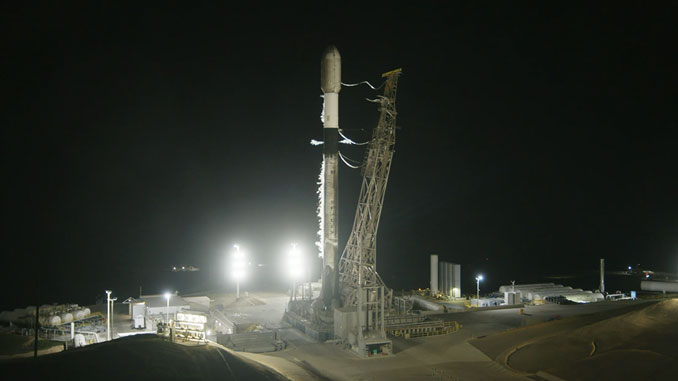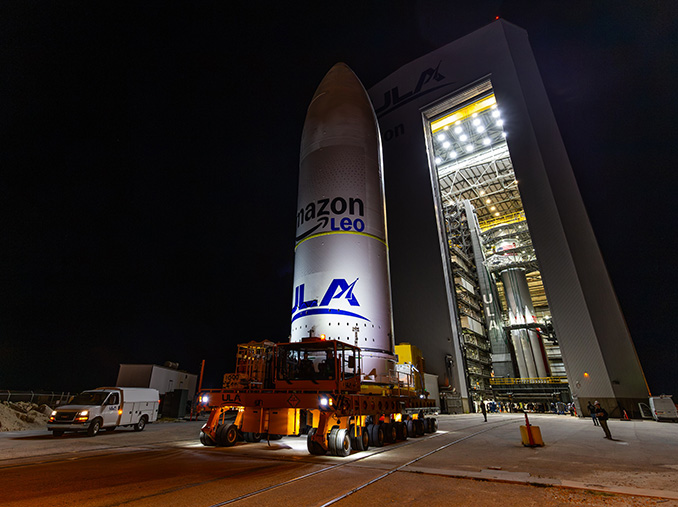
Vulcan aims to get back on the pad
United Launch Alliance has confirmed a mid-November 2026 target for Vulcan Centaur's next launch, marking the rocket's first flight since a nozzle failure on one of its solid rocket boosters cut short a previous mission. The upcoming flight will carry approximately 40 satellites for Amazon's Project Kuiper low-Earth-orbit broadband constellation, which is competing directly with SpaceX's Starlink network.
Vulcan made its debut in early 2024 amid considerable expectations, positioned as the long-term replacement for ULA's retiring Atlas V and Delta IV vehicles. The booster anomaly that grounded it underscored a familiar challenge in rocketry: even mature engineering organizations encounter unexpected failure modes on new launch vehicles. ULA has not publicly detailed the specific modifications made to address the nozzle issue, but the company says the rocket has been cleared to fly following a thorough engineering review.
The timing matters commercially. SpaceX continues to set the pace in the launch market with a high-cadence Falcon 9 manifest, and newer entrants are advancing their own heavy-lift ambitions. For ULA, demonstrating that Vulcan can fly reliably and on a predictable schedule is essential to securing future commercial and government contracts beyond its traditional Defense Department base.
Starliner's long road back to crew operations
Boeing's Starliner spacecraft is on a slower recovery trajectory. In a joint update with NASA at the end of September, both organizations outlined a plan that targets an uncrewed return-to-flight demonstration no earlier than January 2027, with a crewed mission not expected until 2028 at the earliest.
The context is important. Starliner's recent history includes persistent propulsion system anomalies — helium leaks and thruster failures — that plagued the vehicle during and before its crewed flight test to the International Space Station. NASA ultimately decided against returning astronauts Butch Wilmore and Suni Williams aboard the capsule, leaving them to come home on a SpaceX Crew Dragon in March 2025 after an extended stay aboard the station. The spacecraft itself returned to Earth autonomously in September 2024.
Boeing's engineering teams have since been working through a structured remediation effort focused on propulsion hardware and seal integrity, under close NASA oversight. The agency has made clear that a successful autonomous flight is a mandatory prerequisite before any astronauts board Starliner again. Whether the January window holds remains to be confirmed; program timelines in this area have repeatedly shifted, and both Boeing and NASA are being deliberate in their communications.
A winter that could reshape confidence in two programs
Taken together, Vulcan and Starliner represent two distinct but equally consequential tests for the American launch and spacecraft industry. Vulcan is ULA's bid to remain relevant in a competitive market reshaped by commercial operators. Starliner is Boeing's effort to salvage a program that was once seen as a straightforward complement to Crew Dragon but has instead become a prolonged exercise in failure analysis and institutional reckoning.
Neither story is over. If Vulcan's November flight proceeds cleanly and Starliner completes a smooth uncrewed demonstration early next year, the industry will have reason for cautious optimism. If either program encounters further setbacks, the questions around long-term viability will grow harder to dismiss. The coming months will tell a great deal about where each stands.