A Cosmic Cauldron Brought Into Focus
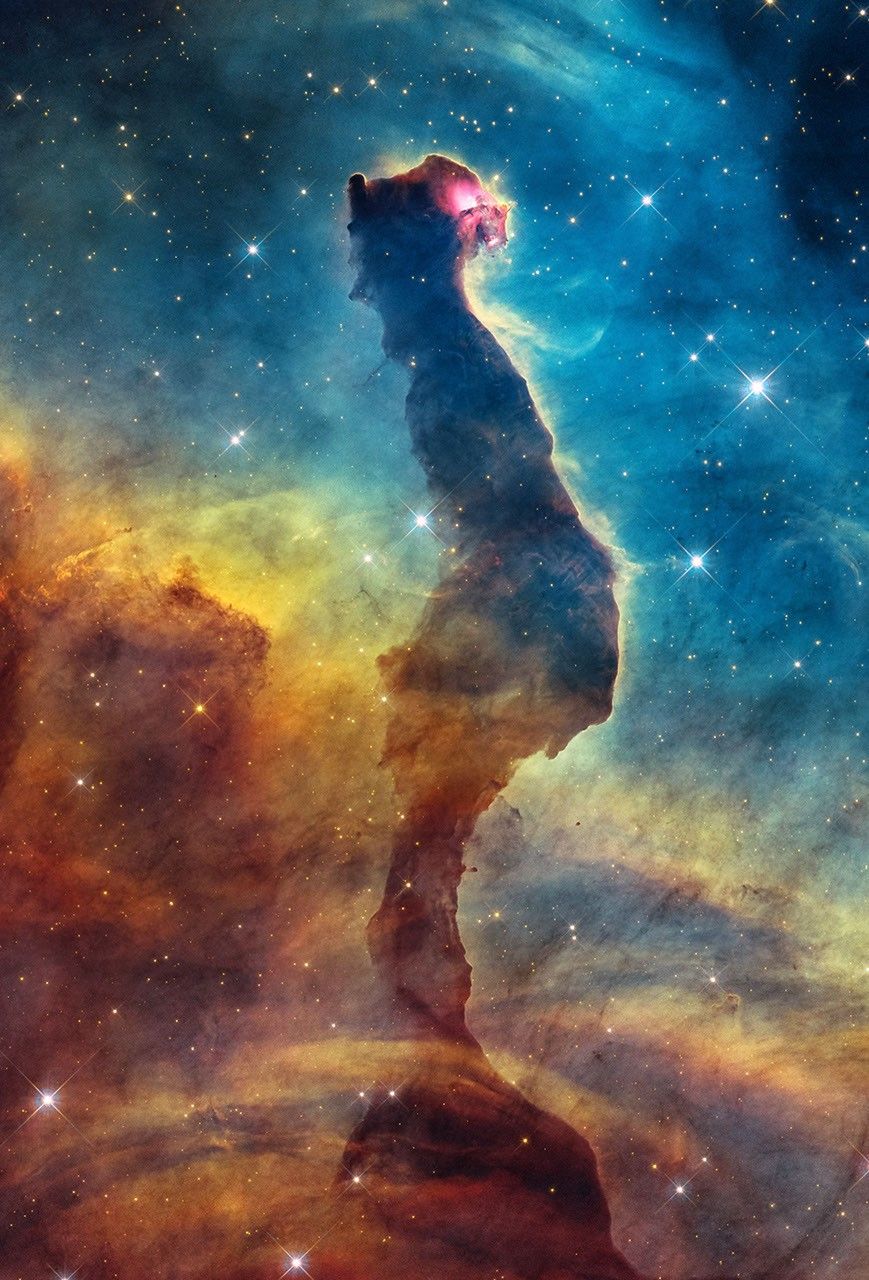
Located roughly 3,300 light-years from Earth, the nebula NGC 7129 has earned its place among the most active star-forming regions within our galactic neighborhood. For decades, the thick curtains of gas and dust shrouding this region frustrated attempts to study it in visible light. The James Webb Space Telescope, a joint undertaking by NASA, ESA, and the Canadian Space Agency, has now done what no previous observatory could accomplish: it has rendered this hidden cradle of stellar birth in striking infrared detail.
Images released by NASA on October 6, 2026, and followed by additional coverage from ESA on October 22, 2026, showcase a landscape teeming with newly revealed stars. Where conventional optical telescopes encountered only an opaque wall, Webb's infrared instruments cut straight through, exposing dozens of proto-stars that had never before been individually observed.
Stellar Jets: Signatures of Stars in Their Infancy
One of the most scientifically significant features captured in the new imagery is the presence of stellar jets — tightly collimated streams of high-velocity gas expelled by very young stars still in the process of formation. These jets are a well-understood hallmark of the earliest phase of a star's life. As material collapses gravitationally toward a central proto-stellar core and forms a surrounding accretion disk, a fraction of the infalling matter is redirected outward along the rotational poles in the form of powerful bipolar outflows.
When these jets collide with surrounding interstellar material, they produce shock-lit structures known as Herbig-Haro objects — compact, luminous patches that serve as reliable age indicators for proto-stars. The density of such features within NGC 7129 points to a region in the thick of active, ongoing stellar assembly, offering researchers a rare window into processes that shaped stars like our own Sun billions of years ago.
Webb's Growing Portfolio of Star-Forming Regions
NGC 7129 is the latest entry in Webb's expanding catalog of stellar nurseries. Since becoming fully operational, the telescope has trained its instruments on iconic regions including the Carina Nebula, the Eagle Nebula, and the Rho Ophiuchi cloud complex. In each case, Webb's primary infrared camera NIRCam and its mid-infrared instrument MIRI have delivered resolution and sensitivity far beyond what Hubble and earlier observatories could provide.
The relative proximity of NGC 7129 on galactic scales makes it a particularly valuable target: Webb can resolve individual structures within the cloud at a level of detail that allows direct comparison with theoretical models of star formation. The data gathered here are expected to inform astrophysical research for years, helping scientists refine their understanding of how stars — and by extension planetary systems — emerge from the raw material of interstellar clouds.
For ESA, which contributed the NIRSpec spectrograph and the Ariane 5 launch vehicle that placed Webb at the L2 Lagrange point in January 2022, the release of these images reinforces the agency's active stake in one of astronomy's most consequential instruments. European research teams are among those now awaiting full spectroscopic datasets from NGC 7129, which should shed light on the chemical environment in which these young stars are assembling their nascent planetary systems.
Much remains to be extracted from these observations. The images released so far represent only the visual surface of a far deeper scientific harvest still to come.