A midnight send-off at Pad 41
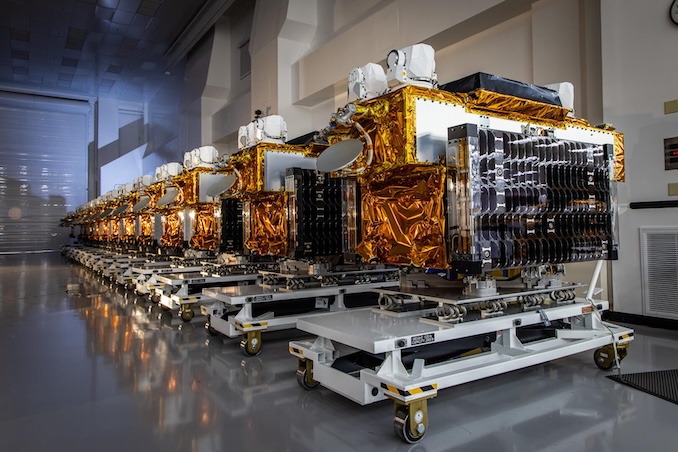
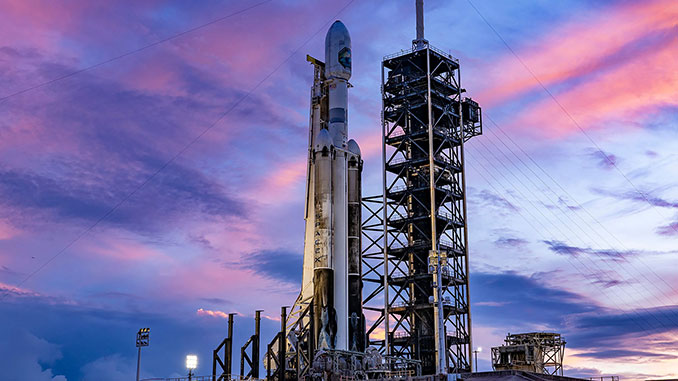
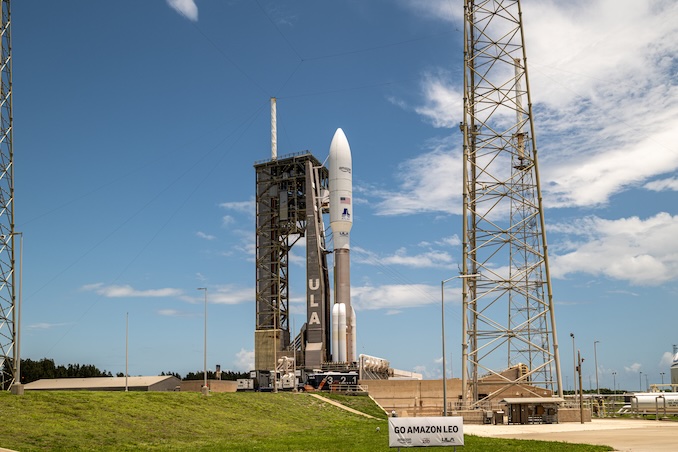
In the early hours of July 2, 2026, Launch Complex 41 at Cape Canaveral Space Force Station is scheduled to host what will be the last Atlas 5 mission in support of Amazon's Project Kuiper broadband constellation. The Leo Atlas 8 mission was set to lift off at 12:24 a.m. Eastern time, or 04:24 UTC, carrying a new batch of low-Earth-orbit satellites aimed at expanding Amazon's global internet coverage network.
The flight carries a dual distinction. It is not only the final Atlas 5 dedicated to the Kuiper program, but also the last-ever flight of the 551 variant — the most capable configuration in the Atlas family, identifiable by its five solid rocket boosters and 5.4-meter payload fairing. United Launch Alliance, the joint venture between Boeing and Lockheed Martin, has operated the Atlas 5 since 2002 without a single total mission failure across more than eighty flights.
Amazon pressing forward in the satellite broadband race
Project Kuiper sits at the center of one of the most ambitious commercial plays in the current space economy. Amazon is working toward deploying thousands of satellites in low Earth orbit, positioning itself as a direct competitor to SpaceX's Starlink constellation, which already has several thousand satellites operational. To hit its deployment targets, Amazon has contracted with a diverse roster of launch providers, including ULA's Atlas 5 and the still-maturing Vulcan Centaur, Blue Origin's New Glenn, and Arianespace's Ariane 6 from Europe.
The satellites aboard Leo Atlas 8 add to a constellation that remains under construction. Amazon has not publicly disclosed the exact number of spacecraft on this particular flight, but the 551 configuration's substantial lift capacity to low Earth orbit makes it well-suited for batch deployments of this kind.
The planned retirement of a reliable workhorse
The Atlas 5's exit from service has been a long time coming. ULA designed its retirement to coincide with the gradual introduction of Vulcan Centaur, the next-generation rocket intended to serve both government and commercial customers going forward. Still, the final 551 flight marks a tangible milestone for a vehicle that has lofted everything from NASA's Solar Dynamics Observatory and the New Horizons probe to Pluto, to classified payloads for the U.S. Space Force.
The launch was part of a busy week for orbital activity worldwide. Among the other missions drawing attention was a rescue flight for the Swift space observatory, whose continued operational status remained uncertain based on available reporting. Together, these missions reflect a global launch cadence that continues to accelerate, driven by an expanding pool of institutional and commercial operators in low Earth orbit.
For ULA, the Atlas 5's retirement places the full weight of future competitiveness on Vulcan Centaur's shoulders — a rocket still building its flight heritage. For Amazon, the calculus is more urgent: deploying Kuiper satellites fast enough to challenge Starlink before the market for low-orbit broadband solidifies around its more established rival.