A galaxy on the move through a gravitational giant
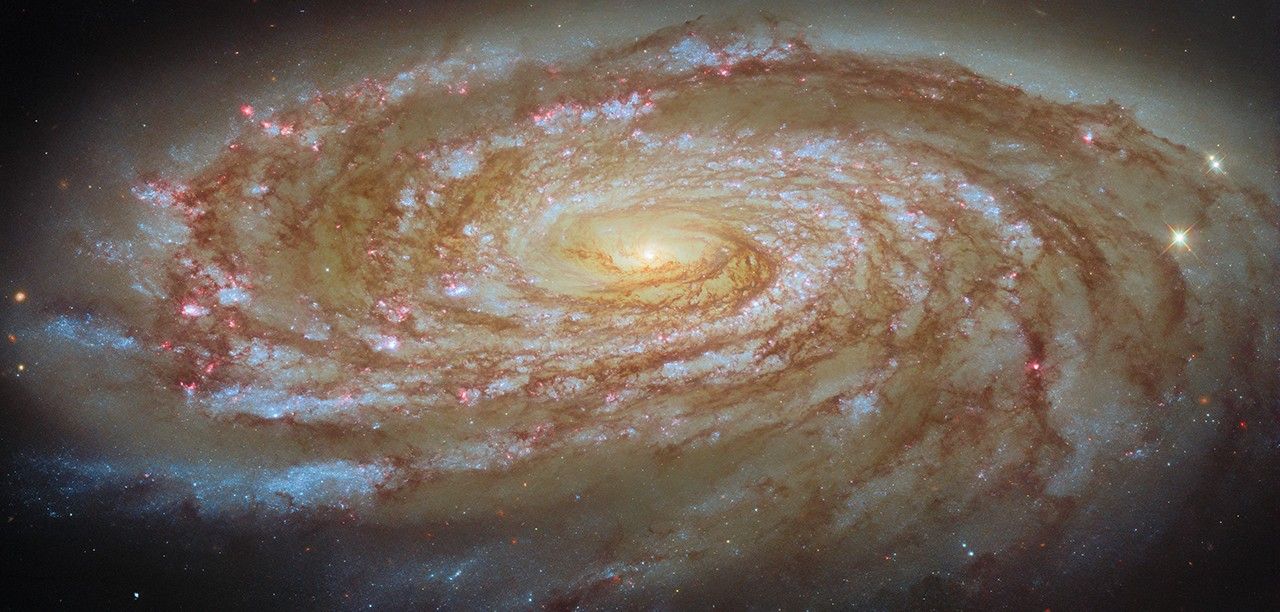
The Virgo Cluster is one of the most gravitationally dominant structures within the local universe. Home to more than 1,300 catalogued galaxies spread across tens of millions of light-years, it exerts a powerful pull on everything in its vicinity — including Messier 88 (M88). On May 29, 2026, NASA and the European Space Agency (ESA) released new Hubble Space Telescope imagery showing this active spiral galaxy as it moves on a trajectory toward the cluster's dense central region.
M88 lies roughly 63 million light-years from Earth and has been catalogued since the 18th century, when French astronomer Charles Messier first recorded it. Yet its internal dynamics and evolving position within the Virgo Cluster remain active subjects of astrophysical research. The latest Hubble image renders its spiral arms, star-forming regions, and bright central bulge in sharp detail, providing a vivid snapshot of a galaxy undergoing significant environmental pressure.
Ram pressure and the reshaping of a spiral galaxy
What makes M88 a particularly valuable target is the physical process it is currently undergoing. As the galaxy moves at high velocity toward the cluster's center, it plows through the intracluster medium — an extremely hot, diffuse gas that permeates the space between galaxies within the cluster. This interaction generates what astrophysicists call ram pressure stripping, a mechanism capable of sweeping cold gas out of a moving galaxy much like wind peels leaves from a branch.
The consequences for a galaxy's evolution can be substantial. Losing its reservoir of cold gas means losing the raw material needed to form new stars. In more advanced cases, elongated streams of ionized gas — sometimes stretching hundreds of thousands of light-years — trail behind affected galaxies like cosmic wakes. M88 appears to be at a relatively early stage of this process, making it a valuable laboratory for studying how dense cluster environments drive galactic transformation over time.
Hubble's continued relevance in the Webb era
The release of these images also serves as a reminder that Hubble, launched in 1990 through a partnership between NASA and ESA, continues to produce scientifically significant results more than three decades into its operational life. The arrival of the James Webb Space Telescope in late 2021 expanded humanity's observational reach into the infrared, but Hubble retains irreplaceable capabilities in optical and ultraviolet wavelengths that Webb does not cover.
The two agencies highlighted this image as part of their ongoing joint science communication efforts, underscoring the value of maintaining multiple generations of space observatories simultaneously. M88's journey through the Virgo Cluster is, in many ways, a fitting metaphor for the broader arc of space-based astronomy: a long, eventful passage through an unforgiving environment, shaped at every step by forces far larger than itself.