When Ingenuity lifted off from the Jezero Crater floor in April 2021, it proved that powered flight was possible in an atmosphere barely one percent as dense as Earth's. That demonstration was a milestone — but also a starting point. NASA engineers are now focused on what comes next: rotorcraft that can do more than prove a concept, and actually contribute to the scientific exploration of Mars.
Blade Geometry at the Heart of the Challenge
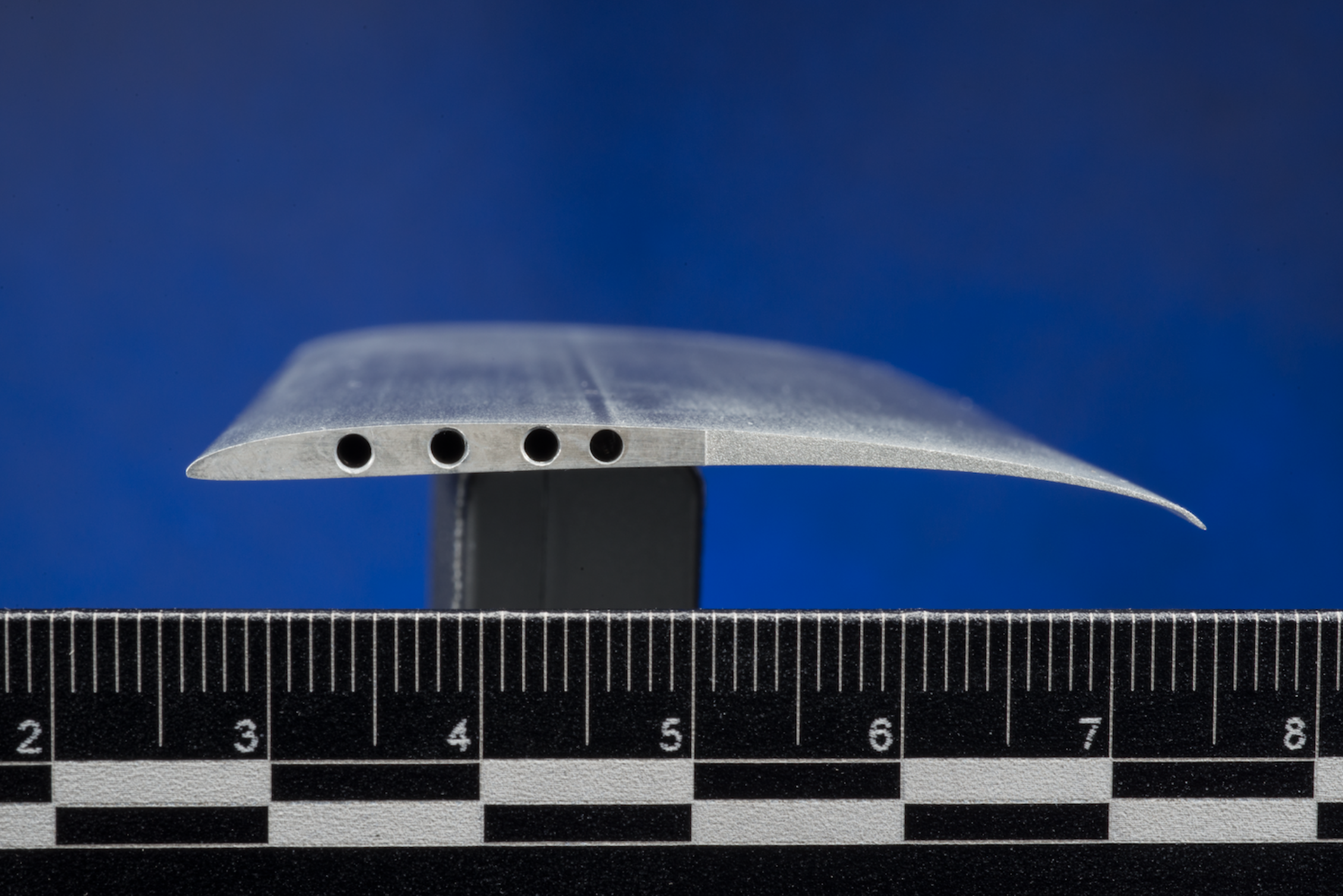
The core engineering problem is unchanged but far from solved. Generating enough lift in the thin Martian atmosphere requires blades that behave very differently from anything flying on Earth. Researchers are exploring experimental rotor geometries through two complementary approaches: high-fidelity computational fluid dynamics simulations, which model the intricate interplay between rotating blades and near-vacuum-like air, and physical wind tunnel testing that brings those models into contact with measurable reality.
The Glenn Research Center in Cleveland plays a central role in the experimental side of this work. Facilities including the 9- by 15-foot Low-Speed Wind Tunnel and the Aero-Acoustic Propulsion Laboratory are equipped to replicate the low-density, low-Reynolds-number conditions that a Mars helicopter encounters during flight. Data gathered in these rigs feeds back into the simulations, tightening the loop between theoretical design and physical validation.
Beyond Altitude Records: Toward Scientific Utility
The ambition driving this research goes beyond extending raw performance metrics. NASA wants future Mars aerial vehicles to carry instruments, survey complex terrain, and cover meaningful distances in a single sortie — capabilities that would make them genuine scientific platforms rather than technology demonstrators. A rotorcraft that can travel tens of kilometres, land on uneven ground, and return data from locations unreachable by rovers would represent a qualitative leap in Mars exploration strategy.
Achieving that requires rethinking blade design from first principles. The aerodynamic regime on Mars — low density combined with very low Reynolds numbers — sits outside the envelope for which conventional terrestrial rotor profiles were optimised. Solutions under investigation include longer blade spans, variable pitch configurations, and lightweight composite structures, though the agency has not publicly committed to any specific design as of yet.
Building Toward Future Missions
This research effort sits within NASA's broader preparation for sustained robotic and eventually human exploration of Mars. No formal mission name or launch schedule has been attached to the work at this stage, but the findings will feed directly into concept studies for next-generation Mars aerial vehicles. Other space agencies and private companies are also tracking the field closely, recognising that aerial mobility could reshape how Mars is explored in the coming decades.
The distance between a blade profile validated in a Cleveland wind tunnel and a rotorcraft skimming above the rim of Valles Marineris remains considerable. But the methodical accumulation of simulation data and experimental results is, slowly and deliberately, closing that gap.