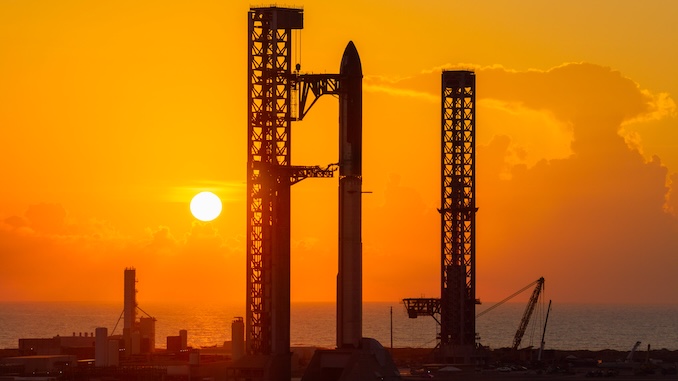
A scrub with seconds to spare
SpaceX's first attempt to launch Starship V3 came to an abrupt halt on May 21, 2026, at the company's Starbase facility in Boca Chica, Texas. With under a minute remaining on the countdown, several issues triggered an automatic abort. SpaceX did not publicly identify the specific causes, though the safing procedures performed as designed and no hardware damage was reported.
Late scrubs are a familiar feature of heavy-lift vehicle development programs. Rather than signaling a deeper problem, they generally reflect the kind of conservative operational discipline that keeps hardware intact and crews safe. SpaceX had already navigated similar situations during earlier flights in the Starship series, and the ground team moved quickly to reset for the following day.
V3 lifts off and delivers on most objectives
On May 22, Starship V3 left the launch mount within its planned window. The flight was the twelfth overall in the Starship test campaign and the first to feature the third major iteration of the vehicle. This new version incorporates structural and propulsion changes relative to its predecessor, though SpaceX has not yet published a full breakdown of every modification included in the upgrade.
The mission followed a suborbital profile, consistent with most previous Starship test flights. That means the vehicle was not placed into Earth orbit; instead, the trajectory involved a powered ascent, a stage separation between the Super Heavy booster and the Starship upper stage, followed by reentry and a recovery attempt. According to SpaceX, the large majority of planned test objectives were completed. Details on any objectives that fell short had not been released at the time of writing.
SpaceX also shared additional program-related news around the same period, though specifics were not available from the sources reviewed for this article.
Progress built one iteration at a time
Twelve flights in a compressed timeframe represents a development pace that has no close parallel among contemporary heavy-lift programs. Each version of Starship — V1, V2, and now V3 — reflects a distinct cycle of hardware refinement, with the broader goal of making the full two-stage system reliable enough for operational missions. Those missions include in-orbit propellant transfer for NASA's Artemis lunar program, for which SpaceX holds a Human Landing System contract, as well as the company's long-range ambitions toward Mars.
The competitive landscape for very large launch vehicles is also taking shape. China's CNSA is advancing its Long March 9 heavy-lift rocket, while other players across the NewSpace sector continue to mature. Every Starship flight is therefore watched closely by space agencies, prime contractors, and commercial operators alike.
The key open question now is when SpaceX will judge Starship V3 mature enough to carry a real payload on an operational mission. Upcoming flights should provide a clearer picture of that timeline.