A Day Late, but on Its Way
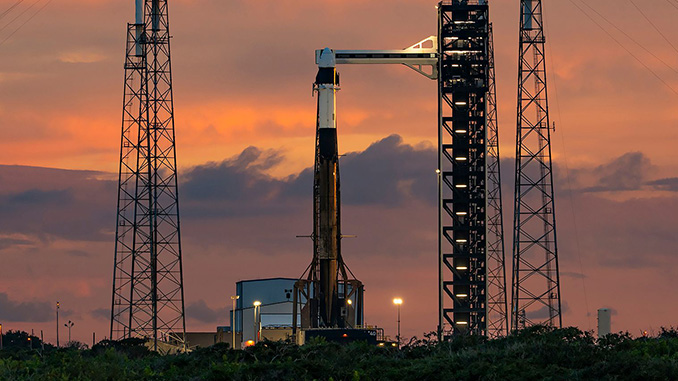
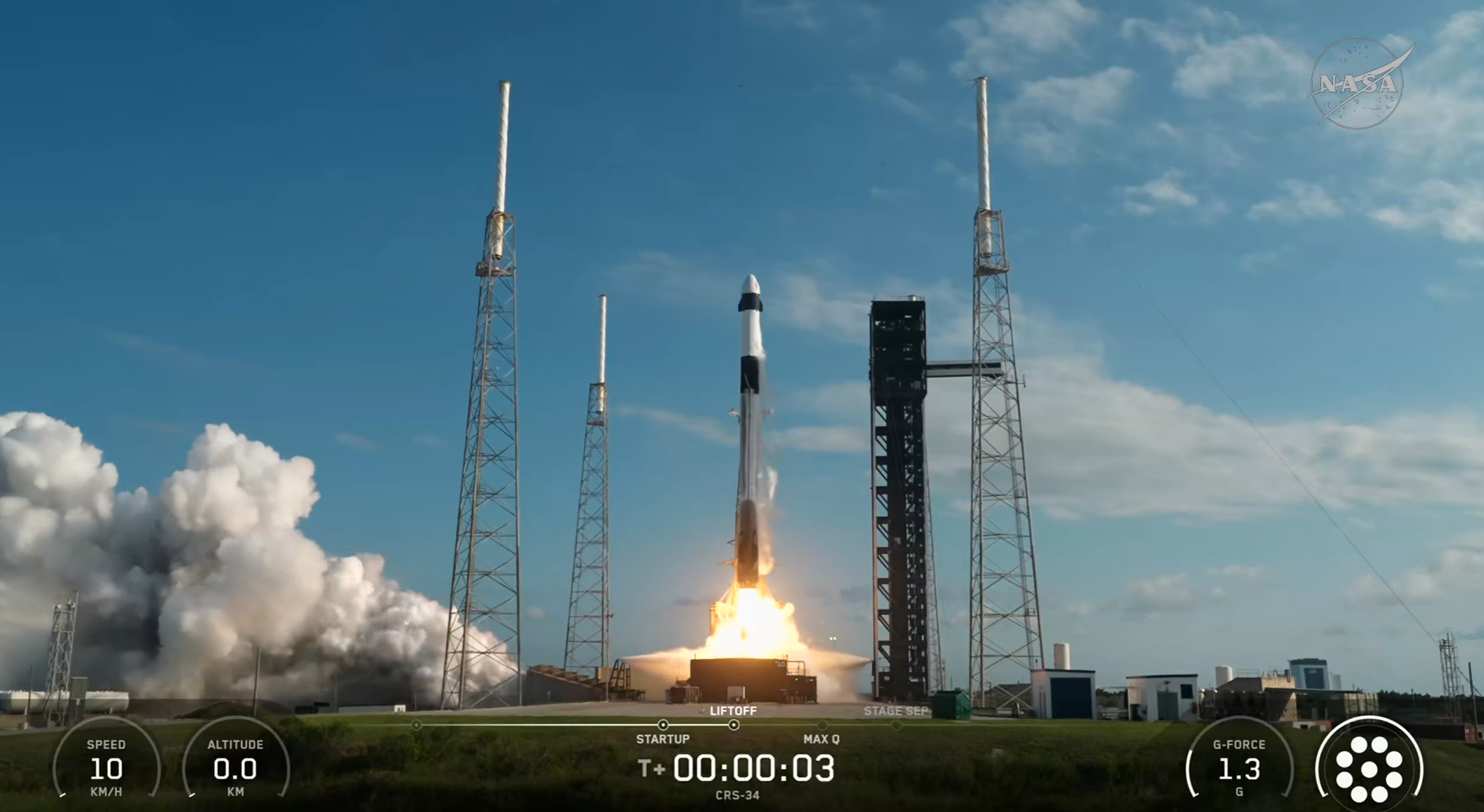
SpaceX's 34th commercial resupply mission to the International Space Station lifted off on Friday, May 15, 2026, at 6:05 p.m. Eastern Time — 22:05 UTC — from Space Launch Complex 40 at Cape Canaveral Space Force Station in Florida. The launch came roughly 24 hours behind the original schedule, following a delay that was flagged earlier in the week. No detailed technical explanation was provided publicly, though last-minute holds of this kind are a routine feature of missions where the launch window is dictated by orbital geometry rather than ground readiness alone.
The Falcon 9 performed as expected, lifting the Dragon Cargo capsule — loaded with approximately 6,500 pounds, or just under 3,000 kilograms, of cargo — onto its trajectory toward the orbiting laboratory. The booster completed a controlled return landing shortly after separation, continuing SpaceX's now-standard practice of recovering and reusing first-stage hardware to keep costs in check.
Science at the Center of the Manifest
While resupply missions inevitably carry food, medical supplies, and maintenance hardware to keep a crew of up to seven alive and working in orbit, the scientific payload is what tends to drive the planning of each Dragon flight. CRS-34 is no exception. NASA has indicated that the capsule carries a range of new experiments designed to exploit the microgravity environment aboard the station, spanning disciplines that reportedly include cell biology and fluid physics, among others. A full public breakdown of the science manifest had not been released at the time of publication.
One of the Dragon capsule's most valuable features in this context is its ability to bring samples back to Earth intact — a capability that remains rare among cargo vehicles. For research teams tracking biological or physical processes over days or weeks in orbit, that return capacity is essential to recovering data that cannot be transmitted digitally.
A Busy Season for Station Logistics
CRS-34 arrives at a logistically active period for the ISS. Just over two weeks before the Dragon's launch, Roscosmos's Progress MS-34 cargo spacecraft successfully docked with the station, completing another scheduled delivery in the quarterly supply chain that keeps the ISS operational. Between SpaceX's Dragon, Roscosmos's Progress vehicles, and Northrop Grumman's Cygnus capsules, the station relies on a carefully choreographed rotation of supply runs to maintain safe operating conditions year-round.
The precise docking date for the CRS-34 Dragon had not been officially confirmed at press time, though such missions typically reach the station within roughly two days of launch. NASA and SpaceX were expected to provide updated rendezvous details as the capsule closed in on the ISS.
Thirty-four missions into the Commercial Resupply Services program, the Dragon has become a workhorse that the station's research community depends on as reliably as any laboratory instrument. As NASA turns increasing attention toward the future of low-Earth orbit — including potential commercial successors to the ISS in the 2030s — that operational track record will carry significant weight.