NASA announced on Friday, May 8, 2026, that Brian Hughes will return to the agency in a newly defined senior leadership position. As senior director of launch operations, Hughes will hold enterprise-wide authority over two of the United States' most active launch facilities: Kennedy Space Center on Florida's Atlantic coast and Wallops Flight Facility in Virginia.
A Career That Spans Institutions and Politics
Hughes is not new to NASA's organizational structure. He previously served as the agency's chief of staff for several months before departing, giving him familiarity with the institutional dynamics at NASA Headquarters in Washington. More recently, he led the Florida operations of Donald Trump's 2024 presidential campaign, a role that placed him squarely within the political sphere.
That dual background — part government manager, part political operative — has drawn attention to the nature of his appointment. NASA has framed the decision in operational terms, emphasizing the strategic and managerial demands of the position. Hughes will report directly to NASA Headquarters and will be responsible for providing direction across the agency's launch infrastructure, setting long-term strategy, and maintaining day-to-day operational oversight at both facilities.
Two Facilities With Distinct but Complementary Roles
Kennedy Space Center carries significant symbolic and operational weight. It serves as the departure point for NASA's highest-profile missions, including crewed launches carried out by SpaceX under Commercial Crew contracts, and upcoming Artemis missions designed to return astronauts to the Moon. The site also houses the ground support infrastructure for the Space Launch System, whose flight manifest remains central to NASA's lunar exploration timeline.
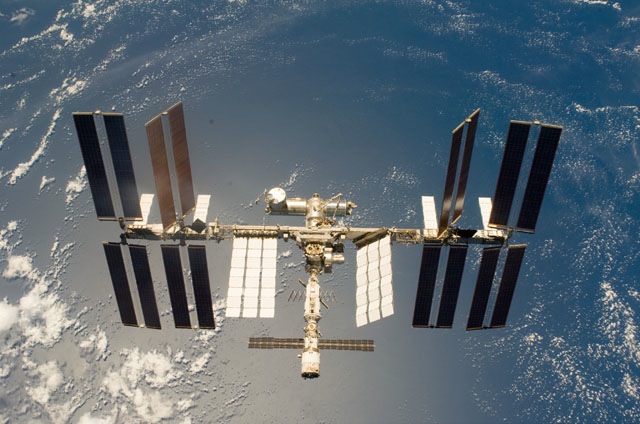
Wallops Flight Facility, managed under the Goddard Space Flight Center, serves a different segment of NASA's launch portfolio. It regularly supports Northrop Grumman's Cygnus cargo missions to the International Space Station, as well as a wide range of smaller scientific and technology demonstration flights. Placing both sites under a unified directorate suggests NASA is seeking greater consistency in how launch resources are managed and prioritized across the organization.
Timing and Broader Context
The appointment arrives during a period of significant institutional pressure for NASA. Budget constraints, shifting programmatic priorities, and an increasingly dominant commercial launch sector — led by companies such as SpaceX and Rocket Lab — are forcing the agency to re-examine how it structures its ground operations. Consolidating launch oversight under a single senior director may reflect an effort to reduce redundancy and improve decision-making speed.
Whether Hughes can translate his experience into effective operational leadership remains to be seen. The coming months will test his ability to align teams with different institutional cultures while managing an accelerating launch tempo and meeting the expectations of both federal stakeholders and commercial partners. His track record at the helm of these two facilities will ultimately define the significance of this appointment.