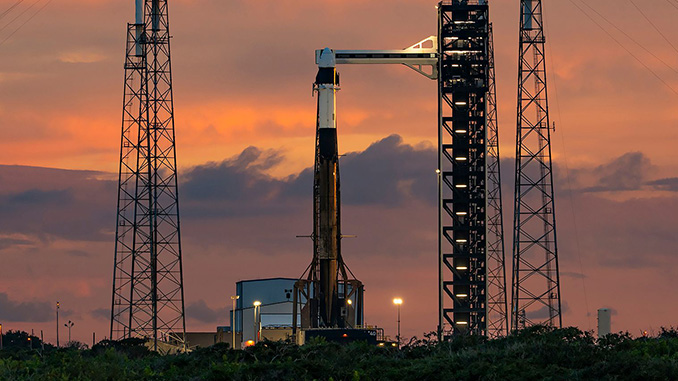
On May 15, 2026, NASA's Psyche spacecraft swept past Mars at a closest approach distance of roughly 4,609 kilometers — less than the span of the continental United States. The flyby was not a sightseeing stop: it was a precisely engineered gravity assist, using Mars's gravitational pull to accelerate the probe and reshape its orbital plane without burning a single gram of onboard propellant. The maneuver marks a pivotal milestone on the journey toward asteroid 16 Psyche, a metal-rich body in the main asteroid belt whose internal structure may resemble the exposed core of a primordial planet.
Gravity Doing the Heavy Lifting
Gravity assists are a well-established technique in deep-space navigation — used by missions from Voyager to Cassini and New Horizons — but each one demands months of trajectory planning and flawless execution. Teams at NASA's Jet Propulsion Laboratory confirmed that the Mars flyby unfolded exactly as calculated. The maneuver delivered both the velocity increase and the orbital inclination adjustment the mission required. Psyche's ion propulsion system, which had been placed in standby mode ahead of the close approach, is expected to resume normal operation in the coming days to continue the slow, steady push toward the asteroid belt.
An Unexpected Portrait of Mars
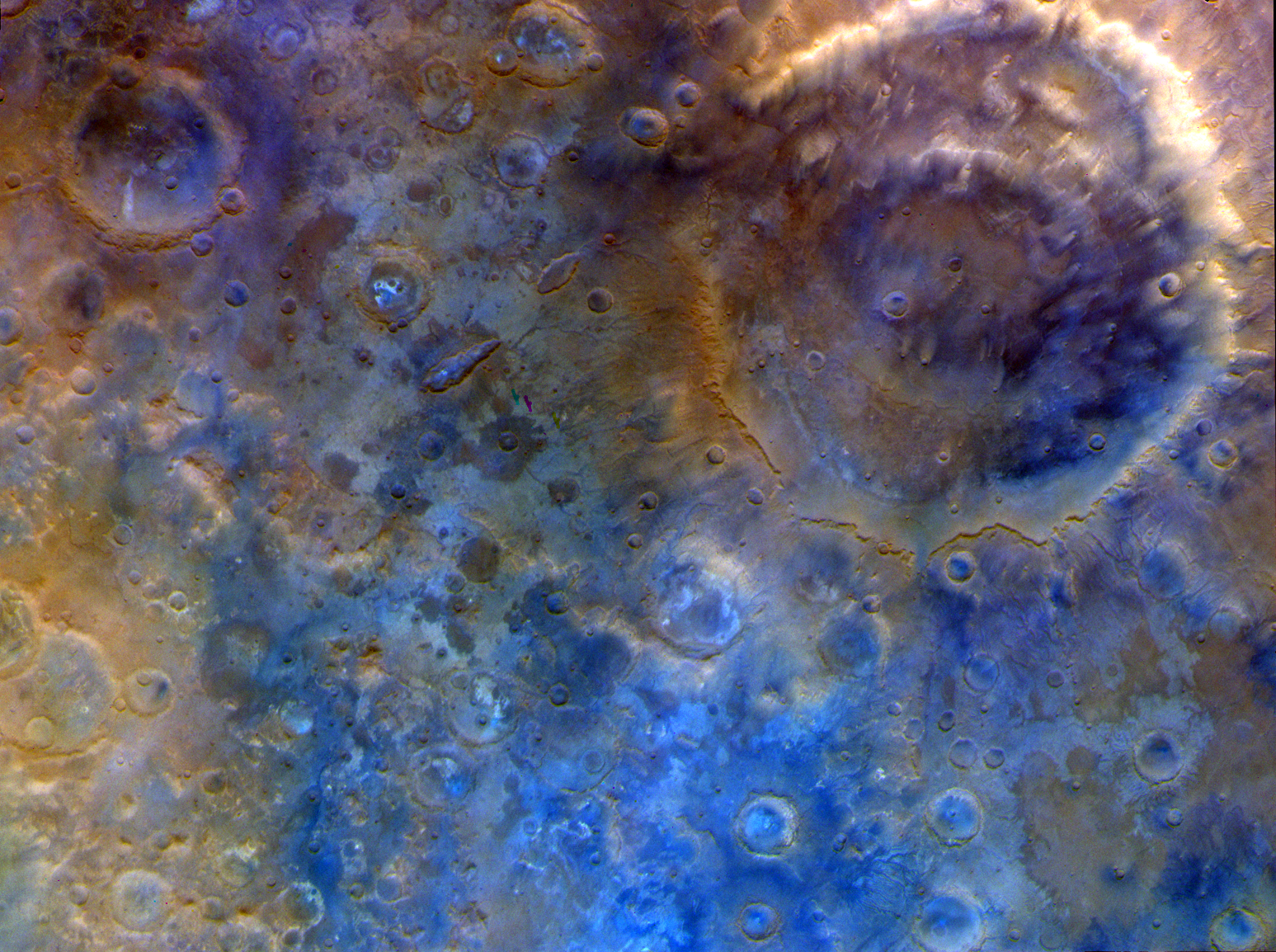
The spacecraft's multispectral imager — primarily designed to study the surface of 16 Psyche — turned out to be a capable observer of Mars as well. NASA released a batch of images on May 19, 2026, covering multiple phases of the flyby sequence:
- A crescent Mars photographed at 5:03 a.m. PDT on May 15, the last full-disk view captured before the planet overfilled the camera's field of view during final approach.
- An enhanced-color image of Huygens Crater, a double-ring impact structure spanning approximately 470 kilometers across the heavily cratered southern highlands. The color variations likely point to compositional or weathering differences across the region.
- Wind streaks in the Syrtis Major region, stretching up to 50 kilometers and formed by prevailing winds interacting with impact craters. Image resolution reached approximately 360 meters per pixel.
- A near-full Mars view taken shortly after closest approach, framing the south polar cap in the foreground and extending north toward the Valles Marineris canyon system.
- The highest-resolution image of Mars's south polar cap obtained during the mission, resolving detail at roughly 1.14 kilometers per pixel across an ice-rich cap extending more than 700 kilometers.
Next Stop: A World of Iron and Nickel
With the Mars flyby behind it, Psyche is now on a long coast toward its primary target. Arrival at asteroid 16 Psyche is scheduled for 2029. The roughly 280-kilometer-wide body has long intrigued planetary scientists: its density and radar reflectivity suggest a composition dominated by metallic iron and nickel, possibly making it the remnant core of a differentiated planetesimal that lost its rocky mantle through ancient collisions. If confirmed, it would be unlike any asteroid previously visited by a spacecraft.
The Martian imagery gathered during the flyby was, in a sense, a bonus — a demonstration that Psyche's instruments are performing well ahead of the main event. For the science team, the Red Planet served as both a gravitational springboard and an impromptu test subject. The real work begins in three years, when Psyche enters orbit around a world that may offer a direct window into the violent, metal-rich interiors of early planetary bodies.