Roman reaches the launch site, Swift eyes a new lease on life
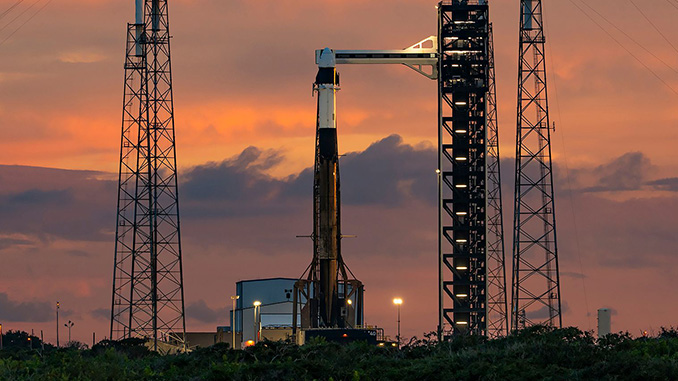
NASA's Nancy Grace Roman Space Telescope arrived at the Space Coast in Florida at the end of June 2026, completing a key pre-launch milestone. Designed to survey billions of galaxies and probe exoplanet atmospheres across wide fields of view, Roman reached the facility both under budget and ahead of its projected schedule — a combination rarely seen on programs of this scale. A confirmed launch date has yet to be announced, but the delivery marks the start of final integration and testing at the launch site.
Meanwhile, a very different NASA observatory is fighting for its continued existence. The Swift satellite, operational since 2004 and still returning valuable data on gamma-ray bursts, is the target of a planned orbital boost mission. Northrop Grumman is bringing its air-launched Pegasus XL vehicle back into service — its first flight since 2021 — to deliver a propulsion module capable of raising Swift's orbit and extending its operational life by several years. A firm launch date had not been confirmed at the time of publication.
Canadarm2 undergoes in-orbit surgery
On the International Space Station, a mechanical fault drew urgent attention from engineers on both sides of the atmosphere. On May 27, flight controllers at NASA's Johnson Space Center in Houston detected irregular electrical current in one of the seven joints of Canadarm2, the Canadian-built robotic arm that handles cargo transfers and supports spacewalks. The joint was also failing to move as commanded. Astronauts aboard the station subsequently performed a hands-on intervention to diagnose and address the malfunction — a procedure described in terms reminiscent of surgery. The episode underscores the maintenance pressures bearing down on the ISS as the station approaches the end of its planned operational life.
Electronic warfare, Esrange, and a push to fund the space economy
On the defense side, the U.S. Space Force confirmed that a mobile satellite-jamming system called Meadowlands has transitioned to operational status. The system reflects a broader shift in American military doctrine, which now treats electromagnetic dominance in orbit as a core operational priority rather than a niche capability.
In northern Europe, SSC Space and Firefly Aerospace confirmed they are jointly targeting 2028 for the first orbital launch from Esrange, Sweden's spaceport above the Arctic Circle. With infrastructure work advancing and regulatory approvals progressing, the two partners say the timeline is credible. A successful orbital mission from Esrange would mark a significant expansion of Europe's launch geography beyond French Guiana.
On the economic policy front, NASA and the U.S. Small Business Administration formalized the SBIC-NASA Initiative, a mechanism designed to channel investment capital toward small manufacturers producing industrial components and enabling technologies for lunar and Mars exploration programs. The agreement tasks NASA with identifying technology priorities and connecting qualifying companies to funding pipelines.
Rounding out the week, the European Space Agency completed its annual CAVES training program in Italy, where five explorers from three agencies spent time working together in underground cave environments — a setting deliberately chosen to simulate the isolation, physical demands, and team dynamics of future deep-space missions.