Update · 17 July 2026, 02:03 Paris time. Elon Musk has clarified the plan on X: "To be confident of a good flight, 2 Raptors will be removed & replaced. Most probable launch timing is early next week.". Two Super Heavy Raptor engines will be removed and replaced before the next attempt, now targeted for early next week — a more conservative schedule than the "few days" initially mentioned. The July 18 window at 00:45 Paris time is effectively off the table. See the original post ↗.
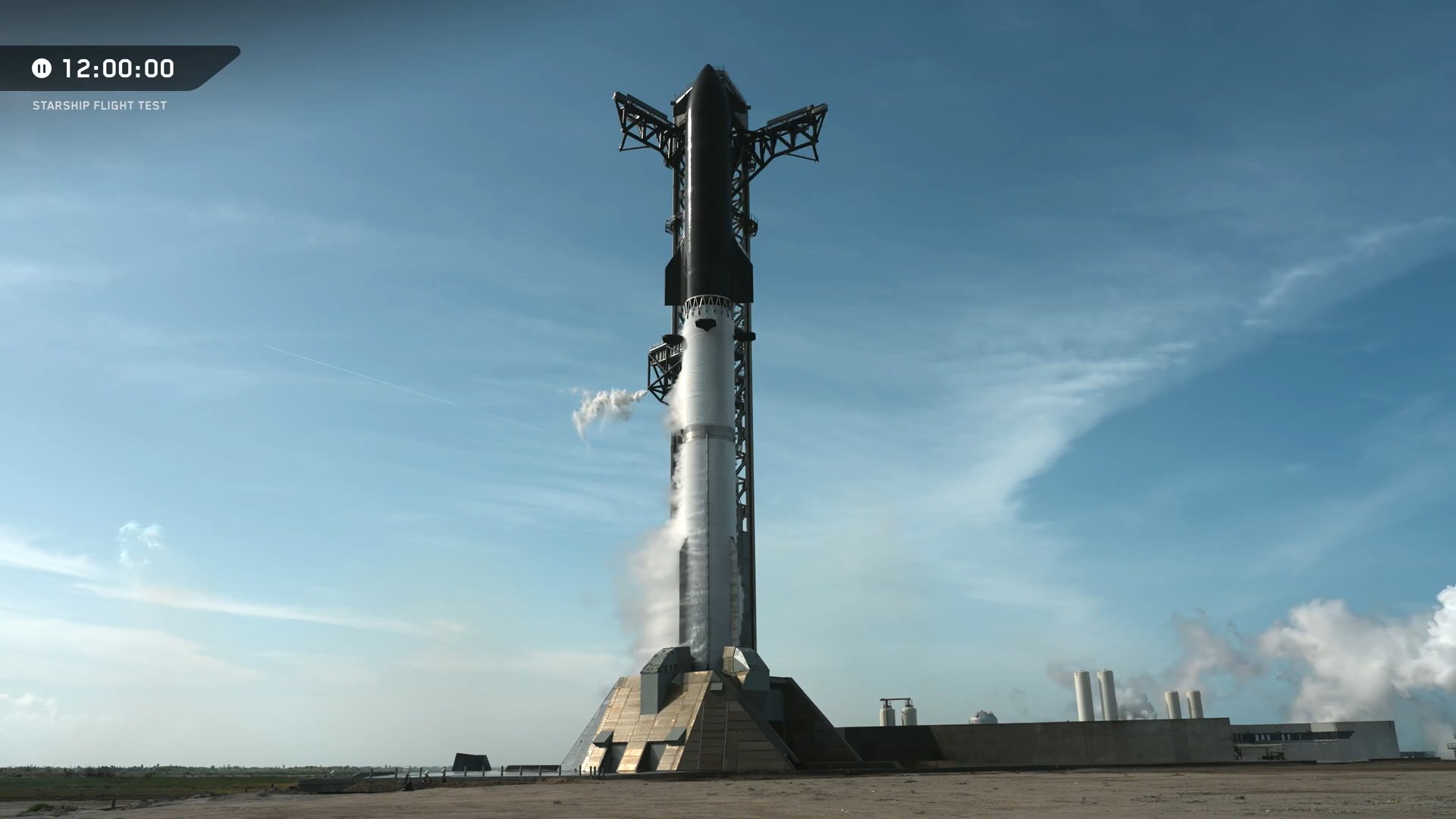
At approximately 6:45 p.m. local time Thursday at Starbase, Texas, the ignition sequence for Starship Flight 13 cut itself short before liftoff. Raptor engines failed to reach nominal start conditions, activating the automatic abort system. The vehicle is intact, propellant has been offloaded, and SpaceX is targeting a new window on July 18 between 12:45 and 2:15 a.m. Paris time.
What happened on Pad 2
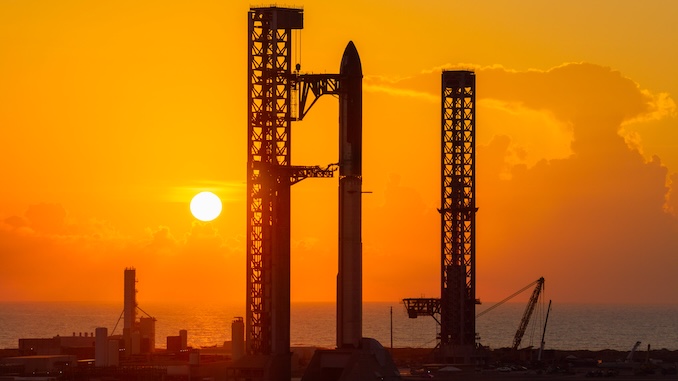
The 90-minute launch window had opened at 5:45 p.m. Starbase time. Stack Booster 20 / Ship 40 was standing ready on Pad 2 at Starbase. At T-0, an undetermined number of Raptor engines did not achieve the required thrust level. The automated flight termination system immediately commanded an abort — precisely the outcome it was built to produce.
Elon Musk posted on X roughly 48 minutes after the incident: "Some of the engines didn't start, triggering an automatic launch abort. Now offloading propellant." No material damage was reported. SpaceX teams are conducting root-cause analysis.
Flight 13 was the 13th test flight in the Starship program since 2023 and the second outing for the V3 vehicle configuration, following the largely successful Flight 12 on May 22, 2026. The mission profile called for a boostback burn and Gulf of Mexico splashdown by Super Heavy, deployment of 20 Starlink V3 satellites — a first for Starship — followed by a Raptor relight on the Ship and a splashdown in the Indian Ocean. The Starlink payload made this one of the more commercially significant test flights to date.
Why this abort is a safety success, not a program failure
Language matters here. A T-0 abort is, by definition, evidence that a safety system worked. Sensors detected an anomaly in the ignition sequence; the flight computer halted the attempt before anything irreversible could occur. The rocket is on the pad, undamaged, and ready to fly again.
SpaceX had already announced, following Flight 12, targeted adjustments to both ignition sequencing and hardware. During that first V3 flight, a single Raptor 3 shut down during ascent, five Super Heavy engines failed to relight for the boostback burn, and a hot-staging sequencing fault caused a roughly 90-degree orientation error on the booster. The FAA completed its review and issued a launch license for Flight 13. Thursday's abort suggests those refinements still require further calibration — a routine part of active vehicle development.
The precise number of engines involved has not been disclosed by SpaceX as of publication. Any more specific characterization of the cause remains speculative at this stage.
$SPCX and a new kind of market exposure
Flight 13 is the first Starship launch attempt since SpaceX went public in June 2026 under the ticker $SPCX. That makes this a historically novel moment: for the first time, a routine development-program anomaly on Starship translated in near-real time into a publicly traded share price.
According to data circulated by The Launch Pad on X, $SPCX dropped approximately $6 in the minutes following the abort announcement. After-hours volume can mechanically amplify price swings, so the figure warrants caution — but the directional signal is real. Retail and institutional investors who hold $SPCX are now directly exposed to the cadence, successes, and setbacks of an ongoing test program.
The structural question this raises is whether equity analysts covering SpaceX will develop frameworks for normalizing aborts within a development cycle of this nature. How that analytical consensus forms will likely define the volatility profile of $SPCX around every future launch window.
What comes next: July 18, with backup windows to the 21st
SpaceX has confirmed a new launch window on July 18, 2026, between 12:45 and 2:15 a.m. Paris time. Backup windows extend through July 21. Musk noted shortly after the abort: "Next launch attempt hopefully in a few days."
The immediate task for engineers is parsing ignition sequence data to identify which engines were involved and why they failed to start. The depth of any required correction will determine whether the July 18 window is viable or whether a further delay is warranted.
The stakes remain unchanged. Deploying 20 Starlink V3 satellites would mark Starship's first commercial payload demonstration — a milestone that carries real weight for SpaceX's revenue case and for its customers. Flight 13 did not lift off on Thursday. It did not fail, either.