A ground test turns catastrophic
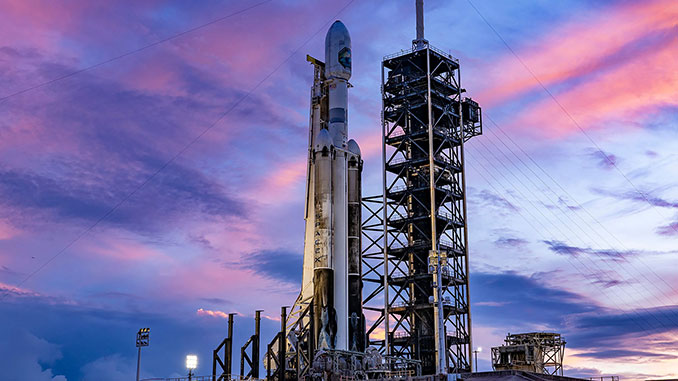
On the evening of May 29, 2026, Blue Origin's New Glenn rocket was destroyed by an explosion during a pre-launch test at its launch facility. The company acknowledged the incident in a short statement, describing it as an "anomaly" while confirming that all personnel on site were safe and accounted for. No injuries were reported.
New Glenn is Blue Origin's heavy-lift launch vehicle, designed to carry substantial payloads to low Earth orbit and beyond. The rocket had been central to the company's strategy for competing in both the commercial launch market and the increasingly lucrative national security segment. Its loss during a ground test — before it even had the chance to fly on this particular mission — represents a significant technical and programmatic setback whose full extent is not yet known.
Blue Origin has not disclosed the precise cause of the explosion, stating that an investigation is underway. Pre-launch anomalies of this nature, while serious, are not unprecedented in the industry. SpaceX, for instance, endured multiple vehicle losses during the early development of the Falcon 9 before establishing the reliability that now defines its operations.
A national security contract signed hours before the blast
The timing of events has a particularly sharp edge. Just hours before the explosion, Blue Origin had received a launch task order from the United States Space Force and the National Reconnaissance Office — the federal agency responsible for operating the country's intelligence-gathering satellites. The contract placed Blue Origin within the U.S. national security launch architecture, a recognition that many in the industry had been watching for.
Rather than distancing themselves from the incident, both the Space Force and the NRO issued a statement reaffirming their commitment to Blue Origin as a launch partner. Describing themselves as "committed partners," the two organizations signaled that they intend to maintain a diversified launch portfolio, rather than concentrating all national security missions with a single provider such as SpaceX and its Falcon 9 family.
This posture reflects a broader strategic preference within the U.S. defense establishment: preserving competition and redundancy in launch capability, even when one contractor encounters difficulties.
The road ahead: rebuilding trust alongside hardware
Blue Origin now faces a dual challenge. On the technical side, the company must determine what caused the anomaly, assess the damage, and chart a path back to flight — a process that could extend over many months depending on the investigation's findings and the availability of replacement hardware.
On the institutional side, the company will need to sustain the confidence of its government customers through a period of uncertainty. The public backing of the Space Force and the NRO provides a measure of breathing room, but it is not unconditional. Continued support will likely depend on Blue Origin demonstrating credible progress toward restoring New Glenn's flight readiness.
The broader context is unforgiving. The commercial and government launch market has grown increasingly competitive, with SpaceX holding a commanding lead in flight cadence and demonstrated reliability. Every month that New Glenn remains grounded is a month in which Blue Origin's rivals consolidate their positions. Whether the company can convert its institutional goodwill into operational momentum remains the defining question ahead.